Modi attacks Congress, says every rupee now reaching desired end
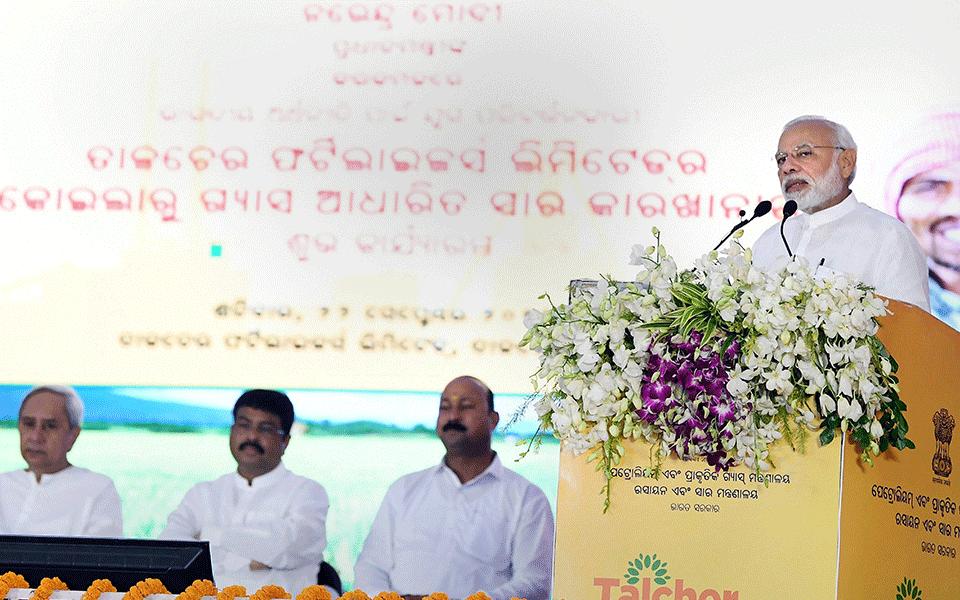
Janjgir Champa (Chhattisgarh), Sep 22: Attacking the Congress, Prime Minister Narendra Modi on Saturday said unlike earlier times, there is no corruption in his government and every rupee meant for development is reaching the desired end.
He said that after coming to power, the Bharatiya Janata Party (BJP) government ended the system of giving benefit of social schemes selectively to those who voted for a particular party, or those close to some politicians.
Speaking at a rally here, Modi said more roads were constructed in Chhattisgarh in the last four years than built since Independence.
"Wasn't there money available before? (Road Transport and Highways) Department before? Engineers before? And people's demand before? Yet it didn't happen. Why?
"That's because, as one of the Congress Prime Ministers said, only 15 paise out of every rupee spent on development reached the villages," the Prime Minister said.
Making a reference to Congress' election symbol, he said: "Which was this hand which made rupee to value only 15 paise?"
"Today, the development is happening for one reason -- the same rupee, which then accounted for 15 paise worth of work, is today leading to 100 paise worth of work. That's why the work is now visible," Modi said.
He added that while poor always demanded that they should be given homes and many political parties promised it during polls, this never happened.
"There were big slogans about eliminating poverty. But did poor get homes? And even if they did, it were the peons of some big bureaucrat, or a servant of some politician," he said.
The Prime Minister added that his government changed the system and decided there will be no discrimination based on caste, religion or vote bank.
"We decided that schemes will be made for all and they should benefit everyone. We decided that by 2022 -- which marks 75 years of Independence -- no family in India would be left without a home and the poorest of poor will have a roof over their heads...not just those who are thought of as a vote bank," he said.
He said similarly, when the government decided to build toilets, they chose those villages where people voted for them.
"But we decided that this won't work. If toilets will be built, they will be built for all."
"If rich families get LPG connection, then poor will get it, too. In four years, we gave as many LPG connections as earlier governments gave since Independence," Modi said.
He said the government also decided to fulfil the long-time demand of farmers to get fair price for their produce.
"For 60 years, they ran the government. But it was when our government came to power that we agreed to their demand and announced that farmers will get minimum support price one-and-a-half times their production cost," Modi said.
He hailed Chief Minister Raman Singh for his initiatives to end the "menace of naxalism" and bringing development at the doorsteps of poor and tribal.
Let the Truth be known. If you read VB and like VB, please be a VB Supporter and Help us deliver the Truth to one and all.
CEC orders immediate arrest of those involved in post-poll violence in Bengal: Official
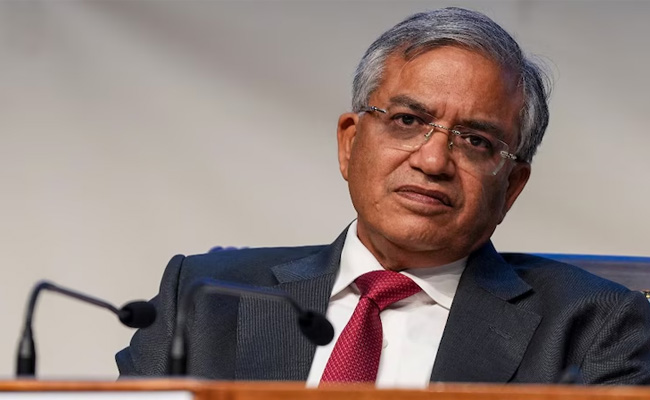
Kolkata (PTI): Chief Election Commissioner Gyanesh Kumar directed the authorities concerned to immediately arrest those involved in post-poll violence and vandalism in West Bengal, an official said on Wednesday.
The Election Commission's directive came after two persons were killed in alleged incidents of post-poll violence in the state on Tuesday, besides scores of party offices being ransacked.
The CEC issued instructions to the West Bengal chief secretary, director general of police, Kolkata police commissioner and directors general of central armed police forces, along with all district magistrates, superintendents of police and other officials, to maintain continuous patrolling in sensitive areas, he said.
"Those responsible for inciting violence and carrying out acts of vandalism must be arrested immediately," the official said, quoting the CEC's instruction.
The chief election commissioner also stressed the need for swift and firm enforcement of the law, he added.
This directive came amid concerns over law and order in parts of the state, with the Election Commission closely monitoring the situation, he added.
"We have been asked to remain on high alert and ensure that any attempt to disturb peace is dealt with firmly," a senior police officer said.
The state authorities have intensified vigil across districts, with coordinated efforts between the police and central forces to prevent any untoward incident, he added.
The assembly elections were held in West Bengal in two phases - April 23 and 29. The counting of votes took place on May 4.
The BJP sealed a landslide victory with 207 seats in the 294-member assembly, ending the TMC's uninterrupted 15-year rule in the state.