Modi departs on three-nation Africa tour
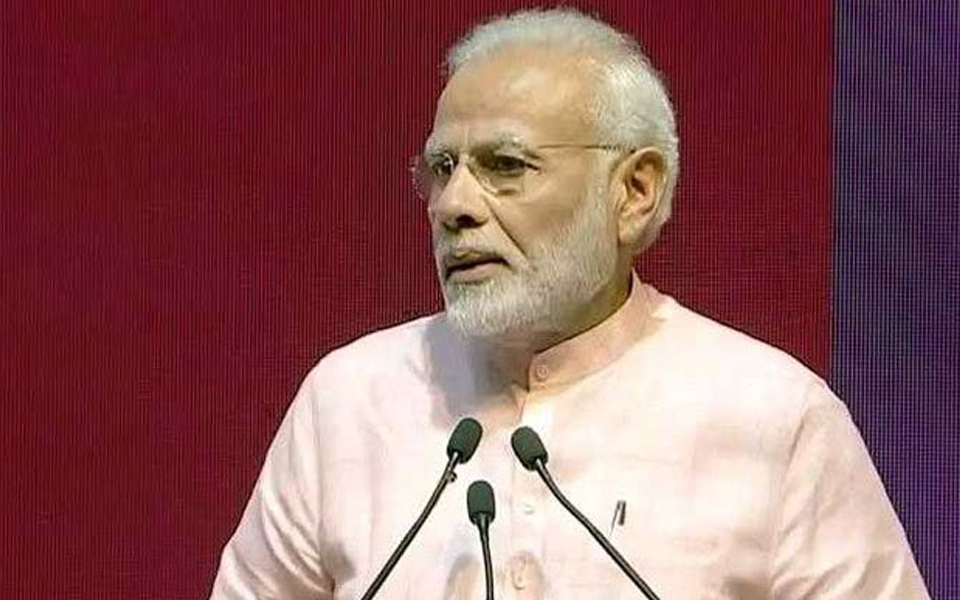
New Delhi, July 23 : Prime Minister Narendra Modi on Monday left for Rwanda on the first leg of his five-day, three-nation tour of Africa that will also take him to Uganda and South Africa.
"Embarking on a momentous journey to strengthen our historical bond with Africa," External Affairs Ministry spokesperson Raveesh Kumar tweetetd.
This will be the first ever prime ministerial visit from India to Rwanda.
From Rwanda, Modi will reach Uganda on July 24 in what will be the first bilateral visit by an Indian Prime Minister to that country in 21 years.
From Uganda, the Prime Minister will reach South Africa on July 25 where he will attend this year's Brazil, Russia, India, China, South Africa (BRICS) Summit.
"India shares close, warm and friendly relations with Africa which are cemented by robust development partnership and a large presence of the Indian diaspora," the Prime Minister's Office said in a pre-departure statement.
"A number of agreements and MoUs in the areas of defence, trade, culture, agriculture and dairy cooperation are scheduled to be signed during the visit," it stated.
This is Modi's second official visit to mainland Africa after he visited Mozambique, South Africa, Tanzania and Kenya in 2016.
Let the Truth be known. If you read VB and like VB, please be a VB Supporter and Help us deliver the Truth to one and all.
4 workers die after being buried under coal slurry in Jharkhand's Dhanbad
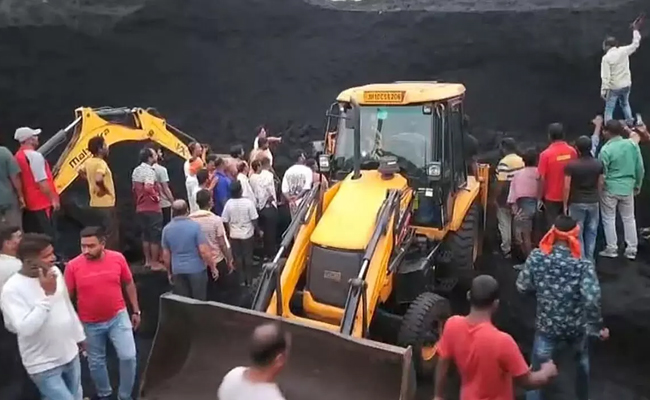
Dhanbad (Jharkhand) (PTI): At least four workers died after being buried under coal slurry in Jharkhand's Dhanbad district on Saturday, a police official said.
The incident took place at Moonidih coal washery in the command area of Bharat Coking Coal Limited (BCCL).
"Bodies of all four workers were dug out of debris during a rescue operation," Putki police station in-charge Waqar Hussain told PTI.
The incident took place when coal slurry was being loaded into trucks by workers, during which a large chunk of slurry fell and trapped several workers underneath, officials said.
The deceased have been identified as Manik Bauri, Dinesh Bauri, Deepak Bauri, and Hemlal Gope.
Meanwhile, the family members of the deceased and local villagers placed the bodies in front of the washery gate and began a protest.
They demanded compensation, jobs for dependents and action against those responsible for the incident.
Police and administration officials are trying to pacify the protesters, an official said.