Modi government's ambitious 'Bharat Rice' project stalled in just four months
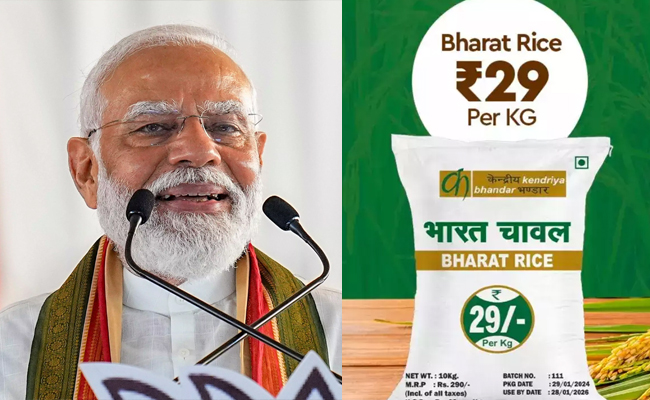
Bengaluru: The central government's ambitious 'Bharat Rice' scheme, aimed at distributing quality food at affordable prices, has been temporarily suspended since July. Under this scheme, rice was sold at ₹29 per kg, wheat flour at ₹27.50 per kg, and pulses at ₹60 per kg.
The 'Bharat Rice' scheme, which began on February 2, 2024, in the wake of the upcoming Lok Sabha elections, was designed to provide quality food to the common man at low prices. The scheme, overseen by the National Agricultural Cooperative Marketing Federation of India Limited (NAFED), saw high demand from consumers. Supplies were maintained until June 10, after which deliveries ceased, leading to the current suspension. The Nafed website shows the rice to be out of stock.
Initially, the scheme involved distributing food items through mobile vans and select malls across various parts of the state. Consumers could purchase ten kilograms of rice or wheat flour, with pulses being available in some districts. However, not all promised deliveries were made.
For Below Poverty Line (BPL) cardholders, the state distributed five kilograms of rice per person for free, while Above Poverty Line (APL) cardholders received ten kilograms of rice at ₹15 per kg. However, many families without ration cards, including migrants and daily wage laborers, faced difficulties in accessing affordable food. The temporary halt in the scheme has added to their woes.
Vinaykumar, Head of NAFED Karnataka Division, informed that around 5,000 tonnes of Bharat rice, wheat flour, and pulses were sold through mobile vans and selected outlets like Reliance Mart and Jio Mart. Despite the high demand, supplies have run out, and no groceries have been delivered since July 1.
The primary reason for the suspension appears to be the depressed paddy production last year due to insufficient rainfall, making it challenging to sustain the scheme across the country. This, coupled with the financial burden on the government, led to the temporary halt.
The central government is now contemplating a new policy for the distribution of Bharat rice. Details of the new policy are awaited.
Let the Truth be known. If you read VB and like VB, please be a VB Supporter and Help us deliver the Truth to one and all.
Bengal: Hundreds stage protest over 'threats' by TMC workers
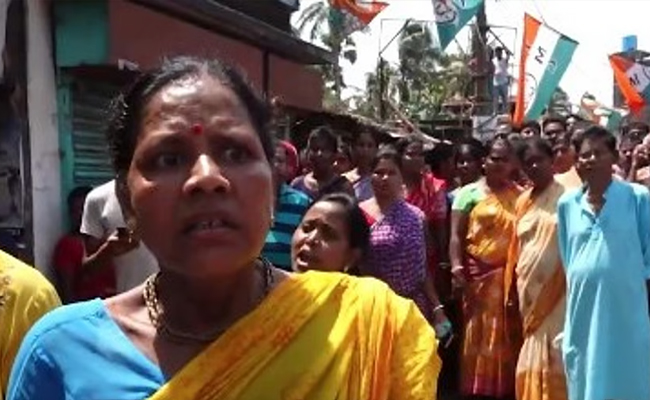
Kolkata (PTI): Demanding safety after counting of votes, hundreds of villagers staged a protest in Falta in West Bengal's South 24 Parganas district on Saturday, alleging they were receiving life threats from TMC workers in the area.
The protesters, many of them women and holding BJP flags, blocked the road in Hasimnagar village, alleging that local panchayat pradhan Israfil, a close associate of TMC candidate Jehangir Khan, issued them threats of attacks after poll results are announced.
The CRPF deputy commandant visited the area with a large force and assured the demonstrators of ensuring their safety.
Khan dismissed the allegations and said the women were "deployed" by the BJP to stage the demonstration and engineer the arrest of TMC functionaries in the area before the counting to "harm the morale of the TMC supporters".
"If the charges are proved, I am ready to face the law," he said.
Fatima Bibi, one of the protesters belonging to the BJP's Mahila Morcha, claimed Israfil and his men "have been visiting the area since April 30 and threatening us that there would be bloodshed from May 5. We demand CRPF remain in the area".
The CRPF official said, "We are here to instill confidence among the people with support of the local police, We have assured them of full security."
An Election Commission official said a report has been sought about the protests from the district administration.