Modi speaks to Putin; discusses safe evacuation of Indians from conflict zones
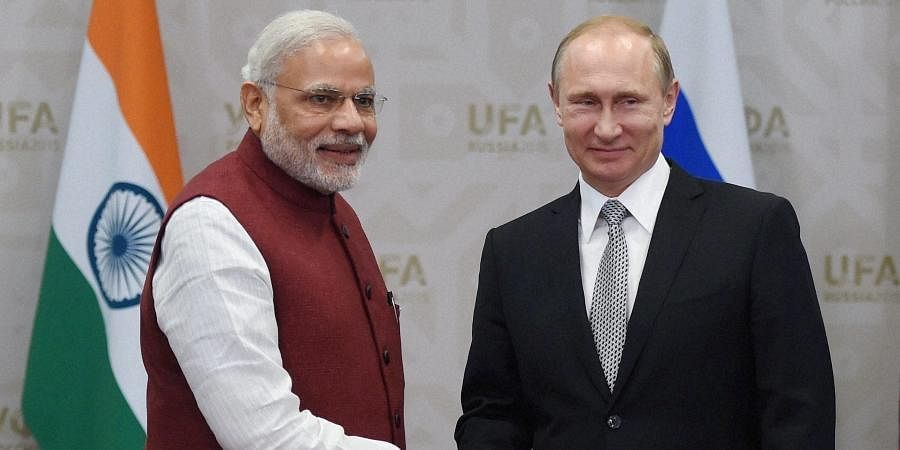
New Delhi, Mar 2: Prime Minister Narendra Modi spoke to Russian President Vladimir Putin on Wednesday and discussed the safe evacuation of Indians from the conflict areas in Ukraine.
An official statement said the two leaders reviewed the situation in Ukraine, especially in Kharkiv city where many Indian students are stuck.
The Modi-Putin telephonic conversation, the second between them in the last six days, came amid mounting concerns in India over the safety of its citizens in Kharkiv, the second-largest city of Ukraine that has been witnessing increasing fighting between Russian and Ukrainian troops.
"Prime Minister Narendra Modi spoke on phone today with Vladimir Putin, President of the Russian Federation. The leaders reviewed the situation in Ukraine, especially in the city of Kharkiv where many Indian students are stuck," the statement said.
"They discussed the safe evacuation of the Indian nationals from the conflict areas," it added.
India asked its nationals on Wednesday to leave Kharkiv urgently to three nearby places "even on foot", while Russia promised to create "humanitarian corridors" for the evacuation of Indians from the conflict zones.
Separately, External Affairs Minister S Jaishankar discussed the "deteriorating" situation in Ukraine with EU High Representative for Foreign Affairs Josep Borrell, French Foreign Minister Jean-Yves Le Drian and his Estonian counterpart Eva-Maria Liimets.
"Discussed the deteriorating Ukraine situation with EU HR VP @JosepBorrellF, French FM @JY_LeDrian and Estonia FM @eliimets respectively. Reiterated India's stance that diplomacy and dialogue alone provide the answer. The cessation of violence is an urgent imperative," Jaishankar said in a tweet.
In an urgent advisory earlier, the Indian embassy in Ukraine asked the Indians to reach the Ukrainian towns of Pesochyn, 11 km from Kharkiv, Babai (12 km) and Bezlydivka (16 km) by 6 pm local time (9:30 pm IST).
The advisory came amid Russia stepping up attacks on key Ukrainian cities and a day after an Indian medical student died in shelling in Kharkiv.
Ministry of External Affairs (MEA) Spokesperson Arindam Bagchi said at a media briefing that the Indian embassy asked the Indians to leave Kharkiv immediately on the basis of information from the Russian side.
"The students who cannot find vehicles or buses and are in railway station can proceed on foot to Pesochyn, Babai and Bezlydivka," the advisory, the second of the day, said.
"Proceed immediately. Under all circumstances, Indians must reach these settlements by 1800 hours (Ukrainian time) today," it added.
It is learnt that the Russian side has informed India about the possible increase in intensity in fighting in Kharkiv and suggested that all Indians should leave the city.
Earlier, Russian Ambassador-designate Denis Alipov said his country is working "intensely" to create a "humanitarian corridor" for a safe passage to Russian territory of the Indians stuck in Kharkiv, Sumy and other conflict zones in Ukraine.
"We have received an Indian request for the emergency evacuation of all those stuck there (Ukraine) to the Russian territory and we are now actively working on the ways and means to launch an operation to provide the humanitarian corridors so that people have the secure passage to safety to the Russian territory," he said.
Alipov said Russia is in touch with Indian authorities on the issue of Indians stuck in Kharkiv, Sumy and in the areas northeast of Ukraine, which are witnessing intense conflict.
Let the Truth be known. If you read VB and like VB, please be a VB Supporter and Help us deliver the Truth to one and all.
Congress using hijab issue to pacify minority anger, alleges Karnataka LoP R Ashoka
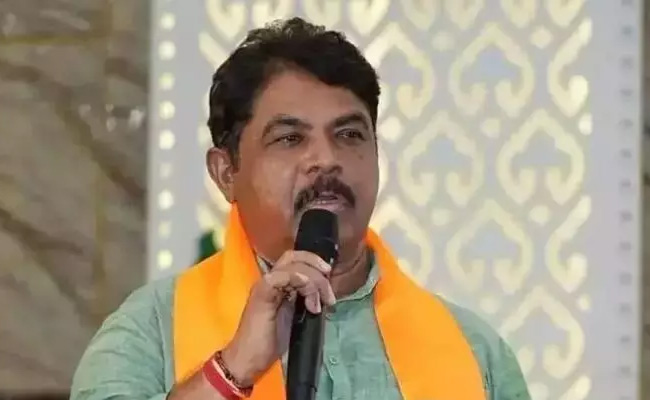
Bengaluru: Leader of Opposition in the Assembly R. Ashoka has accused the Congress government of using the hijab issue to placate what he described as discontent among minority voters after the Davanagere by-election.
In a post on X on Wednesday, Ashoka alleged that the state government, instead of addressing issues such as price rise, corruption, farmers’ distress and law and order, was attempting to retain its minority vote base by reviving the hijab issue.
Referring to the 2022 dress code introduced by the BJP government, which prohibited hijab in schools and colleges, Ashoka said the Karnataka High Court had upheld the policy and emphasised the importance of discipline in educational institutions.
He questioned the Congress government’s move to revisit the issue and asked whether setting aside the court-backed policy to benefit one community could be described as secularism.
Ashoka further alleged that while the government was willing to permit hijab, it continued to prohibit saffron shawls.
He accused the government of dividing students on religious lines rather than treating schools and colleges as spaces of equality.
Drawing a comparison with Mamata Banerjee’s government in West Bengal, Ashoka claimed that excessive appeasement politics had harmed the state and warned that the Congress in Karnataka could face a similar political response.
He said voters in Karnataka would teach the Congress a lesson for what he termed “vote-bank politics” and for compromising constitutional and judicial principles.