Modified scheme to provide cashless treatment for road accident victims nationwide: Nitin Gadkari
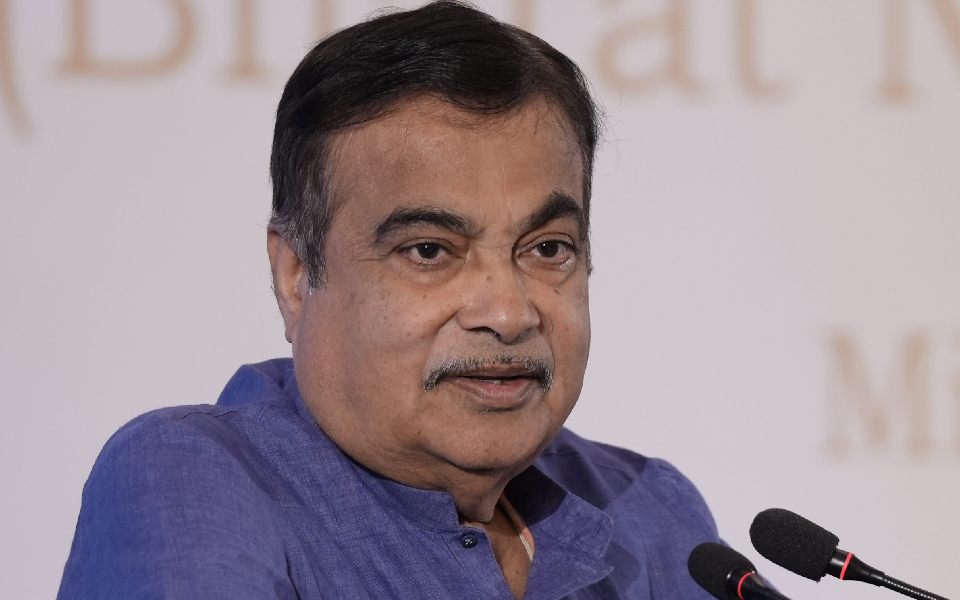
New Delhi, Jan 8: The government will come up with a modified scheme by March to provide cashless treatment for road accident victims nationwide, under which they will be entitled to a maximum amount of Rs 1.5 lakh per accident per person, Union minister Nitin Gadkari said on Tuesday.
According to Gadkari, the scheme will be applicable to all road accidents caused by the use of motor vehicles on any category of road.
The National Health Authority (NHA) shall be the implementing agency for the programme, in coordination with police, hospitals and State Health Agency etc.
The programme will be implemented through an IT platform, combining the functionalities of the e-Detailed Accident Report (eDAR) application of the Ministry of Road Transport and Highways and the Transaction Management System of NHA.
"The broad contours of the pilot programme are -- victims entitled to cashless treatment up to a maximum of Rs 1.5 lakh per accident per person for a maximum period of 7 days from date of the accident," Gadkari said while addressing a press conference.
The government will come up with a modified scheme by March this year.
On March 14, 2024, the ministry of road transport and highways (MoRTH) had launched a pilot programme to provide cashless treatment to road accident victims.
The pilot programme -- initiated in Chandigarh -- was aimed at establishing an ecosystem for providing timely medical care to the victims of road accidents, including during the golden hour.
The pilot project was later expanded to six states.
The road transport and highways minister also said the government is studying labour laws to frame a policy for fixing working hours for commercial drivers, on the lines of pilots, as driver fatigue is resulting in fatal road crashes, Gadkari said, adding that India is facing a shortage of 22 lakh drivers.
MoRTH organised a two-day workshop on January 6, and 7, 2025 to holistically deliberate issues, solutions and next steps to be taken to help drive transformation in India's road transport sector.
During the two-day workshop, accelerating implementation of Vehicle Scrapping Policy, pan-India adoption of PUCC 2.0, timelines for introduction of BS-VII norms were discussed, along with expected reduction in pollution with the norms.
Gadkari also launched the scheme for pan-India setup of Driver Training Institutes (DTI) which provides incentives for setting up DTIs and additional incentives for integrated infrastructure of ATSs and DTIs.
The minister stressed on the introduction of specific regulations and guidelines for improving E-Rickshaw safety, given the proliferation of e-rickshaws across the country.
Gadkari said deliberations were done for introduction of Advanced Driver Assistance System (ADAS) for trucks and strict enforcement of retro reflective tape for transport vehicle safety.
Implementation of monitoring centers & vehicle location tracking devices (VLTD) for safety of women and children were also discussed.
The meeting also discussed the launch and integration of all faceless services by the end of March 2025.
"Further, a Committee of Secretaries with representatives from States, MoRTH and NIC will work towards standardization of faceless services modules, document standardization for registration," he added.
Let the Truth be known. If you read VB and like VB, please be a VB Supporter and Help us deliver the Truth to one and all.
Bengaluru jail introduces biometric tracking system for prisoners
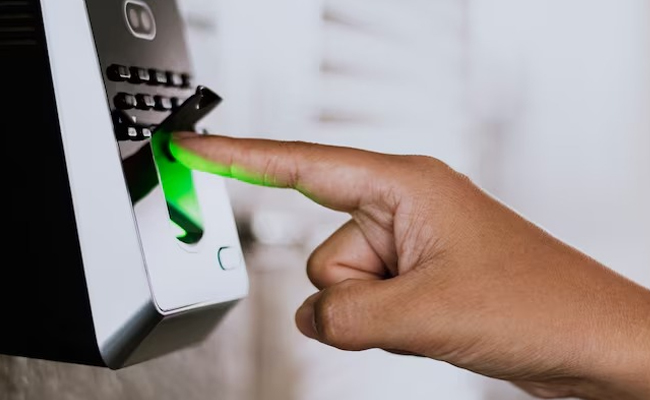
Bengaluru: In a bid to curb misconduct and illegal activities inside Parappana Agrahara Central Prison, prison authorities have introduced a new ‘Prisoners Tracking Movement System’ under which inmates will have to undergo biometric verification while entering every barrack.
According to jail officials, biometric systems have been installed across all major sections of the prison, including barracks, visitor rooms, hospital, canteen, kitchen, library, playground, handicraft units and bakery sections. Staff members have also been deployed at these locations.
Officials said inmates visiting the visitors’ room must now obtain a digital token after biometric verification. Details such as the prisoner’s name, identification number and entry time will be updated in the prison software system. This will help authorities maintain a complete digital record of inmates visiting and returning from meeting rooms.
Similar systems have also been introduced at entry points of the hospital, library and other barracks accessed for work-related purposes. Officials said the system will help identify prisoners involved in suspicious or illegal activities with other inmates and enable authorities to track how much time a prisoner spends at different locations inside the prison.
Authorities stated that AI-powered cameras were already being used inside the prison to monitor inmates as well as prison staff. Along with this, digital tracking of prisoner phone calls and a digital token system for visitor meetings have now been added to strengthen surveillance over inmate movement. Officials said the project has been implemented at a cost of around Rs 2.25 crore.
The prison department has also introduced a canteen usage tracking system to monitor prisoners’ spending patterns. Instead of direct cash payments, inmates can purchase bakery items and snacks using wallets or coupons issued within the prison system.
Officials said the digital system will record details including the buyer’s name, items purchased, quantity, date, time and remaining wallet balance. This will allow prison authorities to maintain complete expenditure records of inmates.