Modi's 5 years 'most traumatic, devastating', should be shown exit door: Manmohan Singh
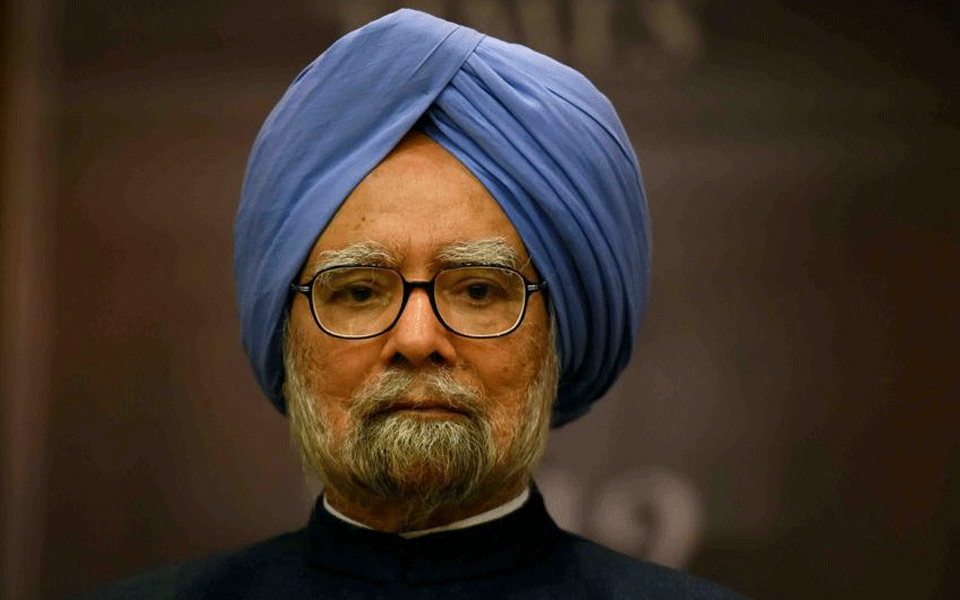
New Delhi: Prime Minister Narendra Modi should be shown exit door as his five-year rule has been "most traumatic and devastating" for India's youths, farmers, traders and every democratic institution, his predecessor Manmohan Singh said Sunday.
Singh, in an exclusive interview to PTI, dismissed the notion that there was a wave in favour of Modi and asserted that the people have made up their minds to vote out the government that "does not believe in inclusive growth and is only worried about its political existence at the altar of disharmony".
In one of his most fierce attacks on the Modi dispensation, Singh alleged that the past five years only witnessed "stench" of corruption peaking to "unimaginable proportions", adding demonetisation was perhaps the "biggest scam" of independent India.
Incidentally, the BJP campaign in the run-up to the 2014 elections had centred on various alleged scams, including in the allocations of 2G spectrum and coal blocks, during the 10-year tenure of the Singh-led UPA government.
The former prime minister also called Modi's Pakistan policy "slipshod", which he said was marred by a series of "flip-flops" -- from going to Pakistan uninvited to inviting "rogue" ISI to the Pathankot air base in connection with the probe into a terrorist attack.
Singh, known as the architect of India's economic reforms in 1990s, felt the country is headed for a slowdown and accused the Modi regime of leaving the country's economy in "dire straits".
He said people are "fed up" with the daily rhetoric and cosmetic change by the current dispensation and there is an undercurrent against this "illusion and boastful self aggrandizement".
In a bid to counter the BJP's focus on the issues of nationalism and terrorism in this election, the former prime minister sought to question Modi's commitment.
He said it was "distressing" to note that Modi was "filming movies" in the Jim Corbett National Park instead of chairing any meeting of the Cabinet Committee on Security (CCS) in the immediate aftermath of the Pulwama terror attack in which 40 CRPF personnel were killed.
He claimed the "gross intelligence failure" in Pulwama speaks volumes about this government's preparedness to tackle terror.
"Let's not forget that Narendra Modi's slipshod policy on Pakistan has been marred by a series of flip-flops- from going to Pakistan uninvited to inviting the rogue ISI to investigate the Pathankot Air Base terror attack. Does it not speak volumes about the strategic failures of Modi Government on national security front," he asked.
Singh said the Modi government's record on national security is "dismal" as incidents of terrorism have seen a quantum jump.
"A lie spoken a hundred times does not become the truth," he said on Modi's plank of nationalism, adding that terror attacks in Jammu and Kashmir alone have gone up by 176 per cent and ceasefire violations at the border with Pakistan up 1,000 per cent in the past five years.
He said that division and hate have become synonymous with the BJP and it thrives on societal fissures.
"A government which does not believe in inclusive growth and is only worried about its political existence at the altar of disharmony should be immediately shown the exit door," he noted.
He alleged that in the past five years the stench of corruption has peaked to "unimaginable proportions" and "there is a definite collusion of people holding political positions and scamsters who fled the country after defrauding banks".
Singh said the BJP's "political distress" emanates from its "failed track record" and claimed the party is searching for new narratives everyday. "This reflects the bankruptcy of a national security vision for the country."
"Five years of Modi Government is a sad story of governance and accountability failure. In the year 2014, Modiji came to power on the promise of 'acche din'. His five years rule has ended up being the most traumatic and devastating for India's youth, farmers, traders, businesses and every democratic institution," he said.
"Our socio-political ambience has lost cohesiveness. People are fed up with the daily loud rhetoric of cosmetic change. There is a sense of deep despair and disillusionment amongst the masses. People have made up their minds to reject the Modi Government and the BJP so that the future of India is safe and secure," Singh said.
The former Prime Minister said one man would not do any justice to the aspirations and hopes of the people by imposing the thought process and will of 'one person' on a diverse country like India.
"Representation in India is very important. A single man can neither represent all the desires of 130 crore people of India and can also not solve the variety of problems faced by them. The idea of 'one man as the monolith of knowledge' cannot be applied to India," he said on whether a presidential form of election is good for democracy.
On foreign policy, he said India has always been guided by national interests and not for "image building of any individual".
Foreign policy entails "gravitas", a sense of diplomacy and restraint, sensitivity towards the concerns of the host nation and ultimately furthering the interests of India, but "regrettably, this government's foreign policy is founded upon anything but a mature comprehension of diplomacy", he said.
Let the Truth be known. If you read VB and like VB, please be a VB Supporter and Help us deliver the Truth to one and all.
Sujit Nair raises concerns over speculation of DMK-AIADMK understanding to block TVK
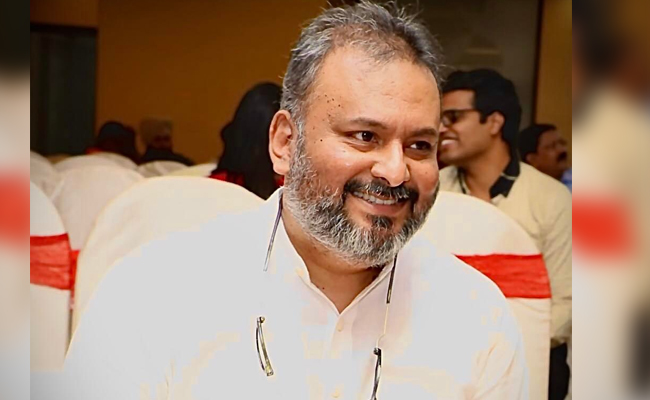
Chennai: Journalist and political commentator Sujit Nair has expressed concern over speculation that the Dravida Munnetra Kazhagam and the All India Anna Dravida Munnetra Kazhagam could explore a post-poll understanding to prevent Vijay-led Tamilaga Vettri Kazhagam from forming the government in Tamil Nadu.
In a social media post, Sujit Nair said the election verdict in Tamil Nadu reflected a clear public demand for political change and argued that the mandate should be respected irrespective of political preferences.
Referring to reports and political discussions surrounding a possible understanding between the DMK and AIADMK, he said he hoped such developments remained only speculative conversations and did not turn into reality.
Nair stated that if such an alliance were to take shape, it would raise serious questions about ideological politics in the country. He said TVK had emerged through a democratic electoral process and that the legitimacy to govern in a parliamentary democracy comes from the people’s verdict.
According to him, attempts to prevent an electoral winner from forming the government through unexpected political arrangements may be constitutionally valid, but many people could view them as politically opportunistic.
He further said that such a move could particularly affect the political image of the DMK, which has historically projected itself around ideology, social justice and opposition politics. Nair said that in ideological terms, the DMK appeared closer to TVK than to the AIADMK, and joining hands with its long-time political rival only to remain in power could weaken its broader political narrative.
He added that the same questions would apply to the AIADMK as well, as the party had spent decades positioning itself against the DMK and such an arrangement could create discomfort among its cadre and supporters.
Drawing a comparison with Maharashtra politics in 2019, Nair said he had expressed similar views when the Shiv Sena formed an alliance with the Indian National Congress and the Nationalist Congress Party after the Assembly elections.
He said post-poll alliances between long-standing political rivals often create a public perception that ideology and electoral mandates become secondary when political power equations come into play.
Nair also said such developments increase public cynicism towards politics and reinforce the belief among voters that ideology is often sidelined after elections.
He maintained that the Tamil Nadu verdict was emphatic and said respecting both the spirit and substance of the mandate was important for the credibility of democratic politics.