Modi's photos shared by Rahul were shot in morning: BJP
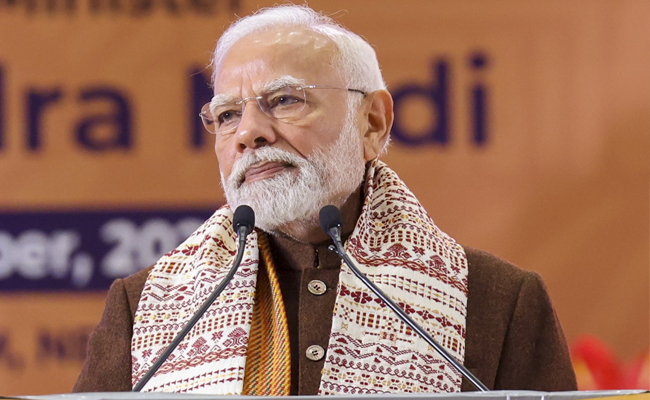
New Delhi : The BJP Friday dismissed Congress president Rahul Gandhi's claim that Prime Minister Narendra Modi attended a photo-shoot allegedly hours after the Pulwama attack on February 14 as "fake news", asserting that photographs were taken in morning.
"Rahul Ji, India is tired of your fake news. Stop sharing photos from that morning to shamelessly mislead the nation. Maybe you knew in advance of the attack but people of India got to know in the evening. Try a better stunt next time, where sacrifice of soldiers isn't involved," the BJP tweeted.
The BJP took on Gandhi after the Congress chief called Modi "prime time minister" and said he continued shooting for a film in Uttarakhand even three hours after news of the Pulwama terror strike came in.
He also attached photographs of Modi attending the photo-shoot and taking a boat ride in the scenic hilly state.
Let the Truth be known. If you read VB and like VB, please be a VB Supporter and Help us deliver the Truth to one and all.
Shivakumar’s CM aspiration natural, high command will decide: Parameshwara
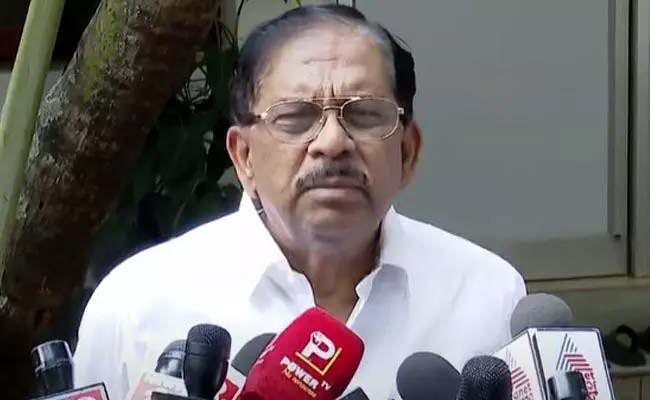
Bengaluru (PTI): Karnataka Home Minister G Parameshwara said on Saturday that Deputy CM D K Shivakumar, as the state Congress president, naturally aspires to become chief minister. However, he added that the final decision rests with the party's high command.
Amid ongoing speculation about a leadership change within the ruling Congress, he wished Shivakumar "good luck".
"I have always wished him so. There is nothing else; we are good friends. He is the PCC (Pradesh Congress Committee) president, and naturally, he has an aspiration to become the chief minister. Nobody can object to it. But it all depends on what the high command decides,” Parameshwara said in response to a question regarding Shivakumar’s aspiration for the CM post.
Speaking to reporters, he said, “Don’t always go back to the CM issue. Please understand there is nothing that I can tell you about it. If I were part of the decision-making body or inside the decision-making body, I could definitely provide information.”
Supporters of Shivakumar have been insisting on his elevation in line with a reported power-sharing agreement with chief minister Siddaramaiah when the party won the 2023 Assembly elections. Some have even claimed that "sweet news" is expected by May 15, which is Shivakumar’s birthday.
Speculation has been circulating within the Congress and political circles about a possible leadership change and cabinet reshuffle after May 4, once the results of the Assembly elections in four states and one union territory, along with bypolls to two Assembly segments in Karnataka, are announced.
However, AICC President Mallikarjun Kharge said on Thursday that there is no CM change in Karnataka "for now" and that the leadership issue in the state will be resolved soon.
On Friday, he said no date has been fixed yet to discuss a possible leadership change, while maintaining that any decision in this regard would be taken collectively by the party high command after due consultation.
Meanwhile, Parameshwara met senior Congress leader and MLC B K Hariprasad and Minister B Z Zameer Ahmed Khan over dinner on Friday. Hariprasad had met Siddaramaiah earlier in the day.
Responding to a question about discussions at the dinner, as his name is also being mentioned for the chief minister post amid calls for a "Dalit CM", the home minister said there was no discussion about the chief minister issue.
“Hariprasad told me that he met the CM, but he did not disclose what was discussed between them. Hariprasad, Zameer Ahmed Khan, and I met over dinner, and we discussed the elections held in four states and one union territory. We analysed the national-level political situation and naturally discussed the state’s political developments,” he said.
When asked if he would travel to New Delhi to meet the party high command, Parameshwara said, “I will definitely go to Delhi. Nobody can stop me from going there. I will go when it is required.”