Modi's return to power will be 'death knell' of all constitutional institutions: Yechury
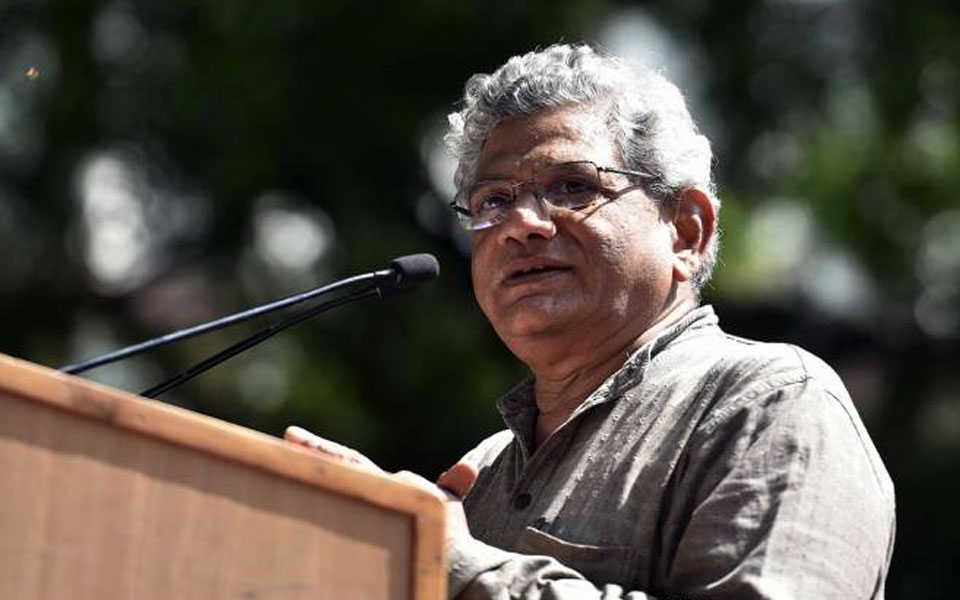
Kasargod (Kerala): The return of Narendra Modi to power will be the "death knell" of all the constitutional institutions in India, CPI(M) general secretary Sitaram Yechury said on Saturday.
He was speaking here at the inauguration of the northern region 'Kerala Samrakshana Yatra' which will be led by CPI state secretary Kanam Rajendran and will highlight the "failures" of the central government.
"Return of Narendra Modi to power will be the death knell of all the constitutional institutions in India. As of now, an attack has been launched against them. It will result in creating a wide gap between the rich and the poor in the society," Yechury said.
Speaking about the Pulwama attack, in which 40 CRPF personnel were killed, he said it should not be communalised for political gains.
"The Kashmir attack should be seen as a terrorist attack. The attack should not be communalised considering the religion of the terrorist and used for political gains. The country should stand together against terrorism," the CPI(M) leader said.
Yechury also said the Sabarimala issue is not going to have an impact on the upcoming Lok Sabha elections.
He said in West Bengal, both the Trinamool Congress and the BJP are political rivals of the communist party.
"The massive rally of the CPI(M) in Bengal shows our clout there but Trinamool was not allowing people to vote there. We have not made any deals with the Congress party, but the aim is to oust the Narendra Modi government. (We) will take decisions accordingly. The main aim is to defeat the BJP candidates," Yechury said, addressing thousands of Left Democratic Front (LDF) workers.
Ahead of the Lok Sabha polls, the LDF has organised two regional yatras in the state.
CPM state secretary Kodiyeri Balakrishnan began his march from the southern district of the state -- Thiruvananthapuram -- on Thursday and it was inaugurated by CPI general secretary S Sudhakar Reddy.
Both the marches will conclude on March 2 in Thrissur.
Let the Truth be known. If you read VB and like VB, please be a VB Supporter and Help us deliver the Truth to one and all.
Anbumani asks PM Modi to ban sale of cigarettes for those born after 2009
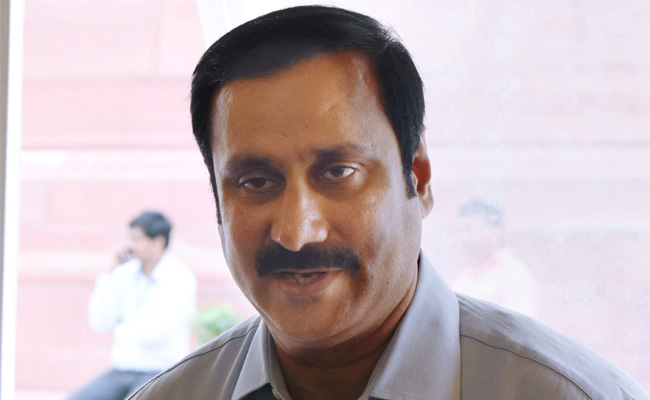
Chennai (PTI): PMK leader Anbumani Ramadoss on Saturday urged Prime Minister Narendra Modi to take legislative measures to prohibit smoking and the sale of cigarettes to individuals born on or after January 1, 2009, thereby creating a smoke-free generation.
Anbumani, former Union minister for health and family welfare, said, "Once implemented, it (ban on cigarettes) will ensure that future generations are legally prevented from ever accessing tobacco products", he said in a letter to Modi.
"I write to you with a deep sense of urgency and responsibility, drawing your kind attention to a critical public health issue that continues to endanger the lives of millions of Indians, particularly among the younger generation who are affected by cigarette smoking", he claimed.
Stating that India unfortunately bears a disproportionately high burden of tobacco-related morbidity and mortality, he said, adding that, according to global health estimates, nearly 267 million Indians, approximately one in five citizens, use tobacco.
"Each year, tobacco consumption directly accounts for over 1.35 million deaths, while exposure to second-hand smoke contributes to a total of approximately 2.3 million deaths annually", he said, adding, "these figures are alarming and reflect a public health crisis of immense magnitude".
He pointed out that Scientific evidence unequivocally establishes tobacco use as a leading cause of cancer and numerous non-communicable diseases, including cardiovascular ailments, chronic respiratory diseases such as COPD, and multiple forms of malignancies. "In India alone, tobacco is responsible for nearly 40–50 per cent of all cancer cases, with over 4.7 lakh deaths annually attributed to tobacco-induced cancers", he added.
"In this context, I strongly urge the Union government to consider enacting a transformative law similar to that of the United Kingdom, that permanently prohibits the sale and consumption of tobacco products for individuals born on or after a specified year (such as 2009). Such a generational ban would mark a decisive step towards eliminating tobacco use in India over time", he said.