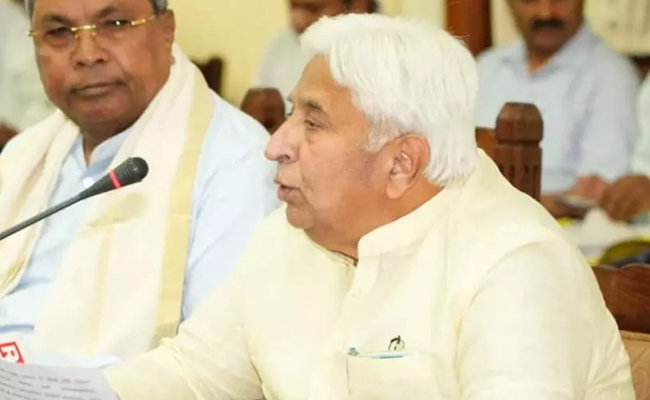
Monu Manesar sent to 14-day judicial custody in attempt to murder case
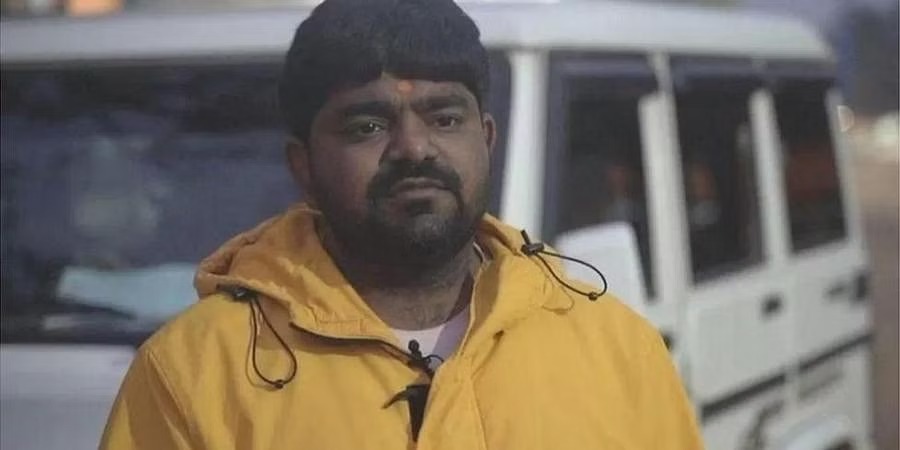
Gurugram (PTI): A Pataudi court Wednesday sent alleged cow vigilante and Bajrang Dal activist Monu Manesar to 14-day judicial custody in an attempt to murder case.
He was produced in the court after the completion of his four-day police remand on Wednesday.
The court of Chief Judicial Magistrate Tarannum Khan sent Mohit Yadav alias Monu Manesar in judicial custody in Bhondsi jail.
"Monu Manesar was produced in the court today and sent to judicial custody while further probe is underway," Pataudi Assistant Commissioner of Police Harinder Singh said.
Police said Monu Manesar will now appear in court on October 25 through video-conferencing due to security reasons.
Earlier on October 7, the Gurugram Police was granted his four-day production warrant. He was taken to Kanpur to recover the weapon used in the attempted murder case which was registered at Pataudi police station against him on February 7 this year.
In an application submitted before the court, the police said that during the remand they recovered a white Scorpio, a rifle and four cartridges at his instance.
"They have recovered a white bulletproof Scorpio, two empty shells of the bullets fired from the rifle used by the accused in the crime and four live cartridges of a .315 bore rifle were recovered," police said in the court.
According to police, the case is related to a brawl between two groups in Pataudi's Baba Shah Mohalla on February 6 when Manesar was there along with his group. A complaint was filed by Mubin Khan, a resident of the same locality, who alleged his son was shot at during firing between two groups.
Following the complaint, an FIR was registered under section 307 (attempt to murder) against Manesar at Pataudi police station.
"In the above case, two accused Lalit and Rakesh, residents of Pataudi, were arrested by Gurugram Police and sent to jail. The third accused Sunil alias Sulli had joined the investigation as per the order of the Punjab and Haryana High Court. Mohit alias Monu Yadav, a resident of Manesar, was wanted in this case and he was sent to judicial custody by the court. Further probe is underway," ACP Singh said.
Manesar was arrested in connection with the abduction and killing of Nasir and Junaid whose charred bodies were found in a vehicle on the Rajasthan-Haryana border on February 16 after they were allegedly abducted by some vigilantes who accused them of cow smuggling.
Let the Truth be known. If you read VB and like VB, please be a VB Supporter and Help us deliver the Truth to one and all.
Efforts of party cadres will be rewarded on May 4: DMK chief Stalin
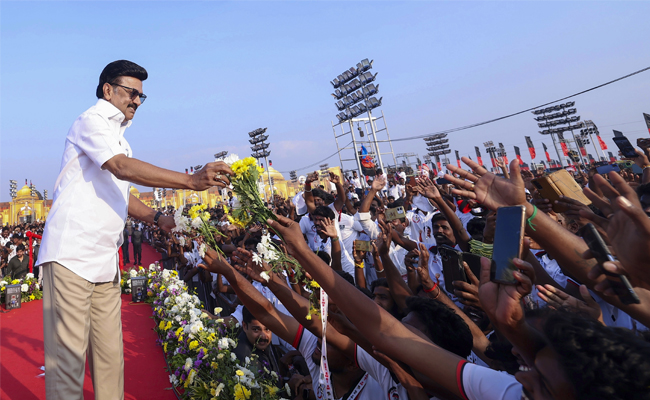
Chennai (PTI): Tamil Nadu Chief Minister M K Stalin on Friday said that the efforts made by his party cadres during the Assembly elections would be rewarded on May 4.
The counting of votes for the Assembly elections held on April 23 will be taken up on May 4.
"We are set to reap the rewards of the hard work put in by our party cadres on the coming fourth (May 4 counting day). There is absolutely no change in this and not even the slightest deviation," Stalin said at a May Day event here.
"There is no need for anyone to assume that I am speaking merely on the basis of exit polls," he added.
Stalin, who is also DMK chief, said that "good news" would come for those eagerly waiting for the election results.
Stating that the DMK governance is based on philosophy and principles, Stalin said, "This will continue."
He recalled the pivotal role of the then Chief Minister C N Annadurai, who first declared May Day as a government holiday, and subsequently, late CM M Karunanidhi, who was instrumental in extending it as a paid holiday across the nation.
"Responding to the request of Kalaingnar (Karunanidhi), the then Prime Minister V P Singh accepted the plea and declared it (May 1) a paid government holiday not merely for Tamil Nadu, but for the entire nation," Stalin said.