Most hospitalised COVID-19 patients have at least one symptom 6 months after falling ill: Study
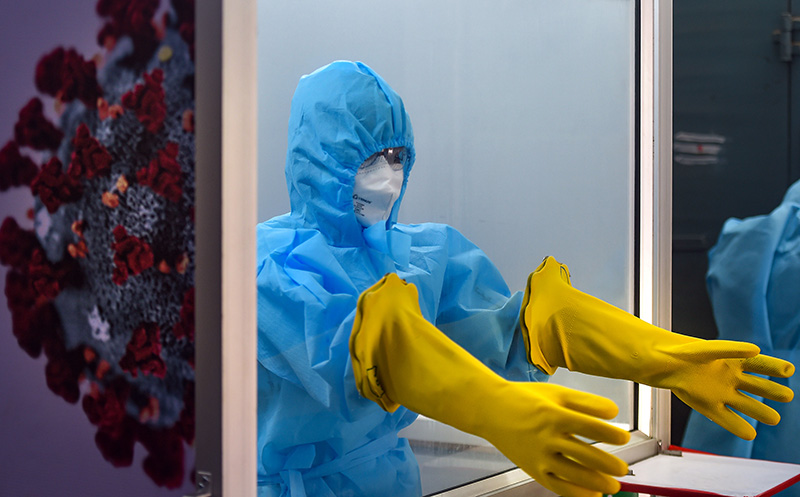
New Delhi: More than three-quarters of COVID-19 patients hospitalized for treatment have at least one ongoing symptom six months after initially becoming unwell, according to a study published in The Lancet journal.
The research looked at the long-term effects of the novel coronavirus infection in 1,733 patients first diagnosed in Wuhan, China between January and May followed by June and September.
In the study, scientists, including those from Jin Yin-tan Hospital in China, interviewed the patients face-to-face using questionnaires to evaluate their symptoms and health-related quality of life.
The discharged patients also underwent physical examinations, lab tests, and a six-minute walking test to gauge their endurance levels.
Nearly 400 patients also underwent further tests, including an assessment of their lung function, and 94 patients whose blood antibody levels were recorded at the height of the infection received a follow-up test.
According to scientists, the most common symptom to persist was muscle weakness (63 percent of cases), with patients also frequently experiencing sleep difficulties (26 percent).
They said anxiety or depression was reported among 23 percent of patients.
The study noted that hospitalized patients who were severely ill more often had impaired lung function and abnormalities detected in chest imaging -- which the scientists believe could indicate organ damage six months after symptom onset.
Since very few follow-up studies have been conducted in recovered patients so far, the scientists said little is known about the long-term health effects of COVID-19.
Those that have been conducted looked only at a small number of cases over a short follow-up period, they added.
"Our analysis indicates that most patients continue to live with at least some of the effects of the virus after leaving the hospital, and highlights a need for post-discharge care, particularly for those who experience severe infections," said study co-author Bin Cao, from National Center for Respiratory Medicine, China-Japan Friendship Hospital in China.
"Our work also underscores the importance of conducting longer follow-up studies in larger populations in order to understand the full spectrum of effects that COVID-19 can have on people," Cao said.
The scientists found that 76 percent of patients reported at least one ongoing symptom during the follow-up tests.
Patients with more severe illness commonly had reduced lung function, with 56 percent of those who required ventilation support experiencing the reduced flow of oxygen from the lungs to the bloodstream.
For patients who required supplemental oxygen therapy and those who did not require oxygen therapy, the researchers said the figures were 29 percent and 22 percent, respectively.
According to the study, patients with more severe disease performed worse in the six-minute walking test.
The scientists said 13 percent of patients whose kidney function was normal while in the hospital had reduced kidney function in the follow-up.
However, due to the way the data was analyzed, the researchers said it was not possible to determine if symptoms reported during follow-up were persistent following the infection, worsened after recovery, or occurred post-discharge.
The scientists believe further work is needed to compare differences in outcomes between inpatients and outpatients.
Let the Truth be known. If you read VB and like VB, please be a VB Supporter and Help us deliver the Truth to one and all.
Two injuries, one DNF, a DQ as India end messy World Relays campaign
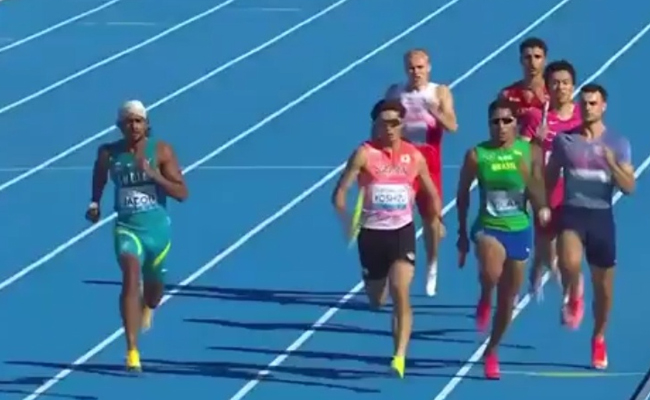
Gaborone (Botswana) (PTI): Amoj Jacob and Ragul Kumar got injured during the men's 4x400m and 4x100 races respectively as India ended their World Athletics Relays campaign in disappointment on the second day of competitions here on Sunday.
The Indian camp had high hopes of making the 2027 World Championships in the men's 4x400m relay but the team did not finish (DNF) the race as Jacob suffered cramps and pulled out of the race after taking the baton from the first leg runner Dharamveer Choudhary. Rajesh Ramesh and Vishal TK were to run in the third and fourth legs.
Those teams which could not qualify for the 2027 Beijing World Championships by reaching the final round of each of the six relay events on Saturday were given another chance in the second qualification round on Sunday.
The top two teams in each of the two heats (in all six relay events) booked the Beijing ticket on Sunday.
India will now have to try and qualify for the World Championships through the Top Lists of the World Athletics, which is a long and tedious process.
In the men's 4x100m race, third leg runner Ragul Kumar fell down the track after failing to hand over the baton inside the exchange zone to fourth leg runner Gurindervir Singh, which clearly showed the lack of coordination among the runners.
Harsh Santosh Raut and Animesh Kujur ran the first two legs.
The Indian quartet was disqualified and Kumar was seen being taken away from the Field of Play with the help of the volunteers.
It was a comedy of errors in the case of the women's 4x100m race, which saw the baton being dropped during an exchange between first leg runner Tamanna and second runner Nithya Gandhe, though the Indians finished the race in 53.09 seconds.
Gandhe started running quite a distance, but after realising that the baton was not in her hand, she turned and ran back to pick it up.
The only silver-lining for the Indian contingent was the national record time in the mixed 4x100m relay race, though the quartet of Ragul Kumar, Nithya Gandhe, Animesh Kujur and Sneha SS finished sixth in heat number two with a time of 41.35 seconds, bettering the previous national mark of 42.30 seconds set in March in Chandigarh.
The mixed 4x400m relay quartet of Theerthesh P Shetty, Kumari Saloni, Nihal William and Rashdeep Kaur ended at fifth in heat number one with a time of 3 minutes and 19.40 seconds.
On Saturday, all the five Indian relay teams had failed to make it to the respective final rounds and thus missed out on the 2027 World Championships berths.