Most of debris generated from India's anti-satellite test has decayed: DRDO Chairman
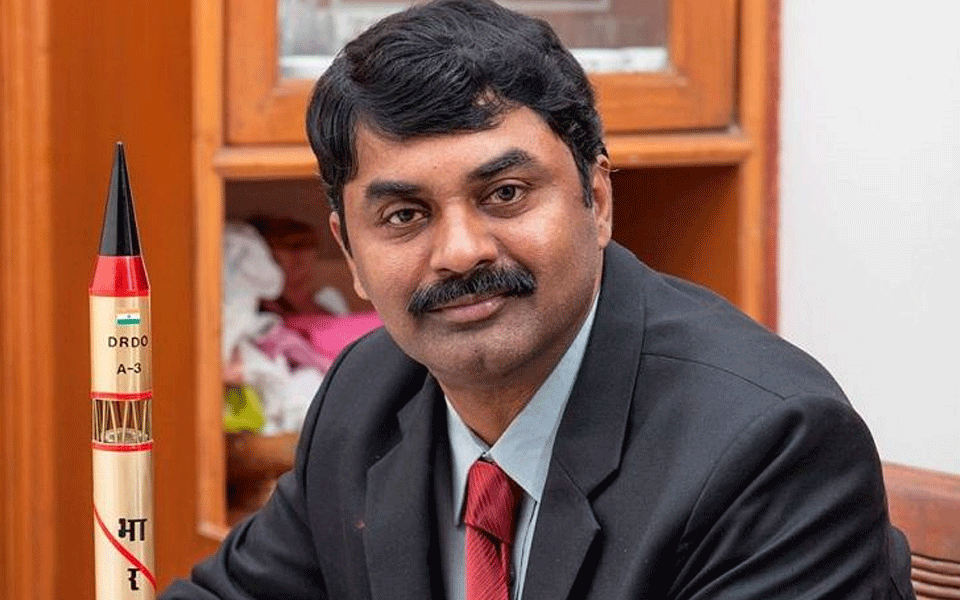
New Delhi: DRDO Chairman G Satheesh Reddy has said that most of the debris generated from from the anti-satellite test conducted by India in March have decayed and rest of it will dissipate in a "short period of time".
He said this in response to a question after delivering a talk on 'Technology for National Security' on Friday at the Institute for Defence Studies and Analyses (IDSA), a city-based think tank.
"As I had mentioned on April 6, the debris were to decay in a few weeks time. As per the information that we have already got, most of the debris have decayed. And, whatever, couple of pieces are there, they will be decaying in a short period of time," Reddy said.
The Defence Research and Development Organisation chief said the continuous information being received is monitored and "I don't think there are any issues".
"It is extremely difficult to predict as to how many days it would take...But, as I had said that day, that they would decay in a few weeks, and majority of them have decayed," he added.
On April 6 at a press conference at DRDO Bhawan here, Reddy had said India chose a much lower orbit of less than 300 km during 'Mission Shakti' for "capability demonstration" and to avoid threat of debris to global space assets.
His remark had come days after the National Aeronautics and Space Administration (NASA) raised concerns about the spread of debris from India's anti-satellite test conducted on March 27.
India's Ministry of External Affairs, too, has said the test was done in the lower atmosphere to ensure that there is no space debris.
On another question on leakage of defence know how-related data, he said, "We haven't seen cases as such, but we are careful".
"There are no serious issues as such, but of late, because of the apprehensions of cyber attacks and cyber-related issues, we are sensitising people in the industry and also in our own laboratories on it," he said.
Let the Truth be known. If you read VB and like VB, please be a VB Supporter and Help us deliver the Truth to one and all.
No 'bacterial infection' found in bodies of 4 Mumbai family members who died after eating watermelon
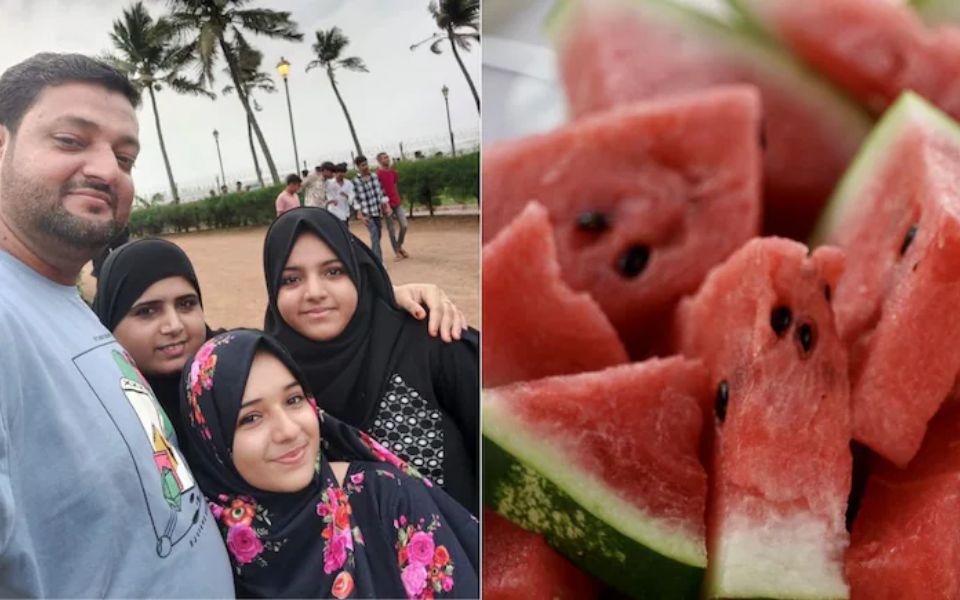
Mumbai (PTI): The initial report submitted by the microbiology department of a Mumbai-based state-run hospital has said no "bacterial infection" was detected in the bodies of four family members, who died after consuming watermelon recently, officials said on Wednesday.
The Dokadia family, residents of Ghari Mohalla on Ismail Kurte Road, had hosted a get-together of relatives on the night of April 25. At around 1 am (on April 26), hours after the guests had left, Abdullah Dokadia (40), his wife Nasreen (35), and daughters Ayesha (16) and Zaineb (13) ate pieces of a watermelon.
They suffered severe bouts of vomiting and diarrhoea in the early hours of April 26 and were rushed to a local hospital before being referred to the government-run J J Hospital where all four died during treatment.
After the incident, Mumbai police, forensic experts and Food and Drug Administration (FDA) officials visited the house and had collected samples of every food item that constituted the family's last meal, including 'chicken pulav', watermelon, water, and other foodstuffs, and sent them to the Forensic Science Laboratory for analysis.
After the post-mortem of the deceased, their viscera was preserved for chemical analysis.
As the probe is underway, the microbiology department of the state-run J J Hospital has submitted its initial report to the police.
"As per the report, no bacterial infection has been detected so far in the bodies of the victims. No bacteria was found in their blood," the official said.
The exact cause of the death will be known once the forensic science lab submits its report, he said.
"The report will also clarify whether any food items consumed by the family members during the day contained anything poisonous," the official said.