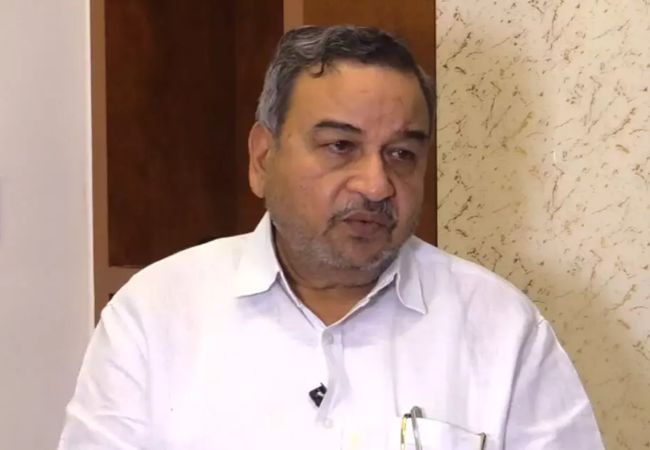
Motivational speaker Sonu Sharma slams govt, Supreme Court over Aravalli Hills order
Says If Aravalli falls, our future falls

New Delhi: Motivational speaker and life coach Sonu Sharma has strongly criticised the Narendra Modi-led central government and the Supreme Court over recent developments related to the Aravalli Hills, warning that the decisions could have long-term consequences for North India’s environment and air quality.
In a video posted on social media, Sharma questioned the logic behind treating parts of the Aravalli range measuring less than 100 metres in height as non-mountains, a position that has emerged from recent legal interpretations. Without naming specific judgments, Sharma said such reasoning effectively strips large portions of the ancient mountain range of legal protection and opens the door for large-scale mining.
The Aravalli range, considered one of the oldest mountain systems in the world, plays a crucial role in checking desertification, regulating climate and acting as a natural barrier against dust storms from the Thar desert. Environmentalists have long warned that continued degradation of the Aravallis could worsen air pollution in cities such as Delhi and accelerate ecological damage across Rajasthan, Haryana and the National Capital Region.
ALSO READ: French national injured after slipping while climbing hill in Hampi
In the video, Sharma argued that redefining mountains based on arbitrary height criteria amounts to legitimising environmental destruction. He compared it to denying basic human identity based on physical attributes, calling the approach illogical and dangerous. He claimed that in Rajasthan alone, nearly 12,000 peaks are part of the Aravalli system, and that only around 1,000 of them exceed 100 metres, leaving the vast majority vulnerable to legal mining activity.
Sharma also took aim at a televised statement by senior news anchor Rajat Sharma, who had said that Delhi’s pollution gets trapped because the city is shaped like a bowl surrounded by the Aravalli Hills. Sharma rejected the argument that the Aravallis are responsible for pollution, instead describing them as the “lungs of North India” whose destruction is aggravating the crisis.
Without directly naming the court, Sharma said institutions were issuing orders without understanding environmental realities. His remarks have been widely interpreted as a criticism of the Supreme Court’s recent stance on the Aravalli Hills, which has drawn concern from environmental groups who fear it may weaken safeguards against mining.
The video has gained significant traction online, given Sharma’s large following of over five million followers on Instagram and more than 13 million subscribers on YouTube. Many users echoed his concerns, saying unchecked mining and construction in the Aravallis would worsen water scarcity, air pollution and desertification.
Sharma ended his message with a call to protect the Aravalli range, warning that continued neglect would have irreversible consequences. “If the Aravalli falls, our future will also fall,” he said, urging citizens to speak up against policies and orders that, in his view, prioritise development over environmental survival.
View this post on Instagram
Let the Truth be known. If you read VB and like VB, please be a VB Supporter and Help us deliver the Truth to one and all.
Rajnath Singh chairs IGoM meet, urges constant vigil over West Asia crisis
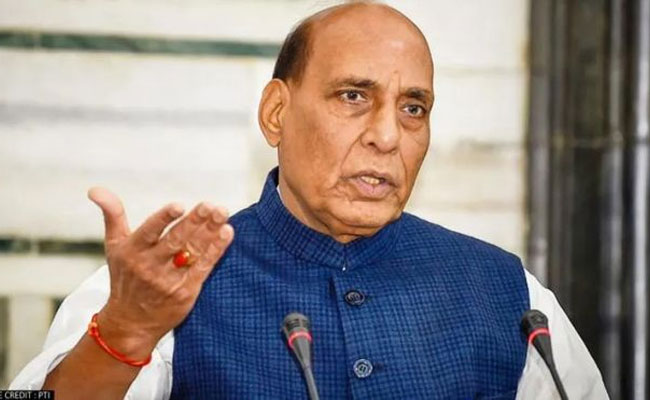
New Delhi (PTI): Defence Minister Rajnath Singh on Thursday emphasised the need for round-the-clock monitoring of the West Asia conflict and called for a calibrated response to deal with any eventuality to ensure that national interests remain protected.
Singh made the comments while chairing a high-level meeting of the Informal Group of Ministers (IGoM) set-up to monitor the situation in West Asia.
The meeting was attended by External Affairs Minister S Jaishankar, Finance Minister Nirmala Sitharaman, Oil Minister Hardeep Singh Puri, Power Minister Manohar Lal, Chemicals and Fertilizers Minister J P Nadda, Consumer Affairs Minister Prahlad Joshi and Minister of Railways, Information and Broadcasting, Electronics and Information Technology Ashwini Vaishnaw.
In view of the "uncertain situation", the defence minister underlined the importance of round-the-clock monitoring of the situation and the need to respond in a calibrated manner to deal with any eventuality, an official readout said.
He stressed on the need to leave no stone unturned to ensure that the people of the country face the minimum effect of the conflict, it said.
It was the second meeting of the IGoM after it was set up last month.
The IGoM was apprised of the measures being taken by the government in the wake of the ongoing West Asia conflict, Singh said on social media.
"We also deliberated upon the next steps to be taken by the government to mitigate any adverse impact arising due to the ongoing conflict," he said.
The defence ministry said in the readout said, "In the meeting, the seven empowered groups of secretaries briefed the IGoM on the steps being taken to tackle the situation."
"The IGoM was apprised about measures undertaken by the Ministry of Finance to address concerns arising due to global trade disruptions and provide relief and support to the industry, especially manufacturing, and bolster investor confidence," it said.
It listed measures including notification issued on Wednesday on full customs duty exemption on 40 critical petrochemical products till June 30.
The ministry also mentioned announcement of a special one-time relief measure for eligible units in SEZs to sell manufactured goods in Domestic Tariff Area (DTA) at concessional customs duty rates to be effective from April 1 to March 31.
It also noted another notification issued by the Department of Revenue clarifying that the provisions of GAAR (General Anti Avoidance Rules) will not be invoked in respect of investments made prior to April 1, 2017.
"These measures will reduce cost pressures on downstream sectors including textiles, packaging and pharmaceuticals, facilitate supply stability in the country and provide requisite clarity for investors contemplating investments in India," the readout said.
Defence Minister Singh appreciated the government's decision to impose a 25 per cent cap on the monthly increase in aviation turbine fuel prices for domestic operations, with effect from April 1.
This step will help protect the people from sudden increase in fares, he said.
The government has accorded highest priority to domestic LPG supply, with refinery production enhanced to fully meet consumption requirements, according to the readout.
"The IGoM was informed that there have been no reports of dry-out at LPG distributorships, and delivery of domestic LPG (liquefied petroleum gas) cylinders continues as per the normal schedule. The temporary supply concerns arose due to instances of hoarding and black marketing, which triggered panic buying in certain areas," it said.
The ministers were informed that strict enforcement action is being undertaken, with raids being carried out across multiple states and Union territories to curb hoarding and black marketing of LPG, the ministry said in the readout.
Action has also been taken against some LPG distributors who engaged in malpractices, it said.
"To support migrant labour and low-consumption households, the government is ensuring adequate availability of 5 kg free trade LPG cylinders, and since March 23, over 4.3 lakh such cylinders have been sold. Special focus is being given to states where demand is higher," it said.
The IGoM was apprised that industrial requirements dependent on commercial LPG are being met, with over 80 per cent of pre-crisis supply levels being maintained to ensure continuity of operations.
"Special meetings have been held with ministries and stakeholders of different industries to understand their demand and meet their needs. Oil PSUs are ensuring continued supply of Auto LPG across the country," the readout noted.
"However, some supply constraints are being faced by private operators due to their procurement challenges, which is why lines are being observed at PSU auto LPG pumps. Wherever the autos are dual feed and can use petrol, they are being encouraged to use petrol," it said.