MP: Folk singer booked over cartoon on Sidhi urination incident

Bhopal/Indore, Jul 7: Popular folk singer and writer Neha Rathore was booked on Friday for allegedly posting a cartoon on Twitter on the urination incident in Sidhi in Madhya Pradesh, a police official said.
Rathore has been booked under relevant sections of the Indian Penal Code, including section 153 A (promoting enmity between different groups), on the complaint of Madhya Pradesh BJP SC Cell media in charge Suraj Khare, said Habibganj police station in-charge Manish Raj Bhadoria.
Khare said Rathore, who gained popularity from her song 'UP me ka ba', had posted a cartoon showing a man in a saffron outfit urinating on a man.
In Indore, an FIR was lodged during the day against tribal leader Lokesh Mujalda and journalist Abhishekh A on the complaint of RSS activist Surendra Singh Alawa for sharing social media posts containing cartoons against the Rashtriya Swayamsevak Sangh in the backdrop of the urination incident, police said.
The cartoon, shared on Facebook and Twitter, showed a person in RSS uniform in an allegedly objectionable manner as per the complainant, a police official said.
They have been charged under Sections 153-A (promoting enmity between different groups), 504 (intentional insult with intent to provoke breach of public peace), 505 (ii) (statements conducing to different classes) of the Indian Penal Code as well as provisions of the Information Technology Act, an official said.
Santosh Singh, in-charge of MG Road police station, said action would be taken after a probe.
After the FIR was lodged, journalist Abhishek tweeted, "Friends, I shared a cartoon about the Sidhi incident. The cartoon has hurt the sentiments of some friends. Therefore, the cartoon has been deleted and I apologize. I have no intention of hurting anyone."
Meanwhile, BJP's Legal Cell's Indore unit convener Nimesh Pathak said they have lodged a complaint against folk singer Neha Singh Rathore at the Choti Gwaltoli police station in the city.
Pathak alleged Rathore had shared an objectionable cartoon on Twitter but added that police were yet to register a case on their complaint.
A man identified as Pravesh Shukla was arrested after a video of him urinating on a tribal youth went viral on social media on Tuesday.
Let the Truth be known. If you read VB and like VB, please be a VB Supporter and Help us deliver the Truth to one and all.
Mumbai-Pune Expressway ‘missing link’ to open on May 1; will improve travel safety: Shinde
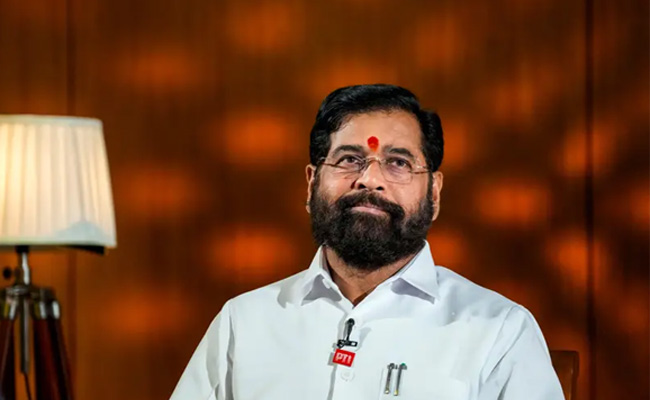
Mumbai (PTI): Maharashtra Deputy Chief Minister Eknath Shinde on Sunday said the long-awaited ‘missing link’ on the Mumbai-Pune Expressway, aimed at bypassing the winding Bhor Ghat section and improving safety, will be inaugurated on May 1.
Shinde, who inspected the project site, said the new stretch will make the expressway fully access-controlled, easing congestion in the hilly section.
Chief Minister Devendra Fadnavis is likely to inaugurate the 13.3-km-long missing link, which connects Khopoli on the Mumbai side to Kusgaon near Lonavala, on Maharashtra Day, which is celebrated on May 1, he said.
The deputy CM said that 99 per cent of the project work has been completed. “I personally inspected the quality of work and found it satisfactory. The remaining minor works will be completed in the next few days,” Shinde said.
Shinde said the new alignment will bypass sharp curves and accident-prone stretches in the ghat section, helping reduce delays and improve commuter safety. He claimed accidents in the section would reduce substantially once the project becomes operational.
“The missing link project will make travel between Mumbai and Pune quicker, safer and more convenient, and will contribute significantly to the state’s development,” he said.
The Rs 6,700-crore project, developed by the Maharashtra State Road Development Corporation (MSRDC), includes two tunnels, high viaducts and a cable-stayed bridge over Tiger Valley.
The missing link will reduce the travel distance between Mumbai and Pune by approximately 6 km and shorten the journey time by 20 to 30 minutes, said officials.
Initially, only light motor vehicles and buses will be permitted on the new stretch to reduce congestion on the existing ghat section, officials said, adding that heavy goods vehicles will be prohibited due to safety concerns.
“There will be no toll hike because of the missing link project. No increase has been proposed at the Khalapur toll plaza either,” Shinde said.
The project comprises two eight-lane tunnels of 1.75 km and 8.92 km in length and two viaducts measuring 850 metres and 650 metres, said officials. It has been designed to bypass the old Khandala ghat section, a winding route that has long slowed down traffic and posed safety risks, said officials.
The 650-metre viaduct will feature what officials described as India’s tallest road cable-stayed bridge, with pylons rising to 182 metres, taller than those on the Bandra-Worli Sea Link.
Officials claimed that the tunnels have a width of 23.75 metres and are among the widest road tunnels in the world. An MSRDC official said the tunnel is likely to be included in the Guinness Book of Records.
The route runs beneath the Lonavala lake area and was executed in difficult terrain marked by heavy rainfall and strong winds, officials said.
Shinde said projects such as the missing link would boost access to tourist destinations such as Lohagad Fort, Visapur Fort and Karla Caves.
MP Shrirang Barne, former corporator Abasaheb Bagul, MSRDC Managing Director Anilkumar Gaikwad and senior engineers from executing agencies were present during the inspection, officials said.
Krishnamurthy Subramanian, executive chairman of construction and engineering company Afcons International Private Limited, said the journey to completion of “India’s highest road cable-stayed bridge” was challenging.
“The bridge, located in the Sahyadri region, presented extreme challenges, including narrow ridges that left little room for heavy machinery, sudden wind speeds reaching up to 100 kmph, and dense fog reducing visibility to a few metres. Despite these conditions, we are proud to deliver this engineering marvel,” he said.
The expressway, spanning approximately 95 km, holds the distinction of being India's first access-controlled highway.