MP Home minister orders probe into college principal’s notice to ban ‘Hijab’ inside premises
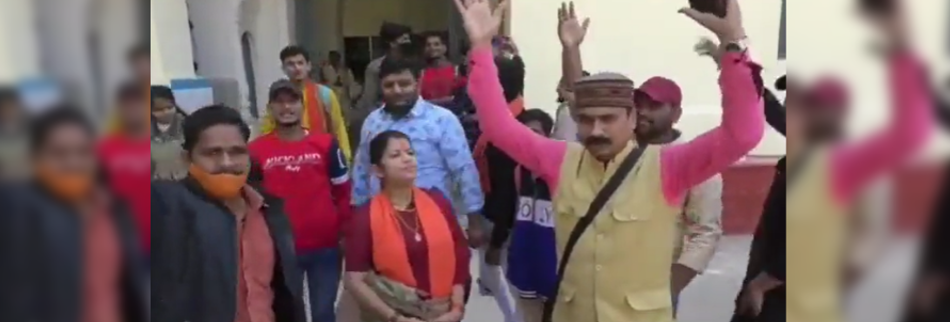
Bhopal/Datia, Feb 15: The Madhya Pradesh government has ordered an inquiry after a video showed a group of people raising "Jai Shriram" slogans on seeing two girls clad in burqa and hijab entering a government college in Datia town.
Ordering the inquiry, state Home Minister Narottam Mishra, who is the government spokesman, reiterated on Tuesday that there was no proposal to ban the wearing of the hijab in Madhya Pradesh.
The viral video clip showed some young men raising slogans of 'Jai Shriram' after seeing two girls clad in burqa and hijab entering the campus of the government post-graduate college in Datia. This incident occurred on Monday (February 14).
The college had recently issued an order banning students from wearing religious attire, including hijab.
Datia is a living example of communal harmony. I have seen the video of Datia PG College. I have directed the district collector to inquire into the order issued by its principal. The state government has already clarified that there is no proposal to ban hijab in Madhya Pradesh and nobody should create confusion on this issue, Mishra, who is MLA from Datia, said in a video statement.
Ajay Singh Raj, a Bajrang Dal activist, had said in a statement that saffron activists had paid a surprise visit to the Datia PG college campus and found that some students reached there wearing burqa and hijab, "which is not as per the Constitution".
"If this (wearing of burqa and hijab) continues, Hindu students will reach the said college in the 'bhagwa' (saffron) uniform," he said and threatened to launch an agitation against the college management.
Meanwhile, Congress MLA from Bhopal (Central) Arif Masood thanked the state home minister for ordering an inquiry.
He said since the state government had already clarified that there was no proposal on cards to ban the wearing of hijab on campus, the educational institutions should not bear any confusion in mind in this regard. He urged people to refrain from spreading misinformation on this issue.
"I appeal to educational institutions to protect students as examinations are underway," the MLA added.
Today in Datia,Madhya Pradesh,
— Mister J. (@Angryoldman_J) February 15, 2022
people of Hindu organization raised slogans of 'Jai Shri Ram' in front of Muslim girls wearing hijab-burqa in PG College.
After which the college administration banned from wearing a burqa to the college. #HijabRow #Hindutva pic.twitter.com/FNJTgikckc
Let the Truth be known. If you read VB and like VB, please be a VB Supporter and Help us deliver the Truth to one and all.
Congress using hijab issue to pacify minority anger, alleges Karnataka LoP R Ashoka
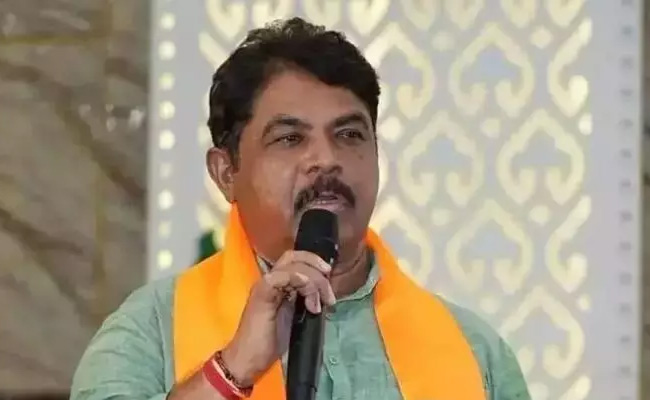
Bengaluru: Leader of Opposition in the Assembly R. Ashoka has accused the Congress government of using the hijab issue to placate what he described as discontent among minority voters after the Davanagere by-election.
In a post on X on Wednesday, Ashoka alleged that the state government, instead of addressing issues such as price rise, corruption, farmers’ distress and law and order, was attempting to retain its minority vote base by reviving the hijab issue.
Referring to the 2022 dress code introduced by the BJP government, which prohibited hijab in schools and colleges, Ashoka said the Karnataka High Court had upheld the policy and emphasised the importance of discipline in educational institutions.
He questioned the Congress government’s move to revisit the issue and asked whether setting aside the court-backed policy to benefit one community could be described as secularism.
Ashoka further alleged that while the government was willing to permit hijab, it continued to prohibit saffron shawls.
He accused the government of dividing students on religious lines rather than treating schools and colleges as spaces of equality.
Drawing a comparison with Mamata Banerjee’s government in West Bengal, Ashoka claimed that excessive appeasement politics had harmed the state and warned that the Congress in Karnataka could face a similar political response.
He said voters in Karnataka would teach the Congress a lesson for what he termed “vote-bank politics” and for compromising constitutional and judicial principles.