MP: Man kills 14-year-old daughter, rapes her corpse in Guna district

Guna, Feb 23: In a shocking incident, a handicapped man allegedly killed his 14-year-old daughter after she turned down his advances and raped her corpse at a village in Madhya Pradesh's Guna district, police said on Wednesday.
The police have arrested the 40-year-old accused, who is a resident of Jaita Dongar village in Bajranggarh police station limits, superintendent of police Rajiv Kumar Mishra said.
The accused had on Tuesday lodged a police complaint that his minor daughter had gone missing from home, following which a probe was initiated, he said.
During the investigation, the accused's neighbours informed the police that the victim was last seen with her father on Tuesday afternoon, the official said.
On interrogation, the accused broke down and confessed that he had taken his daughter to Damdoli forest around 12 pm with the intention of raping her, he said.
However, when the girl threatened to inform other family members, the accused allegedly strangled her and then raped the corpse, the official said.
Based on the information provided by the accused, a police team was sent to the forest and the body was recovered, Mishra said, adding that forensic evidence was also collected from the spot.
The accused has been booked under the relevant sections of the Indian Penal Code (IPC) for murder and rape, he added.
Let the Truth be known. If you read VB and like VB, please be a VB Supporter and Help us deliver the Truth to one and all.
Congress using hijab issue to pacify minority anger, alleges Karnataka LoP R Ashoka
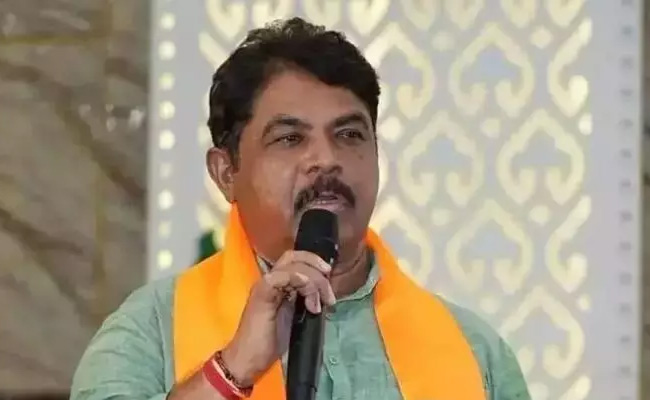
Bengaluru: Leader of Opposition in the Assembly R. Ashoka has accused the Congress government of using the hijab issue to placate what he described as discontent among minority voters after the Davanagere by-election.
In a post on X on Wednesday, Ashoka alleged that the state government, instead of addressing issues such as price rise, corruption, farmers’ distress and law and order, was attempting to retain its minority vote base by reviving the hijab issue.
Referring to the 2022 dress code introduced by the BJP government, which prohibited hijab in schools and colleges, Ashoka said the Karnataka High Court had upheld the policy and emphasised the importance of discipline in educational institutions.
He questioned the Congress government’s move to revisit the issue and asked whether setting aside the court-backed policy to benefit one community could be described as secularism.
Ashoka further alleged that while the government was willing to permit hijab, it continued to prohibit saffron shawls.
He accused the government of dividing students on religious lines rather than treating schools and colleges as spaces of equality.
Drawing a comparison with Mamata Banerjee’s government in West Bengal, Ashoka claimed that excessive appeasement politics had harmed the state and warned that the Congress in Karnataka could face a similar political response.
He said voters in Karnataka would teach the Congress a lesson for what he termed “vote-bank politics” and for compromising constitutional and judicial principles.