MP Raghav Chadha's Z-plus security cover withdrawn by Punjab govt
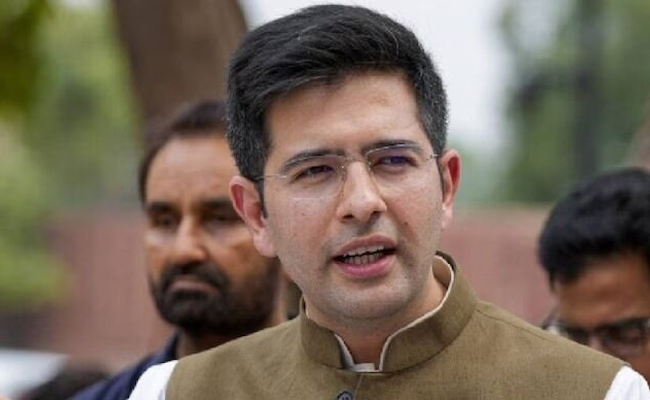
Chandigarh (PTI): Days after a verbal spat between MP Raghav Chadha and the AAP over his removal from the post of deputy leader in the Rajya Sabha, the Punjab government has withdrawn his Z-plus category security cover, it has been learnt.
Chadha is a Rajya Sabha MP from Punjab and was accorded by the state government a Z-plus category security cover.
The cover was withdrawn a few days ago, sources said.
The Aam Aadmi Party on April 2 announced the replacement of Chadha with MP Ashok Mittal for the post of deputy leader in Rajya Sabha.
Chadha said he had been "silenced, not defeated", attracting a retort by his party, which accused him of engaging in "soft PR" and restraining himself from raising his voice against Prime Minister Narendra Modi and the Centre in Parliament.
Punjab Chief Minister Bhagwant Mann said he believed Chadha was "compromised" for denying the party whip.
"If Chadha is unwilling to speak on issues like the 'deletion' of votes in West Bengal, stage a walkout from Parliament on important issues or raise a voice against the arrest of several AAP volunteers and leaders in Gujarat, then it is breaking the party line and going against the party whip," Mann earlier said.
Punjab AAP leaders, including Cabinet minister Harpal Singh Cheema, too attacked Chadha, accusing him of failing to raise the state's issues in Parliament.
Responding earlier, Chadha shared a video showing his interventions on key issues affecting Punjab.
Meanwhile, the Shiromani Akali Dal (SAD) and Congress criticised the AAP government over the withdrawal of Chadha's Z-plus security cover.
SAD leader Bikram Singh Majithia alleged that a government which claims to represent ordinary households has completely "politicised" the Punjab Police.
He demanded that the DGP explain the grounds Chadha was earlier granted security and now its withdrawal.
"Chief Minister Bhagwant Mann and Arvind Kejriwal are misusing the Punjab Police on a large scale for political interests. While police and vigilance agencies are being used against political opponents, the force is not being deployed adequately for the safety of Punjab's people," Majithia alleged in a statement.
He claimed that Chadha was also given a residence in Chandigarh.
Leader of the Opposition Partap Singh Bajwa said the BJP and AAP may pretend to be at loggerheads, but they are two sides of the same coin, "misusing agencies" to settle political scores.
"When it suits them, they scratch each other's back, the security cover to Raghav Chadha exposes this convenient nexus," he said.
"Both have conveniently buried cases like DIG Harcharan Singh Bhullar and (former minister) Laljit Singh Bhullar, where no real action has been taken. People can see through this charade, this isn't law taking its course , it's pure 'noora kushti'. Punjabis know that it is collusive politics," Bajwa said on X.
Let the Truth be known. If you read VB and like VB, please be a VB Supporter and Help us deliver the Truth to one and all.
Guv Gehlot clears bill paving way for Panchayat elections through ballots
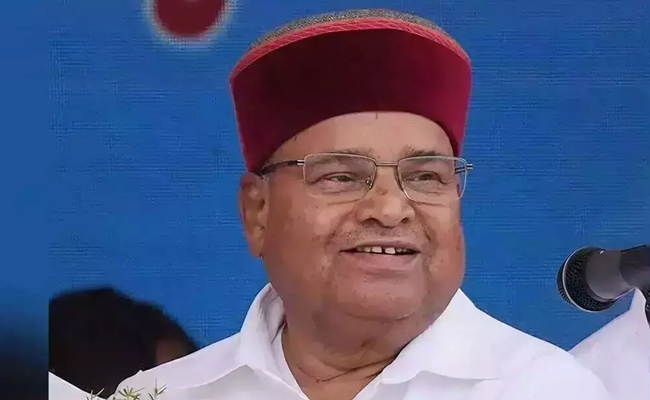
Bengaluru (PTI): Karnataka Governor Thaawarchand Gehlot has given his assent to the Karnataka Gram Swaraj and Panchayat Raj (Amendment) Act that will pave the way for holding the Panchayat elections through ballots instead of Electronic Voting Machines (EVMs).
Following the assent, the Act was notified in the state gazette on Wednesday.
The bill was passed by both houses of the Karnataka legislature in March during the budget session, amid protests by the opposition BJP.
As per the law, the principle of secrecy of the ballot is a cornerstone of free and fair elections, as recognised by the judiciary, which emphasised that the secrecy of the ballot protects voters from coercion, intimidation, and undue influence, thereby safeguarding the sanctity of the democratic process in several judgments of the Supreme Court.
Some concerns have been raised regarding the functioning of EVMs, necessitating a return to the robust secret ballot paper system to restore public trust, according to the Act.
Justifying its decision, the Karnataka government said there is “a growing consensus on the need to strengthen electoral mechanisms that prioritise anonymity and transparency”.