MP: White fungus case reported in Jabalpur, doctor says it's common, curable
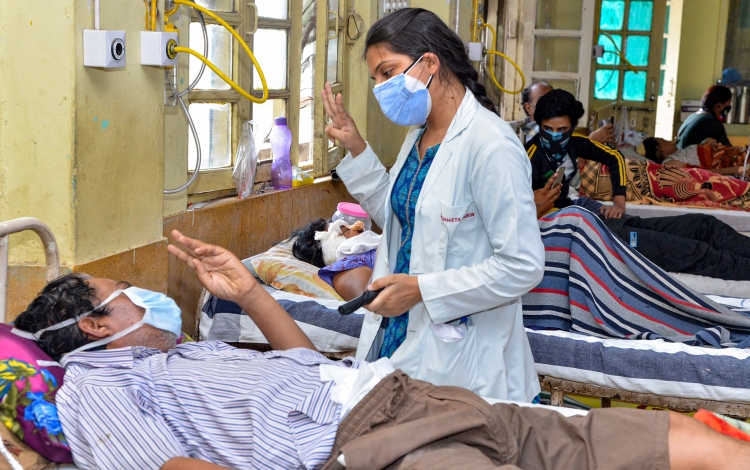
Bhopal, May 22: A 55-year-old man who had recovered from COVID-19 has been diagnosed with 'white fungus', a type of fungal infection, in Jabalpur in Madhya Pradesh even as the state is dealing with an outbreak of mucormycosis or 'black fungus' among coronavirus patients or survivors, a health official said.
Though it was said to be the `first reported case' in the state during the ongoing second wave of coronavirus pandemic, a senior doctor said white fungus is quite common and curable.
Known as Aspergillus Flavus infection in medical parlance, it is not a new disease, nor is it as fatal as mucormycosis, and is curable with commonly available medicines, she said.
The 55-year-old patient was operated on May 17 after complaining of persistent headache and eye pain and a test on Friday revealed that he had white fungus in the nose, said Dr Kavita Sachdeva, head of the ENT department at government-run Netaji Subhash Chandra Bose Medical College hospital in Jabalpur.
"He is recovering well and will be discharged shortly," she said.
White fungus is curable with commonly available medicines and does not need expensive injections unlike in the case of mucormycosis, nor is it as deadly, Dr Sachdeva added.
"White fungus is not rare and many people have been cured of it," she said.
This infection is more common in rural areas as it is carried by dust, hay or other such particles, she said.
"It has no direct connection with diabetes, but diabetes aggravates most infections, bacterial and fungal," she added.
On average, five white fungus patients visit the hospital a month, Dr Sachdeva said.
"By contrast, mucormycosis is rare. We get eight to ten cases in the entire year," she added.
Meanwhile, MP Medical Education Minister Vishwas Sarang said on Saturday that the state has reported 650 confirmed cases of black fungus so far.
Let the Truth be known. If you read VB and like VB, please be a VB Supporter and Help us deliver the Truth to one and all.
Allahabad HC orders probe into 'reinstatement' of teacher in UP's Barabanki
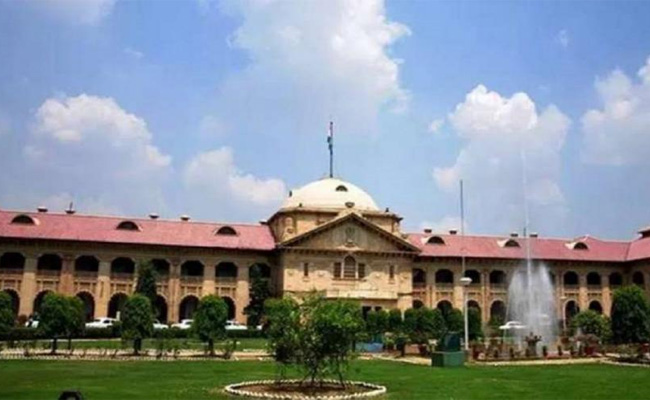
Lucknow (PTI): The Lucknow Bench of the Allahabad High Court on Friday ordered a probe by the special task force (STF) into alleged irregularities in the rejoining of a teacher at City Intermediate College in Barabanki, observing that the reinstatement appeared to be prima facie illegal.
The court also directed the recovery of the salary paid to the teacher during the disputed period.
A bench of Justice Rajeev Singh passed the order on a petition filed by the college management committee. The court expressed doubts over the roles of the District Inspector of Schools (DIOS), Barabanki, the college principal and the teacher concerned and hence, directed a detailed inquiry into the matter.
Taking note of alleged manipulation of records and misleading submissions, the court ordered the immediate transfer of the Barabanki DIOS to ensure a fair probe. It also directed the initiation of disciplinary proceedings against the then joint director of education of the Ayodhya division.
In its order, the court found that the teacher, Abhay Kumar, was initially appointed as an assistant teacher in 2018 but joined an Eklavya Model Residential School in Chhattisgarh as a lecturer in June 2024 without obtaining permission from the management. His subsequent request to retain the lien was rejected.
Despite this, he was allowed to rejoin the Barabanki College in September 2025 on the directions of the joint director of education and the DIOS, and was even paid the salary for October 2025. The court termed the rejoining "wholly illegal" and lacking any legal basis.
The bench also expressed concern over lapses in communication within the education department and directed the Uttar Pradesh chief secretary to ensure that official orders are communicated through email and WhatsApp as well, to prevent disputes.
The matter is next listed for hearing on May 28 when a compliance report is sought.