Mumbai CP posts video of Ranas having tea at police station to counter ill-treatment claim
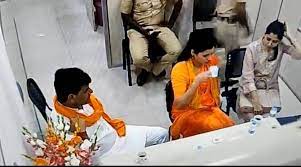
Mumbai, Apr 26: After Amravati MP Navneet Rana wrote to Lok Sabha Speaker Om Birla claiming she was not given water to drink and also faced casteist slurs at Khar police station after her arrest last Saturday, Mumbai police commissioner Sanjay Pandey on Tuesday tweeted a video of the parliamentarian and her MLA husband Ravi Rana sipping tea while in police custody.
The Mumbai police commissioner tweeted a 12-second video from his verified Twitter handle @sanjayp_1 at 2 pm with the caption, "Do we say anything more".
The video clip shows the Rana couple sitting on chairs and sipping tea in front of police officials at Khar police station. Bottles of mineral water are also seen on the table in front of them.
Slapped with sedition charge, the Independent MP from Amravati Rana had written to the Lok Sabha speaker, claiming that her arrest by Mumbai Police was illegal and alleged "inhuman treatment" in Khar police station.
In her letter, the MP stated that she was being put up at the police station without due regard to the office held by her and not given drinking water while in police custody. Navneet Rana also alleged that she was abused due to her caste.
She sought action against the Mumbai commissioner of police and other top officers over her arrest.
The Lok Sabha Secretariat on Monday sought details from the Maharashtra government within 24 hours following the allegations made by Navneet Rana against the police after her arrest.
"I was taken to the Khar Police Station on 23.04.2022 and I spent the night in the police station on 23.03.2022...I made several and repeated demands for drinking water throughout the night, however, no drinking water was provided to me throughout the night", Navneet Rana had said in the letter.
Navneet Rana and Ravi Rana were arrested on Saturday after they gave a call for the chanting of the Hanuman Chalisa outside Chief Minister Uddhav Thackeray's private residence 'Matoshree' in Mumbai, which had triggered angry protests by Shiv Sainiks. The couple later withdrew their call, citing Prime Minister Narendra Modi's visit to Mumbai for an event.
The video tweeted by the Mumbai police commissioner has been retweeted multiple times and evoked several 'likes' from netizens.
The lawmaker couple is currently in judicial custody. The sessions court in Mumbai has posted their bail application for hearing on April 29.
Navneet Rana is lodged at Byculla jail in Mumbai and Ravi Rana at Taloja jail in Navi Mumbai.
Do we say anything more pic.twitter.com/GuUxldBKD5
— Sanjay Pandey (@sanjayp_1) April 26, 2022
Let the Truth be known. If you read VB and like VB, please be a VB Supporter and Help us deliver the Truth to one and all.
Congress using hijab issue to pacify minority anger, alleges Karnataka LoP R Ashoka
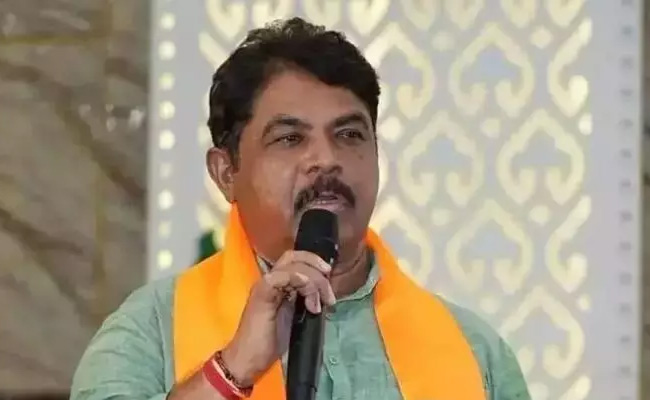
Bengaluru: Leader of Opposition in the Assembly R. Ashoka has accused the Congress government of using the hijab issue to placate what he described as discontent among minority voters after the Davanagere by-election.
In a post on X on Wednesday, Ashoka alleged that the state government, instead of addressing issues such as price rise, corruption, farmers’ distress and law and order, was attempting to retain its minority vote base by reviving the hijab issue.
Referring to the 2022 dress code introduced by the BJP government, which prohibited hijab in schools and colleges, Ashoka said the Karnataka High Court had upheld the policy and emphasised the importance of discipline in educational institutions.
He questioned the Congress government’s move to revisit the issue and asked whether setting aside the court-backed policy to benefit one community could be described as secularism.
Ashoka further alleged that while the government was willing to permit hijab, it continued to prohibit saffron shawls.
He accused the government of dividing students on religious lines rather than treating schools and colleges as spaces of equality.
Drawing a comparison with Mamata Banerjee’s government in West Bengal, Ashoka claimed that excessive appeasement politics had harmed the state and warned that the Congress in Karnataka could face a similar political response.
He said voters in Karnataka would teach the Congress a lesson for what he termed “vote-bank politics” and for compromising constitutional and judicial principles.