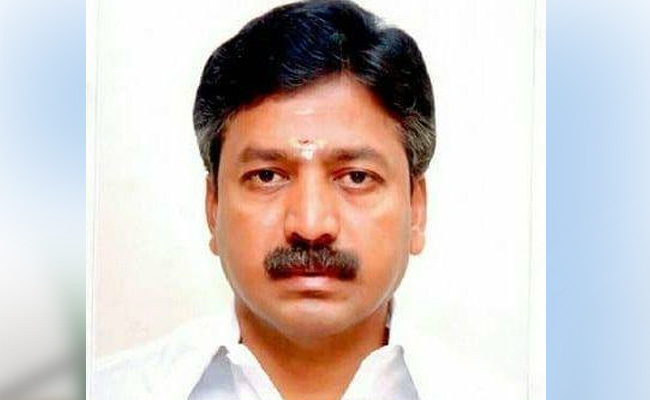
Mumbai woman IAS officer's anti-Gandhi tweet sparks row

Mumbai: A Mumbai woman IAS officer's tweet has triggered a row by calling removal of Mahatma Gandhi's statues from across the world, including his images from the Indian currency notes.
Demanding that institutions and roads named after the Father of the Nation be renamed, she also "thanked" his assassin Nathuram Godse.
After the controversy, the officer, Nidhi Choudhari, posted as Deputy Municipal Commissioner in Brihanmumbai Municipal Corporation (BMC), said on Saturday that the tweet was "sarcastic" and it was "misinterpreted". The controversial tweet has since been deleted.
The Nationalist Congress Party (NCP) demanded her suspension for the "derogatory" tweet about Mahatma Gandhi and "glorification" of Godse.
In her tweet posted on May 17 along with the picture of Mahatma Gandhi's mortal remains, Choudhari had written, "What an exceptional celebration of 150th birth anniversary year is going on. High time we remove his face from our currency, his statues from across the world, rename institutions/roads named after him! That would be a real tribute from all of us! ThankU#Godse for 30.01.1948."
On Saturday, NCP leader Jitendra Awhad demanded strict action against Choudhari by suspending her. "She glorified Godse by posting a derogatory tweet about Gandhiji. This shouldn't be tolerated," he said.
Claiming that Mahatma Gandhi's 'My Experiments With Truth' is her all-time favourite book, Choudhari said that her tweet was "misinterpreted."
"Those who have misinterpreted my tweet of 17.5.2019 should go through my timeline. Even past few months tweets would be self explanatory. I am deeply hurt and saddened by misinterpretation to a tweet written with sarcasm.
"I would never insult GandhiJi. GandhiJi is Father of Our Nation & in 2019 all of us must do our little bit to make this country better. Hope those misinterpreting my tweets would realise the sarcasm in it," she said on Twitter on Saturday.
Let the Truth be known. If you read VB and like VB, please be a VB Supporter and Help us deliver the Truth to one and all.
Trump says EU has until July 4 to approve last year's trade deal or it will face higher tariffs
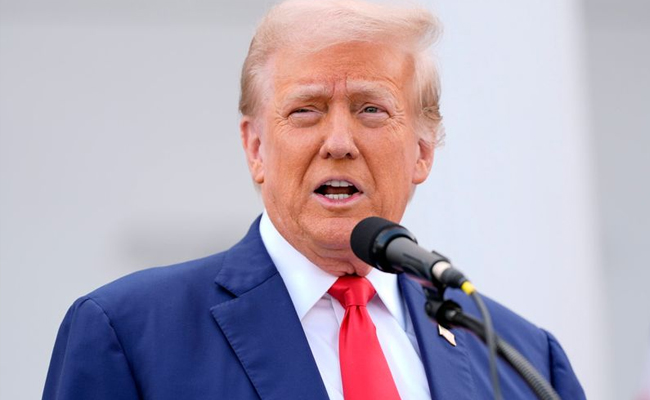
Washington (AP): President Donald Trump has said in a social media post that goods from the European Union would face higher tariff rates if the 27-member bloc fails to approve last year's trade framework by July 4.
The announcement on Thursday appeared to be a deadline extension after the president said last Friday that EU autos would face a higher 25 per cent tariff starting this week. Trump made the updated announcement after what he described as a "great call" with European Commission President Ursula von der Leyen.
Still, the US president was displeased that the European Parliament had yet to finalize the trade arrangement reached last year, which was further complicated in February by the US Supreme Court ruling that Trump lacked the legal authority to declare an economic emergency to impose the initial tariffs used to pressure the EU into talks.
"A promise was made that the EU would deliver their side of the Deal and, as per Agreement, cut their Tariffs to ZERO!" Trump posted. "I agreed to give her until our Country's 250th Birthday or, unfortunately, their Tariffs would immediately jump to much higher levels."
It was unclear from the post whether Trump was implying that the tariff rates would jump on all EU goods or the increase would only apply to autos.
His latest statement indicates he might be backing away from his earlier threat on EU autos by giving the European Parliament several more weeks to approve the agreement.
Under the original terms of the framework, the US would charge a 15 per cent tax on most goods imported from the EU.
But since the Supreme Court ruling, the administration has levied a 10 per cent tariff while investigating trade imbalances and national security issues, aiming to put in new tariffs to make up for lost revenues.