Muslim Woman, Attacked For Running Cow Shelter
Appeals To PM For Help
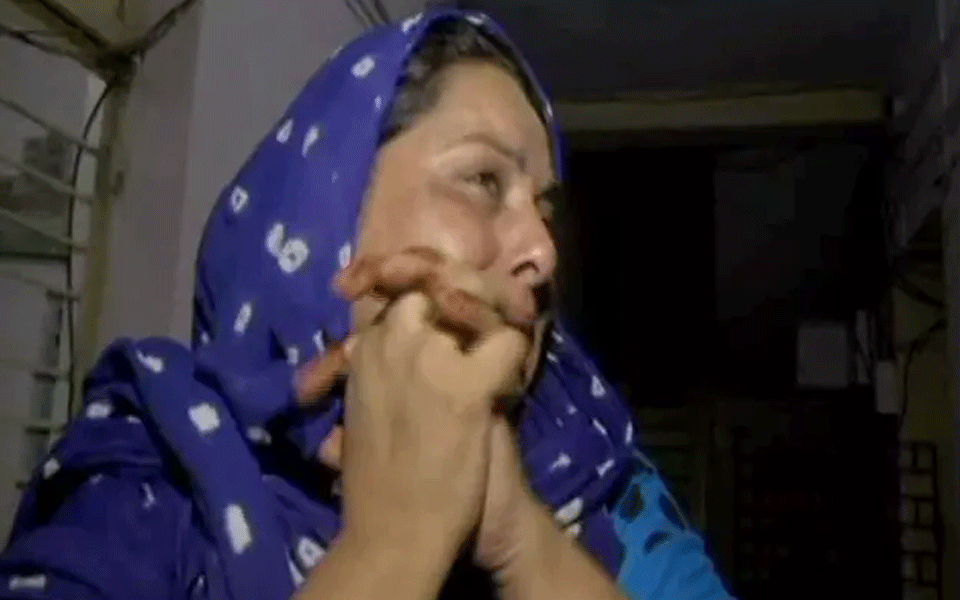
Madya Pradesh, July 01: Mehrunisa Khan, the state president for National Cow Service Corps in Madhya Pradesh, is being threatened not just by outsiders, but her family has also turned against her.
A Muslim woman from Madhya Pradesh, who was assaulted in Bhopal today for running a cow shelter, fears that her attackers might use acid next time. "They came prepared. They threatened to kill me. They tried to kidnap me. I am scared," she said.
Mehrunisa Khan, the state president for National Cow Service Corps in Madhya Pradesh, is being threatened not just by outsiders, but her family has also turned against her. She alleged that she was thrashed by her in-laws, who warned her against working towards the protection of cows. Her parents and daughter, too, have refused to support her, she says.
"They (the attackers) are threatening me on WhatsApp. They have sent me photographs of severed heads and said that one of those could be mine soon. Either kill me or save me," she said.
She has appealed to Prime Minister Narendra Modi and Chief Minister Shivraj Singh Chouhan for help.
"I was thrashed and abused by my in-laws for being associated with cow protection and for speaking against triple talaq. It has been four months since I filed a complaint, but the police aren't helping. They are calling it a 'family matter'. I appeal to the Chief Minister and Prime Minister to help me," she told news agency ANI.
Ms Khan runs a cow shelter in Neemuch, about 500 kms from her home. Threats have become an everyday occurrence. She lives in the goshala (cow shelter) when she is on a visit and recently rented a room in Bhopal as she has nowhere to go, she said.
"From the day I joined this cause, I have been receiving death threats not just from outsiders but my own family as well. Even after moving away from them, they keep telling me to leave all this as it is bringing bad name to the family. I don't understand how working for animals who cannot even speak is ruining their reputation," she said.
However, nothing can stop her from working towards cow shelters and speaking her mind, she says.
Meanwhile, Madan Ojha, a retired teacher who helps Ms Khan run the cow shelter, said cow protection should not be turned into a communal issue.
"I hope that the shelter becomes an example for all those who want to spread hate. We don't feel any religious difference here since everyone is dedicated to a noble cause. Now that Mehrunisa madam has joined, I feel that this cow shelter will grow and become an example of peace for the whole country," he said.
Courtesy: www.ndtv.com
Let the Truth be known. If you read VB and like VB, please be a VB Supporter and Help us deliver the Truth to one and all.
25 lakh properties in Bengaluru brought under e-Khata system: Shivakumar
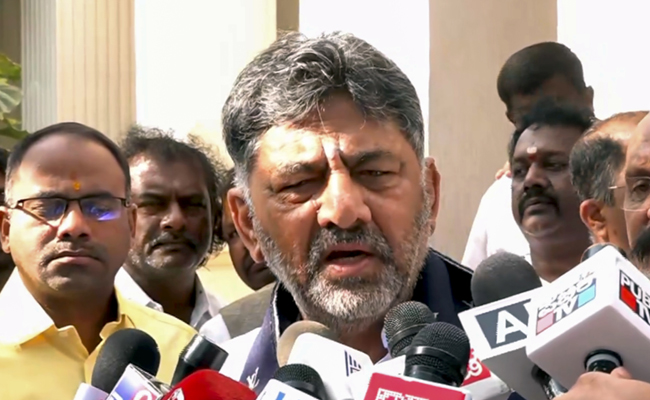
Bengaluru (PTI): Karnataka Deputy Chief Minister D K Shivakumar on Friday said that the state government has brought over 25 lakh properties under the e-Khata system in Bengaluru.
e-Khata is an electronic property certificate that maintains ownership information in an online database.
The e-Khata initiative aimed to ensure accuracy, transparency and universal coverage for property owners, he said.
Addressing a press conference here, Shivakumar, who is also the Bengaluru in-charge Minister, said over 25 lakh properties are being brought under the e-Khata system. Of them more than 7,000 applications have been processed, and additional outreach measures being planned for those yet to obtain their e-Khata.
"Twenty five lakh e-Khatas is a great number which has created history," he said.
The Deputy CM said the government is ensuring that every e-Khata will have its GPS, the shape of the property, and the measurement with every photo and document.
He explained that the government is integrating Aadhaar details, digital documentation, GPS mapping and property sketches to create a robust database.
"We want to see that every record is filled right. They (officials) are asking for documentation, stamp, digital documents. We wanted to connect every Aadhaar card and have it online," Shivakumar said.
To facilitate access, the Deputy CM announced the opening of more than 50 centres across Bengaluru, many of them in government schools, where citizens can apply for or rectify their e-Khata records.
"All of them will be working this Saturday. This 'Khata Mela' will be done. It is 'Nanna Khata, Nanna Swathu'," he said.
Applicants whose documents require verification will be given an acknowledgement and asked to return after 15 days, during which officials will conduct site inspections, he said.
Shivakumar said the government has also taken steps to identify and reclaim properties recorded as roads in revenue documents, asserting that such lands belong to the government.
"We have decided through the law that all the roads in the revenue records have been taken out. Those properties belong to the government itself," he said.
He noted that the initiative has received recognition from the Union government. "The Government of India has awarded us. It said that it is the model for the entire country," he said, while thanking officials involved in the project.
The Deputy CM said the government expects around 10 lakh additional households to benefit from the drive and assured that even those who have not downloaded their documents will receive printed copies free of cost at their residences.
"We will see that all the 25 lakh people will get their e-Khata to their home free of cost," Shivakumar said.
On apartment properties, he said all flats that have obtained occupancy certificates have been cleared.
"All the 37,460 flats (who have applied for e-Khata) have been issued an occupancy certificate. We have cleared all of them," the Deputy CM said.