Muzaffarnagar DM Opposes Yogi Govt, Says Can't Withdraw Riot Cases Due to Administrative Reasons
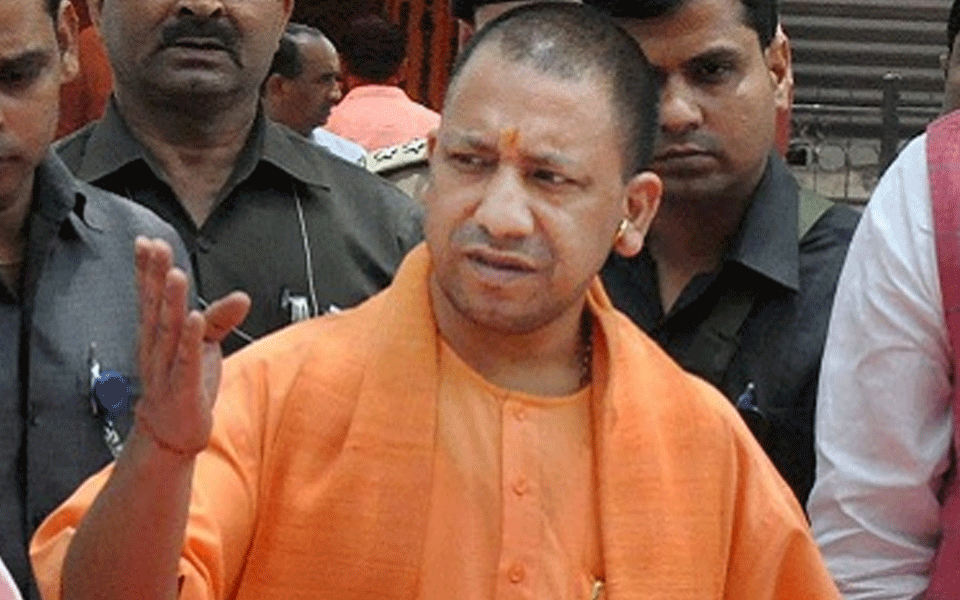
Lucknow, August 13: The Muzaffarnagar district administration in its report to the government has advised that the withdrawal of 113 cases related to Muzaffarnagar and Shamli riots would not be advisable on an administrative level.
In March this year, the Yogi Adityanath-led BJP government in Uttar Pradesh had initiated the process to withdraw 131 cases related to the riots in 2013.
District magistrate Muzaffarnagar, Rajiv Sharma said, “Under the constitutional process anyone can apply for rollback of cases. This practice is being continued by this government and was used by the previous government as well. After a thorough investigation on 13 points by the police, we have recommended to the government that the withdrawal of cases will not be advisable on administrative level.”
The riots, which took place during Akhilesh Yadav’s tenure as CM in August-September of 2013, left more than 40,000 homeless. A total of 502 cases were registered in connection with the riots, in which 6,867 people have been accused.
News18 had reported in February that Hindu-Muslim communities had organised Hindu-Muslim panchayats to amicably resolve the issue without political intervention. Hindu-Muslim Mahapanchayat was organised in Bulandshahr district’s Barabasti on February 4 which saw the Jat community in Purbaliyan and Muslims of Kutuba village coming together. A decision was taken to withdraw 20 cases registered against members of the two communities.
According to some reports, the panchayat had also raised eyebrows ahead of the 2019 Lok Sabha elections as some political leaders felt that the improving ties between the two communities would prevent them from earning “brownie points”.
Former Union minister Sanjeev Balyan met UP CM Yogi Adityanath in Lucknow, along with BJP MLA Sangeet Som, farmer leader Naresh Tikait and a few others to deliberate on issues pertaining to the riots.
The leaders demanded that most cases of arson filed against Jats be quashed. They claimed that of the 502 cases, around 400 were of arson, with most being bogus filed to get compensation. The Yogi government had then promised to look into the matter.
Courtesy: www.news18.com
Let the Truth be known. If you read VB and like VB, please be a VB Supporter and Help us deliver the Truth to one and all.
Kerala Assembly polls: Trends after 9 am show UDF continues to lead
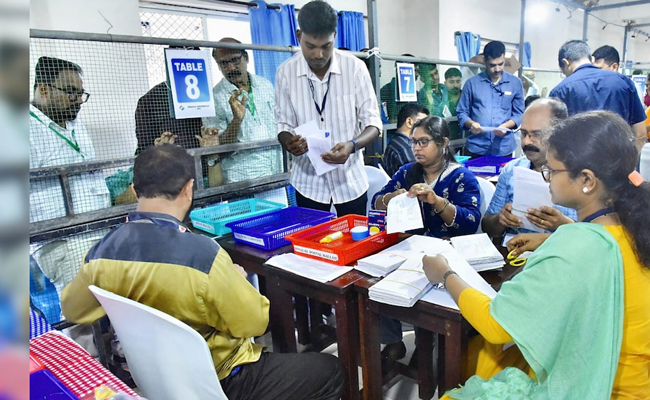
Thiruvananthapuram (PTI): As counting of EVM votes polled in the April 9 Kerala Assembly elections commenced, trends after 9 am show the Congress-led UDF leading in the state.
The UDF was ahead in close to 90 seats, while the CPI(M)-led LDF was leading in over 40 seats with the BJP-headed NDA in the front in around 5 assembly constituencies as EVM votes began to be counted, according to news reports.
As per Election Commission figures, Congress is ahead in 10 seats, CPI(M) in 5, CPI in 2, Revolutionary Socialist Party (RSP) 2 and IUML, RJD and Kerala Congress (KEC) with one each, among others.
The trends appear to support the UDF claim that it would get a huge majority. PTI
If the situation continues, the UDF stand to claim power in the state.