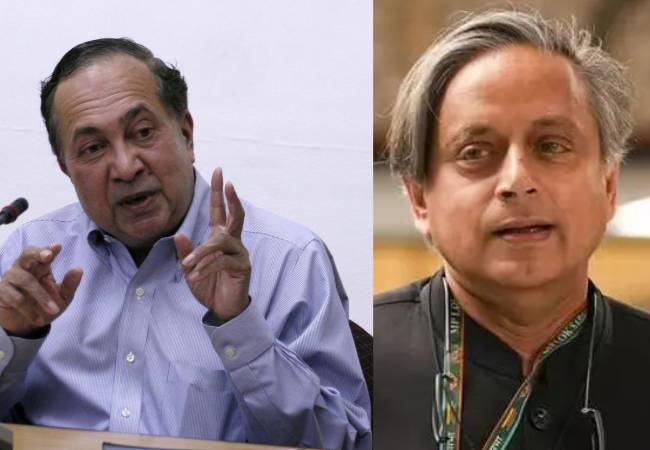
N Ram criticizes Shashi Tharoor for defending BJP government’s role in India-Pakistan ceasefire
New Delhi:
In a recent post on X (formerly Twitter), N Ram, the Director of The Hindu Publishing Group and former Editor-in-Chief of The Hindu, took aim at Congress MP Shashi Tharoor for his comments defending the BJP-led government’s handling of the India-Pakistan ceasefire and the role played by the United States in mediating peace between the two countries. N Ram, a veteran journalist known for his insightful commentary on political issues, criticized Tharoor’s statements made during an interview with Karan Thapar on The Wire, accusing him of acting as an apologist for the government. He raised concerns about Tharoor’s alignment with the ruling party’s narrative, particularly when the Congress Party itself is questioning the government’s actions.
In his tweet, N Ram remarked, "Watch Shashi Tharoor, grilled by Karan Thapar, emerge as the principal spokesman of, and the leading apologist for, the BJP government with respect to what might have led to the ceasefire between India and Pakistan and what the Trump administration’s role might have been in this regard. At a time when Congress leaders and elected representatives are asking questions and demanding answers from the Government, Tharoor’s smug assertions and ‘educated guesses’ seem calculated to make his party squirm. Are we missing something political here?"
N Ram's post highlights the growing divide within the Congress Party, where Tharoor’s comments seem to contradict the party’s stance on national security and diplomatic matters. The political establishment has been particularly vocal in its calls for the government to explain its role in the sudden ceasefire between India and Pakistan, especially regarding its interactions with the United States.
During his appearance on The Wire, Tharoor made a series of comments that appeared to support the government’s handling of the India-Pakistan ceasefire, despite the controversy surrounding it. In a conversation with Karan Thapar, Tharoor emphasized the role of the United States under President Donald Trump in facilitating diplomatic talks between India and Pakistan.
Tharoor began by explaining that while India and Pakistan have a long history of hostility, the sudden ceasefire could have been influenced by several factors, including diplomatic efforts by global powers. According to Tharoor, the Trump administration’s “shuttle diplomacy” was aimed at creating a window for dialogue, and it was “entirely possible” that this external pressure contributed to the ceasefire agreement.
Tharoor also expressed the view that the US administration was interested in bringing stability to the region, not just for the benefit of South Asia but also to improve its own geopolitical positioning. He suggested that the Trump administration may have seen an opportunity to exert influence over India and Pakistan, which both had strategic significance in the context of the US-China rivalry.
Tharoor speculated that the ceasefire could have been influenced by operations like Sindoor, which might have led Pakistan to reconsider its stance.
Tharoor further explained that while the Indian government had not publicly discussed the specifics of these operations, their potential impact on the security dynamics between India and Pakistan should not be dismissed. In his view, the government’s strategic approach towards Pakistan, including the use of intelligence and covert operations, might have been part of a broader diplomatic effort to ensure stability in the region.
Tharoor’s remarks during the interview have triggered sharp reactions from within the Congress Party, with several leaders questioning his approach. While the Congress has been critical of the BJP government on various national and international fronts, Tharoor’s defense of the government’s role in the ceasefire has raised eyebrows. Several party members have expressed discomfort with his tone and the seeming alignment with the ruling party, particularly on sensitive issues like national security.
Tharoor's defense of the government’s approach to India-Pakistan relations, as well as his suggestions regarding the US mediation, has sparked criticism within the Congress party. His remarks, which seemed to align with the BJP’s official stance, have led to accusations that Tharoor is acting as an apologist for the ruling party, despite being a senior leader in the opposition.
At a time when Congress leaders are demanding accountability from the government regarding its handling of the ceasefire and its engagement with global powers, Tharoor’s comments appear to have put him at odds with the party’s official stance. His remarks also prompted questions about his political positioning, as many believe that such statements could undermine the opposition’s efforts to hold the government accountable.
The fallout from Tharoor’s comments has not only raised questions within the Congress Party but also sparked political discussions about his position within the opposition. Critics have accused him of “softening” his stance on the government, while others suggest that his remarks could be a calculated attempt to maintain a more balanced and diplomatic approach in his public persona.
Tharoor’s intellectual approach to foreign policy and diplomacy has often set him apart from the more populist elements within the Congress Party. However, his recent remarks have led to questions about whether his views are evolving or whether he is consciously distancing himself from the party’s traditional stance.
With Congress leaders demanding clearer answers from the government, Tharoor’s comments may have added a layer of complexity to the ongoing debate about India’s approach to Pakistan and its relationships with global powers like the United States.
The Congress Party has yet to officially comment on Tharoor's statements, but the controversy has added fuel to the growing division over his political alignment and public stance on sensitive national and international issues.
Watch Shashi Tharoor, grilled by Karan Thapar, emerge as the principal spokesman of, and the leading apologist for, the BJP government with respect to what might have led to the ceasefire between India and Pakistan and what the Trump administration’s role might have been in this…
— N. Ram (@nramind) May 12, 2025
Let the Truth be known. If you read VB and like VB, please be a VB Supporter and Help us deliver the Truth to one and all.
Stalin urges Centre to rollback commercial LPG price hike
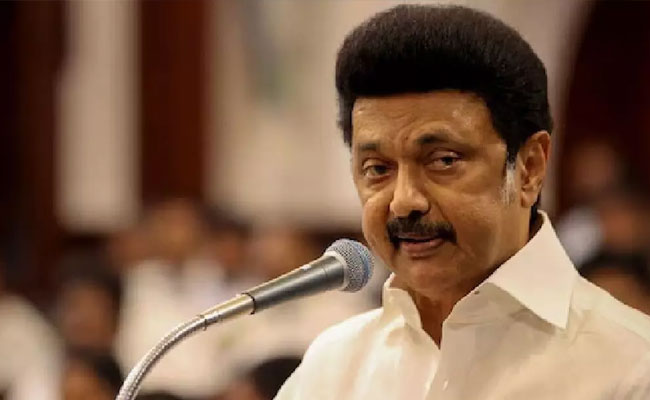
Chennai (PTI): Tamil Nadu Chief Minister M K Stalin on Friday demanded that the Centre immediately rollback the hike in commercial LPG cylinder prices. The price of commercial LPG was hiked by the steepest ever Rs 993 per 19-kg cylinder on May 1, marking the third straight monthly increase due to rising global energy prices linked to the West Asia conflict.
In his social media X platform, the DMK chief alleged that as predicted before the polls, the BJP-led union government has raised LPG prices immediately after the elections concluded.
"When global crude oil prices fell, the benefits were not passed on to the people, " he said, accusing the Centre of "using the West Asia war crisis as an excuse to raise the prices without regard for public welfare".
Calling for protection of the livelihood of the people, Stalin demanded an immediate rollback of the LPG price hike.
He asked the Centre to consider the people's suffering and find solutions.