NABARD sanctions over Rs 735 cr for Bengal for rural infra projects

Kolkata, July 2 : NABARD on Monday said it has sanctioned Rs 735.53 crore in the first quarter of the current fiscal under the Rural Infrastructure Development Fund (RIDF) for West Bengal for facilitating the execution of 86 projects.
They include six solar power, one medium irrigation, five minor irrigation and 12 flood protection projects, besides 57 projects for the widening and strengthening of roads and five rural bridges, according to a statement.
According to the National Bank for Agriculture and Rural Development (NABARD), the entire loan amount was provided to the state at a concessional rate.
Elaborating on the projects, the financial institution said the grid connected solar power projects would generate 88.61 MU of green energy per annum.
The work on the irrigation projects is expected to benefit 11,554 hectares of land besides addressing the problems of water wastage in the upstream areas, seepage loss, deposition of silt and insufficient height of canal, which have been resulting in erratic and short supply of water in the command area.
The flood protection measures were aimed at addressing the erosion of river banks and about 155 villages would benefit, it claimed.
The widening and strengthening of 57 roads would facilitate 352.81 km in 14 districts and this would help the farmers to access agro inputs and markets for their agricultural produce along with other facilities.
Rural bridges would lead to saving of 82 km distance, the statement added.
Let the Truth be known. If you read VB and like VB, please be a VB Supporter and Help us deliver the Truth to one and all.
Bridge portion collapses on Jammu outskirts; 3-4 labourers feared trapped, 1 rescued
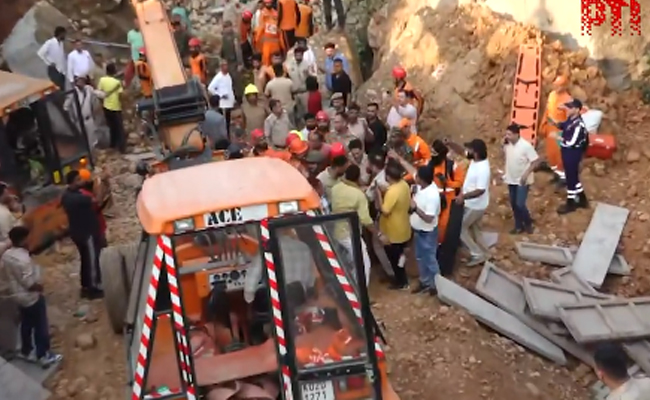
Jammu (PTI): A portion of a small bridge collapsed in the Bantalab area on the outskirts of Jammu city on Friday, trapping at least three to four labourers under the debris, while one injured worker was rescued, official sources said.
Authorities have closed the road link following the collapse of the portion of the bridge.
The incident occurred when labourers were carrying out repair work on a retaining wall near the bridge that was damaged in last year's flash floods, the sources said.
According to the sources, a section of the bridge suddenly gave way, burying workers engaged at the site under the rubble.
Police, Army and State Disaster Response Force (SDRF) teams launched rescue operations to extricate those buried under the debris. They pulled out one injured labourer and shifted him to a hospital, the sources said.
Family members of the labourers present at the site said around six workers engaged at the site at the time of the incident came under the debris when the structure collapsed. The family members said while two of the labourers managed to escape, four got trapped.
The sources said those trapped included the husband of a woman labourer, a mason, an unmarried labourer and a relative of the contractor.
There was no official confirmation on the exact number of persons trapped under the debris till the filing of this report.
The rescue operations are ongoing.