Namo Bharat reaches capital as PM inaugurates 13-km section of Delhi-Meerut RRTS corridor
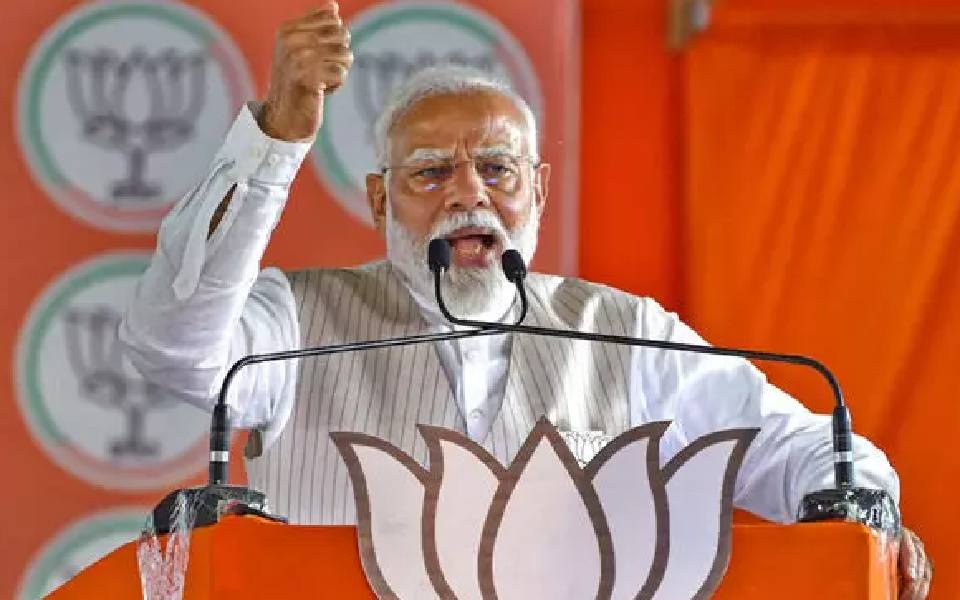
New Delhi, Jan 5: The Namo Bharat train entered the national capital on Sunday with Prime Minister Narendra Modi inaugurating a 13-km section of the Delhi-Meerut RRTS corridor from Sahibabad in Ghaziabad to New Ashok Nagar here.
Modi also took a ride on a Namo Bharat train from Sahibabad to New Ashok after purchasing an NCMC (National Common Mobility Card) using the UPI payment system.
During his journey, the prime minister interacted with people, including children.
With the inauguration of the Delhi section of the Regional Rapid Transit System (RRTS) corridor, Meerut city is now directly connected to Delhi and the commuters can reach Meerut South in just 40 minutes.
The 55-km RRTS corridor between New Ashok Nagar and Meerut South with 11 stations has become operational. Passenger operations will commence from 5 pm onwards and the trains will be available every 15 minutes.
The fare from New Ashok Nagar station to Meerut South station is Rs 150 for standard coach and Rs 225 for premium coach.
The Namo Bharat train has served more than five million passengers so far.
The construction of other sections -- New Ashok Nagar-Sarai Kale Khan and Meerut South-Modipuram -- is progressing at a rapid pace, according to an official.
Of the newly-inaugurated 13-km section, 6 km is underground, including Anand Vihar station.
This is the first time that Namo Bharat trains will operate in an underground section.
Anand Vihar underground station is one of the biggest on the Namo Bharat corridor. New Ashok Nagar is the first elevated Namo Bharat station to become operational on the Delhi section.
The official said that Namo Bharat stations are designed and constructed to provide seamless connectivity with other modes of public transport such as buses and metro, wherever possible.
One coach in each train is reserved for women and other coaches have reserved seats for women, the elderly and 'Divyangjans'.
Each train has designated space for wheelchairs and stretchers, and a train attendant to assist and ensure the convenience of passengers.
Modi inaugurated the 17-km priority section of the RRTS corridor between Sahibabad and Duhai Depot on October 20 last year.
The 82-km RRTS corridor originates at Sarai Kale Khan in New Delhi and terminates at Modipuram in Meerut.
It has 16 stations along with nine additional stations for the Meerut metro, making it a comprehensive and transformative regional transit solution.
The National Capital Region Transport Corporation (NCRTC), which is constructing the RRTS corridor, later in a statement said that the prime minister also interacted with women train operators and station controllers, commending their pivotal roles in operations.
During the journey, Modi interacted with various set travellers, showcasing the diverse social impact of the corridor.
The women beneficiaries of the NCRTC's vocational training program, supported by the JFPR (Japan Fund for Prosperous and Resilient Asia and the Pacific) grant, shared their inspiring journeys of employment, the NCRTC said in the statement.
The engineering students discussed their aspirations and the corridors technological advancements, while the school students showcased their creativity through artwork, poetry and songs inspired by the project, it said.
नमो भारत ट्रेन के साहिबाबाद-अशोक नगर के नए कॉरिडोर में सफर के दौरान मेरे युवा साथियों की अद्भुत प्रतिभा ने नई ऊर्जा से भर दिया। pic.twitter.com/ov7eUOFKpp
— Narendra Modi (@narendramodi) January 5, 2025
Let the Truth be known. If you read VB and like VB, please be a VB Supporter and Help us deliver the Truth to one and all.
Air India resorts to cost-cutting ways amid 'tough times'; layoffs not anticipated
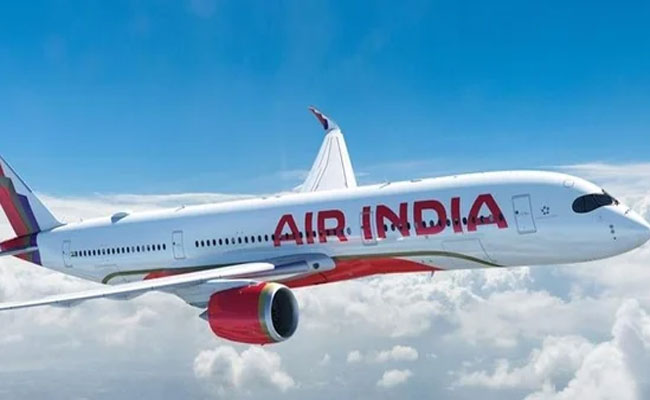
New Delhi/Mumbai (PTI): Hit hard by Pakistan airspace closure and Iran war, Air India has resorted to cost-cutting measures, including holding back annual increments for staff and asking them to cut discretionary spending as well as non-critical expenditures, warning of "tough times".
On Friday, Air India Chief Executive Officer & Managing Director (CEO & MD) Campbell Wilson told the staff it is going to be a "very, very difficult year" if things don't improve on the Middle East front.
A day after the loss-making airline's board discussed various cost-saving steps, Wilson, along with Chief Financial Officer (CFO) Sanjay Sharma and Chief Human Resources Officer (CHRO) Ravindra Kumar GP, addressed the employees during a townhall on Friday where the emphasis on the need to keep a close watch on costs.
With higher jet fuel prices due to the West Asia conflict and airspace curbs, the loss-making airline's expenses have spiralled in recent times and against this backdrop, Sharma also told staffers that FY26 has seen a softening in revenue amid heightened external uncertainties.
Calling for a relentless focus on costs in these tough times, Wilson urged employees to suspend discretionary spending, renegotiate rates where feasible, and defer non-critical expenditures.
"There must be a laser-sharp focus on eliminating wastage and leakages," he said.
Stressing the need to tighten the belt for a while, Wilson sounded optimistic that travel demand would rebound and the industry would continue on its upward path.
CHRO Ravindra Kumar told staff that the airline will proceed with variable pay for the last financial year and continue with planned promotions while noting that annual increments will be deferred by at least one quarter.
"We don't anticipate layoffs," he said.
At the airline's board meeting on Thursday, various cost-saving steps, including likely furloughs, were discussed. The Tata Group-owned airline has around 24,000 employees.
Generally, furlough refers to sending staff on unpaid leaves by companies during a tough financial situation.
During the townhall, CFO Sanjay Sharma said while strong revenue growth and fleet expansion drove financial momentum through FY25, FY26 has seen a softening in revenue amid heightened external uncertainties.
Air India has seen around 40 per cent CAGR (Compounded Annual Growth Rate) in revenue between 2022 and 2025, he added.
The airline was acquired by the Tata Group from the government in January 2022.
The Air India CEO mentioned the external challenges being facing the aviation industry as a whole, including the continued closure of Pakistan airspace that is expected to persist for the foreseeable future and geopolitical conflicts leading to disruptions and airspace closures across West Asia.
Wilson, who is set to step down later this year, also flagged a sharp depreciation of the rupee and a 2.5-3 times increase in jet fuel prices, and added that these factors have adversely affected travel sentiment and consumer confidence, as per the sources.
If the Strait of Hormuz opens, oil prices fall and consumer as well as business confidence come back, there is a decent chance of a solid recovery, Wilson said, adding that unless those circumstances happen, it was going to be "a very, very difficult year".
"I feel somewhat responsible that we ended up with probably the biggest surprise of the year in the external environment which was a full-scale war in our neighbouring region in the Gulf. That has had a huge impact on airspace," he said.
For Air India, Wilson said the situation is compounded by the fact that the airline cannot fly over the neighbouring country and has to take a much longer routing for any west-bound destination.
"Every airline is reporting that they are under some sort of financial pressure as a result of higher fuel prices and economic uncertainty. So, it is unfortunately not a great environment to be running an airline," the Air India CEO said.
The Air India Group -- Air India and Air India Express -- is projected to have incurred more than Rs 22,000 crore loss in the financial year ended March 2026.
At the townhall, Wilson also highlighted various initiatives, including completion of the retrofit of its legacy narrow-body aircraft and rapid network optimisation to redeploy capacity more efficiently.