Namo Bharat RRTS crosses 1 lakh riders on first full day after launch
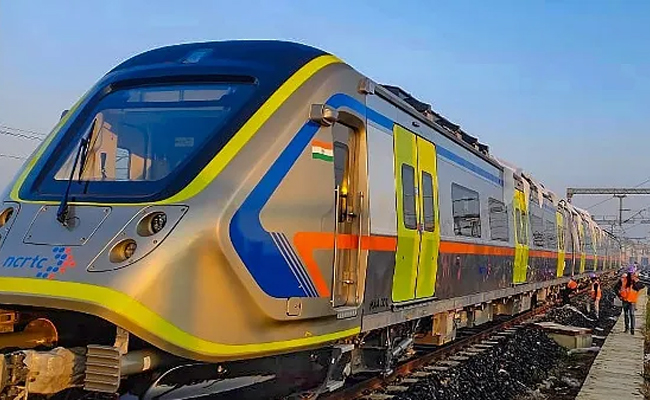
New Delhi (PTI): The NCRTC on Monday recorded the highest-ever ridership on the Namo Bharat Regional Rapid Transit System, with commuter numbers expected to exceed 1 lakh passengers.
This marks the first full day of commercial services after Prime Minister Narendra Modi formally inaugurated the complete 82-km Delhi-Meerut corridor and the new Meerut Metro link.
"On Monday, with the last train scheduled to depart at 10 pm, National Capital Region Transport Corporation (NCRTC) expects the total ridership to surpass 1 lakh commuters," the corporation said.
This is the highest ridership recorded on the corridor to date, it said.
A video from the Begumpul station in Meerut showed passengers keen to experience the new service.
In the clip, large crowds are seen gathering on the spacious concourse early in the day, with many families and youth taking selfies and photos inside the train and station.
Some commuters in the video could also be seen scattering flower petals on the platform as the Regional Rapid Transit System (RRTS) train approached, while others waved enthusiastically.
The visuals showed orderly queues forming at ticket counters and platform entrances, with station staff assisting first-time riders and explaining safety protocols.
Prime Minister Modi on Sunday inaugurated the remaining sections of the RRTS -- the 5-km stretch between Sarai Kale Khan and New Ashok Nagar in Delhi and the 21-km extension from Meerut South to Modipuram in Uttar Pradesh.
Designed for speeds of up to 180 kmph, the Namo Bharat system is aimed at significantly reducing travel time between Delhi and key urban centres such as Sahibabad, Ghaziabad, Modinagar and Meerut.
Let the Truth be known. If you read VB and like VB, please be a VB Supporter and Help us deliver the Truth to one and all.
Yogish Gowda murder case: HC issues notice to CBI after hearing Kulkarni’s plea
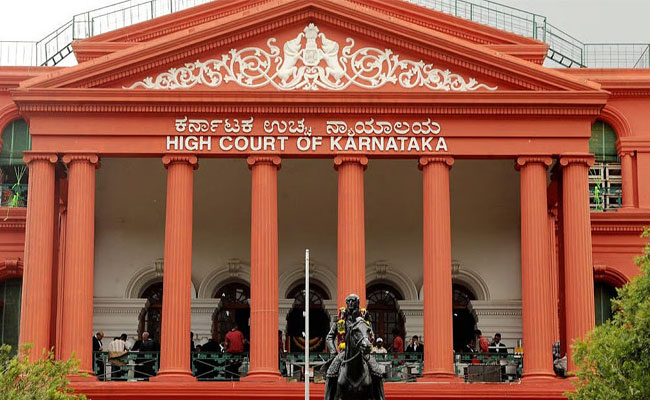
Bengaluru: Karnataka High Court has issued a notice to the Central Bureau of Investigation (CBI) following the filing of application by Congress MLA Vinay Kulkarni and Chandrashekhar Indi challenging the life imprisonment awarded to them by the Special Court for murder of BJP Dharwad leader Yogish Gowda.
The divisional bench comprising Justices Muhammad Nawaz and T Venkatesh Naik heard the pleas filed by Kulkarni on April 15 and Chandrashekhar Indi also called Chandu Mama on April 16.
The bench has now issued a notice to the CBI and also directed the HC Registry to obtain the trial court documents before adjourning the hearing.