Nanded govt hospital deaths: I lost my child, wife suffering due to doctors' negligence, claims man
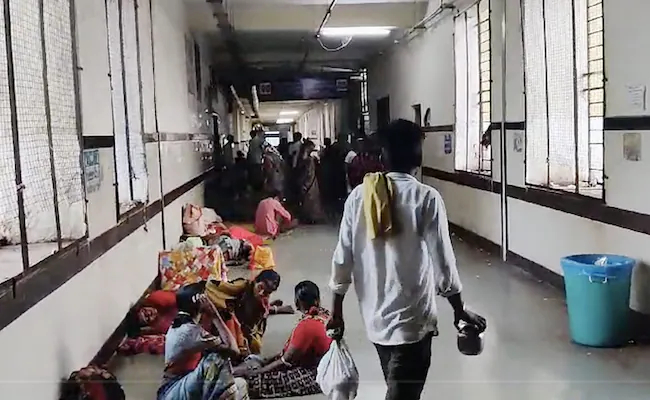
Chhatrapati Sambhajinagar (PTI): A man, whose newborn child was among the 31 patients who died at a government hospital in Maharashtra's Nanded in 48 hours, has blamed negligence by doctors for his loss.
The distraught man, Nagesh Solanke, also claimed his child was not underweight after birth. His wife had undergone a C-section procedure at a private hospital where the baby was delivered, he said, adding the child was later brought to the government hospital for treatment.
As many as 31 deaths, including those of infants, were recorded at the Dr Shankarrao Chavan Government Medical College and Hospital in central Maharashtra's Nanded district in 48 hours since September 30.
Solanke's child was among the 24 deaths, including of 12 babies, recorded at the hospital between September 30 and October 1. Seven more deaths occurred at the same facility between October 1 and 2, as per authorities.
"My child was not underweight and was absolutely fine...don't know what happened to my child who is now no more. I lost my baby, my wife suffered permanent damage to her health due to the caesarean-section. I have lost everything," Solanke told reporters outside the hospital.
The man and his wife reached the government hospital after the woman underwent the caesarean-section procedure at a private hospital in Nanded, he said.
"Doctors at the private hospital claimed the baby was fine, but needed to be kept in glass (warmer) for four-five days. I had already spent money for the (wife's) surgery and was unable to bear this hefty amount for further treatment of the baby. So, we came to the government hospital in Nanded," Solanke said.
He said the baby was admitted to the hospital at around 6 pm on (September 30). He later brought medicines from a medical store outside the facility and handed them over to a doctor.
According to Solanke, his baby was fine till about 2 am on October 1.
"Later, at around 4 am, doctors said they were putting the baby on some big machine. They didn't tell me its name," the man said.
'We were waiting outside and they asked for our signatures. Then, in just 10-15 minutes what happened that my child died. Besides my baby, two other children, both twins, also died and they called us inside and announced the deaths," he said.
How can 12 babies die (in one day at the hospital)? Solanke asked.
"This is only possible if the machines are not working and doctors are negligent. The dean also pays no attention to the facility," he claimed.
The man, while getting emotional, said he has now lost everything after waiting for nine months for the child.
"I lost my kid, my money. Doctors (at the private hospital) asked for money (for the child's treatment), so we came here. This happened due to the negligence of doctors. There was lack of facilities. They didn't even allow me to go inside and see our child. I just wish to meet the hospital dean once," Solanke said.
Maharashtra Medical Education Minister Hasan Mushrif on Tuesday said the death of the large number of patients at the government hospital in Nanded will be inquired to establish the cause and promised things will improve at the facility in the next 15 days.
Mushrif also said there was no shortage of medicines at the hospital and maintained that if the deaths have occurred due to anyone's negligence, action will be taken against that person.
Chief Minister Eknath Shinde on Tuesday said his government had taken the deaths at the Nanded hospital very seriously, and appropriate action would be taken after a detailed inquiry while denying that there were shortages of medicines and staff.
Let the Truth be known. If you read VB and like VB, please be a VB Supporter and Help us deliver the Truth to one and all.
Centre spent Rs 76.13 lakh on print media ads for RSS centenary, reveals RTI
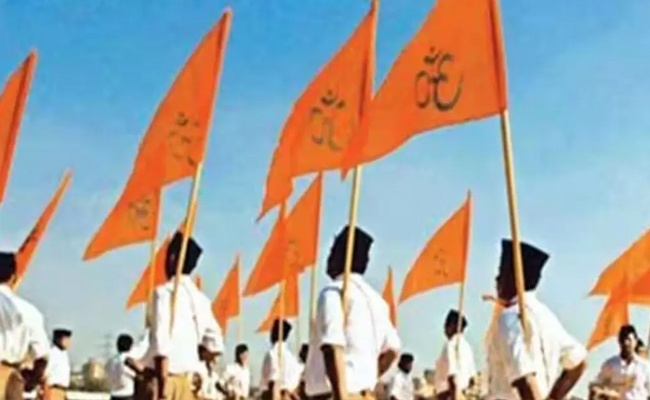
New Delhi: The Union Ministry of Culture allegedly spent Rs 76.13 lakh on print advertisements marking the 100-year celebrations of the Rashtriya Swayamsevak Sangh (RSS), according to a Right to Information (RTI) reply.
The information was sought by RTI activist Ajay Basudev Bose, who filed an application seeking details on expenditure incurred by the ministry for advertisements commemorating the RSS centenary.
Bose shared a picture of the reply from the ministry on his official ‘X’ handle.
“It is informed that an amount of Rs 76,13,129 has been spent on advertisement given in various print media by the Ministry of Culture on the occasion of the completion of 100 years of RSS,” the government’s reply stated.
RTI reply shows Min of Culture Govt of India spent a Whopping Rs 76L,13K,129 on Advertisement in Print Media on occasion of 100 yrs of #RSS
— AJAY Basudev Bose (@AjayBos93388306) April 16, 2026
When Everyone knows RSS is Not Registered & Does not Pay any Tax is it justified to spend Tax Payers Money on such Private event??@RSSorg… pic.twitter.com/dW4IUtdNCg
Bose questioned the expenditure in the post X, “when Everyone knows RSS is Not Registered & Does not Pay any Tax is it justified to spend Tax Payers Money on such Private event??”
Reacting to the development, Karnataka’s IT-BT and Panchayat Raj Minister Priyank Kharge also criticised the spending.
In a post on X, he asked why public money was being used for what he described as a “private ideological project.”
"Modi Sarkar spent Rs 76,13,129 of public money on newspaper advertisements to celebrate 100 years of the RSS. Why is Government spending taxpayers money on an unregistered, non-tax-paying organisation to celebrate their centenary?," he added.
Why is public money being used to serve a private ideological project?
— Priyank Kharge / ಪ್ರಿಯಾಂಕ್ ಖರ್ಗೆ (@PriyankKharge) April 16, 2026
Modi Sarkar spent ₹76,13,129 of public money on newspaper advertisements to celebrate 100 years of the RSS.
Why is Government spending taxpayers money on an unregistered, non-tax-paying organisation to… pic.twitter.com/EoZ6Pim3IM
According to reports, the RSS describes itself as a volunteer-based organisation and has stated that it functions as a body of individuals rather than a registered entity.
Founded by Keshav Baliram Hedgewar in 1925, the organisation is marking its centenary year beginning from Vijaydashami in 2025, with the milestone observed on October 2.