Narasimha Rao believed Vijaya Raje Scindia's assurance on Babri against ministers' advice: Pawar
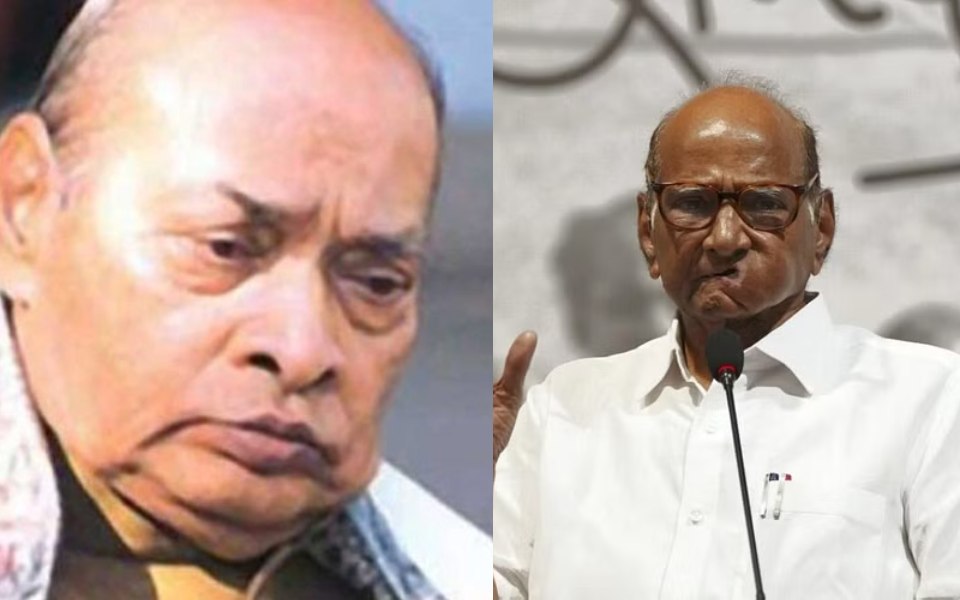
New Delhi, Aug 8: As the Ram Janmbhoomi movement gathered steam in 1992, BJP leader Vijaya Raje Scindia had assured then prime minister P V Narasimha Rao that nothing would happen to Babri Masjid and he believed her against the advice of his ministers, NCP chief Sharad Pawar revealed on Tuesday.
At the launch of senior journalist Neerja Chowdhury's book 'How Prime Ministers Decide', Pawar, who was the defence minister at the time of the Babri Masjid demolition, said he along with then home minister and the home secretary was present at the meeting.
"There was a group of ministers and I was one of them... It was decided that the prime minister should call a meeting of leaders of the respective party," the NCP chief said.
"In that meeting, Vijaya Raje Scindia had assured the prime minister that nothing would happen to the Babri Masjid," he said.
Pawar said that while he, the home minister and home secretary felt anything could happen, Rao chose to believe Scindia.
Chowdhury, meanwhile, recalled a conversation that Rao had with some senior journalists in the aftermath of the mosque demolition where the prime minister was asked what he was doing when the demolition happened.
She claimed that Rao had told journalists that he allowed it to happen because it would end a festering sore and he felt the BJP would lose its main political card.
The book was launched by Pawar, along with Kerala Governor Arif Mohammad Khan, Congress leader Shashi Tharoor, former railway minister and BJP leader Dinesh Trivedi, and Maharashtra's former CM Prithviraj Chavan.
The discussion was moderated by senior journalist Rajdeep Sardesai.
Trivedi recalled the time of Rajiv Gandhi as prime minister and the role of Arun Nehru, one of his key advisors.
"Arun Nehru was like family... That was one of the best periods and if it continued things would be very different," Trivedi said.
Prithviraj Chavan, who served as a Union minister in the UPA government, said not handling the Anna Hazare movement properly caused the downfall of the Congress-led alliance.
"What caused that downfall was what happened immediately before that. Scams, 2G... We didn't handle Anna Hazare rightly. That's what brought an end to the Congress government," he said.
He also said that former prime minister Manmohan Singh was good at building consensus and mentioned the nuclear deal.
Chowdhury's book analyses the operating styles of the country's prime ministers through the prism of six decisions of historic significance.
Former PM Indira Gandhi's return to power in 1980 after her humiliating defeat post the Emergency in 1977, Rajiv Gandhi's decision to undo the Supreme Court's judgment in the Shah Bano case, V P Singh's implementation of the Mandal Commission Report, P V Narasimha Rao's role as prime minister during the Babri Masjid incident, and the governments under Atal Bihari Vajpayee and Manmohan Singh are among the topics discussed in the book.
Let the Truth be known. If you read VB and like VB, please be a VB Supporter and Help us deliver the Truth to one and all.
TMC will be voted back to power in Bengal: Tejashwi Yadav
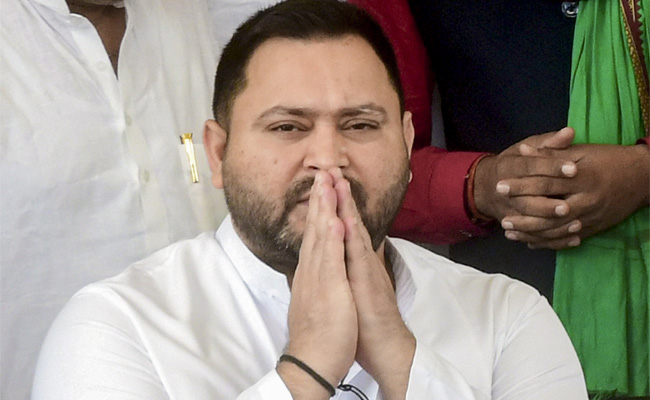
Patna (PTI): Leader of Opposition in Bihar assembly, Tejashwi Yadav, on Tuesday exuded confidence that the Mamata Banerjee-led TMC will again be voted to power in West Bengal.
Yadav returned to Patna after a four-day poll campaign in West Bengal.
“The atmosphere there is euphoric and people want to bring Didi (Mamata Banerjee) back to power. I am fully confident that the TMC will win the election,” he told reporters here.
He said that a large number of people from Bihar living in West Bengal share a lot of love and respect for Mamata Banerjee.
Responding to BJP’s allegations that the TMC had “ruined” West Bengal during its tenure, the RJD leader said the “entire country has been ruined under the Narendra Modi-led government”.
“I want to ask one question to Modi ji – you have been prime minister for more than 11 years, tell me one thing you have done for Bengal,” Yadav said.
The first phase of elections to the 294-member West Bengal assembly was held on April 23, while the second phase will take place on April 29. Votes will be counted on May 4.