Narendra Modi stadium turns sea of blue to watch India in red hot form
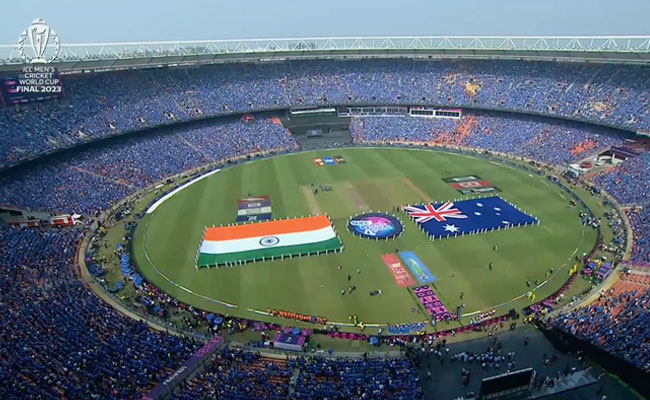
Ahmedabad (PTI): The massive Narendra Modi Stadium in Motera in Ahmedabad on Sunday was at the centre of a massive buzz created by a sea of blue in anticipation of India emphatically defeating the Australians and lifting the Cricket World Cup.
A perfect complement was world renowned Surya Kiran, the aerobatic team of the Indian Air Force, comprising nine aircrafts, owning the sky with a 10-minute air show ahead of the game that enthralled spectators in the stadium as well as the hundreds who lined up terraces of homes.
While thousands of fans moving towards the 1.32 lakh capacity stadium were already dressed in the blue jerseys of the Indian cricket team, others were seen making last minute purchases from vendors dotting the roads leading to the venue.
Apart from jerseys, the Tricolour, traditional Indian headgear like 'pagdis' in saffron, white and green, as well as masks of master batter 'King' Virat Kohli and Prime Minister Narendra Modi were selling like hot cakes.
Many fans were getting their faces painted in the three colours of the flag from children who were charging Rs 50 each.
The entire area reverberated with chants of 'Bharat Mata ki Jai' and 'India Jeetega', lending a festival atmosphere unparalleled in the cricketing world and for that matter most sporting events.
The crowd included few Australians, as well as foreign nationals wanting to soak in the atmosphere of cricket in a nation crazy about the sport.
While Ben, who was wearing the Indian jersey, came all the way from New Zealand, Ferdenand from South Africa had painted his face in saffron, white and green to support Rohit Sharma and his team that has remained unconquered in the tournament so far.
"I am a South African. I came here because I am a huge fan of the Indian cricket team. No matter who wins today, it will be an epic battle because both teams are strong. But if you ask me, I would say India has more chances of victory." said Ferdenand.
One Vinay Agarwal, who had painted Nepalese flag on his cheek, said he had come from the Himalayan nation to support neighbour India.
Fans started making their way towards the area where the gigantic stadium is situated right from the morning, many of them from Surat, Rajkot and Vadodara in Gujarat, as well as cities like Pune in Maharastra.
"We have come here from Pune. We are so happy that India is in the final. Since all our players are in form, we are 100 per cent confident India will lift the trophy" said Arun More who turned up along with his group, all in Peshwa-style headgear.
"Age is just a number. As long as I am able to walk, I will come to watch the Indian cricket team. I am a huge fan of Virat Kohli. I am confident nothing can stop India from winning the World Cup," said 70-year-old Sukhbir Singh from Punjab.
Ahmedabad becoming the centre of the cricketing world and the passions the game ignites has also meant hotel tariffs have gone through the roof, with several rooms being given out at more than 10 times the normal rate.
Some have hit upon the idea of driving down to the city overnight just in time for the match to avoid such expensive hotel stays.
"Instead of paying Rs 50,000 for one night's (hotel) stay, we hired a taxi and reached here this morning. We will go back home as soon as the match is over. This will be much cheaper," said Arun Sharma, who is here to with a group of friends from Haryana to watch the game.
One Bansilal Dantani, a city resident who lives an ascetic life, became an instant hit among fans as soon as he reached near the stadium with a 10-foot tall cutout of PM Modi for people to take selfies.
"During a cricket match played here (old Motera stadium) in 1994, I jumped in and ran towards Kapil Dev to congratulate him after India won the match. My only wish is to meet Kapil Dev again. Today, since Modi and Kapil Dev are here, India will definitely win the match because luck is on our side," said Dantani.
More than 60 personnel have been deployed to provide security during the day, including those from the Gujarat police and the Rapid Action Force, the CRPF's elite riot and crowd control unit.
Let the Truth be known. If you read VB and like VB, please be a VB Supporter and Help us deliver the Truth to one and all.
Three private doctors arrested in illegal scanning case involving 31 minor pregnant girls in KR Pet
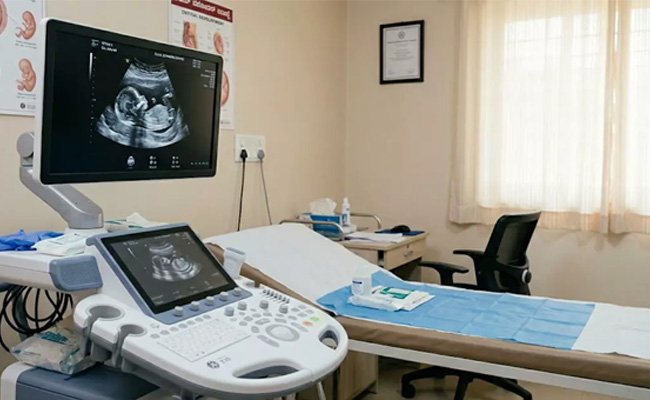
Mandya: Police on Tuesday arrested three private doctors in connection with a case involving alleged illegal scanning of 31 minor pregnant girls at a private diagnostic centre in KR Pet. The accused were later remanded to judicial custody.
The arrested doctors have been identified as Dr. Divyachetan of Chetana Maternity Centre, Dr. Harshit of Navi Diagnostic Centre, and Dr. Harish of Kushal Diagnostic Centre.
Police said Priyanka, a gynaecologist attached to a government hospital, is absconding and efforts are under way to trace her.
The case came to light after Karnataka Lokayukta Police recently conducted raids, during which illegal sex determination tests on minor pregnant girls were allegedly detected at two diagnostic centres in KR Pet town.
Following the raids, District Health and Family Welfare Officer Dr. Mohan, Deputy Director of the Women and Child Development Department P.S. Asha, and District Child Protection Officer Rashmi inspected several diagnostic centres and filed cases at KR Pet Town and Rural police stations.
According to the allegations, Navi Diagnostic Centre conducted scans on 24 minor pregnant girls, including 19 cases in 2024 and five in 2025. Kushal Diagnostic Centre is accused of conducting scans on seven minor pregnant girls.
Meanwhile, Deputy Commissioner Dr. Kumar has directed taluk vigilance committees to inspect all 63 ultrasound scanning centres in the district and submit reports within 10 days.
Officials said the Tahsildar of each taluk has been appointed chairperson of the respective committee.