National Education Policy: UGC, AICTE, NAAC To Be Merged In A New Body
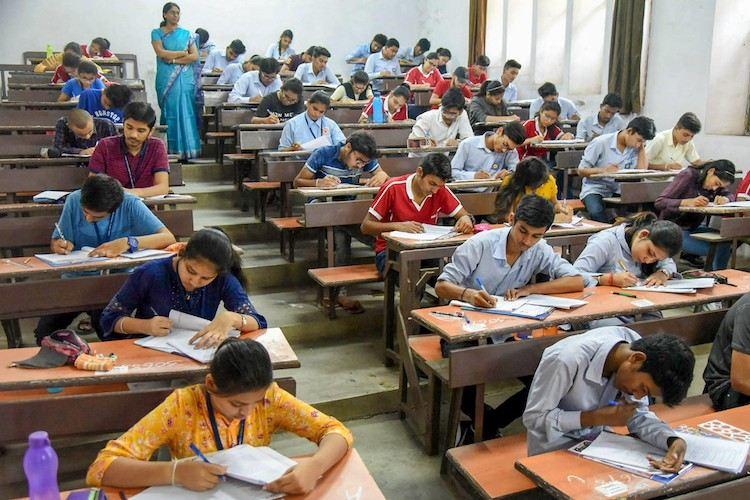
New Delhi: Union Cabinet approved the National Education Policy 2020, thus ushering in a new era of school and higher education in India. One of the key changes which NEP will implement is the setting up of a 'single overarching umbrella body for the entire higher education', Higher Education Commission of India (HECI).
Though there will be a single body, there will be distinct and independent bodies which will each assume separate functions of accreditation, funding, and academic standard setting. These bodies will replace autonomous bodies like University Grants Commission (UGC), All India Council of Technical Education (AICTE), and National Assessment and Accreditation Council (NAAC).
The first vertical of HECI will be the National Higher Education Regulatory Council (NHERC). It will function as a common, single point regulator for the higher education sector including teacher education but excluding medical and legal education. Up until now, UGC was responsible for regulating higher education, AICTE regulated technical and engineering education, and NCTE was responsible for regulating teacher training and education.
The second vertical of HECI will be the National Accreditation Council (NAC). NAC will accredit institutes based on basic norms, public self-disclosure, good governance, and outcomes.
The third vertical will be Higher Education Grants Council (HEGC) which will facilitate funding and financing of higher education based on transparent criteria.
The fourth vertical of HECI will be the General Education Council (GEC). It will frame expected learning outcomes for higher education programmers, also called 'graduate attributes'. GEC will also frame a National Higher Education Qualification Framework (NHEQF).
Functioning of HECI and all its verticals will be transparent. Use of technology is also stressed in NEP to reduce human interface to ensure efficiency and transparency in their work.
The professional councils such as the Indian Council for Agricultural Research (ICAR), Veterinary Council of India (VCI), National Council for Teacher Education (NCTE), Council of Architecture (CoA), National Council for Vocational Education and Training (NCVET) etc., will act as Professional Standard Setting Bodies (PSSBs).
Let the Truth be known. If you read VB and like VB, please be a VB Supporter and Help us deliver the Truth to one and all.
4 held for sexually assaulting woman, girl on moving bus after social media alert in UP's Agra

Agra (UP) (PTI): Four people were arrested, after a prompt response by police following a social media alert, for allegedly sexually assaulting a woman and a girl inside a moving bus here, officials said on Tuesday.
According to an official police statement, at 12:27 am on April 27, information was received on the social media platform X about an incident of sexual assault on a bus travelling from Kanpur to Ahmedabad, which was approaching Namner crossing in Agra.
Acting under the direction of Police Commissioner Deepak Kumar, the Agra Police social media team immediately alerted the Rakabganj police station within minutes and coordinated with the victims to confirm the incident and obtain the exact location, it stated.
Police teams launched intensive checking at Namner crossing and intercepted the bus as it reached the spot. The four accused involved in the incident were apprehended on the spot, and legal action was initiated against them, the statement said.
The police said the swift response and coordination between the social media team and field units ensured timely action, bringing relief to the victims and other passengers, who expressed gratitude towards the police, it added.