Naukri, 99acres, few apps back on Google Play Store; govt says delisting of apps can't be permitted

New Delhi, Mar 2: Naukri, 99acres and NaukriGulf were among a handful of apps that made a comeback on Google Play Store after they complied with the tech giant's payment norms even as the government talked tough, calling delisting of Indian apps unacceptable and summoning a meeting on the issue next week.
IT and Telecom Minister Ashwini Vaishnaw, in an interview with PTI, said removal of apps cannot be permitted and that "startups will get the protection they need".
Just as his interview with PTI hit the wire, certain apps like Naukri.com, 99acres, NaukriGulf, and Shaadi.com were back on the Google Play Store.
Sources said that only those apps which complied with Google Play Store policies were reinstated.
Other apps like Bharat Matrimony, Balaji Telefilms' Altt (formerly ALTBalaji), audio platform Kuku FM, dating service Quack Quack, Truly Madly, and Stage OTT, which had disappeared from the Play Store on Friday, are still not back.
While InfoEdge's matrimony app jeevansathi.com was not removed, as it continued to be compliant, its Naukri.com, 99acres and a few others were back after they moved to Google's consumption model, which means any payment to be made is done outside of the app.
Taking a strong view of Google pulling out some apps from its Play Store, Vaishnaw on Saturday said delisting of Indian apps cannot be permitted and that the tech company and concerned startups have been called for a meeting next week.
According to Vaishnaw, the startup ecosystem is key to the Indian economy, and their fate cannot be left to any big tech to decide.
The minister's comments came in reference to a question on Google removing some apps, including popular matrimony apps, from its Play Store in India over a dispute on service fee payments, even as apps and well-known startup founders had cried foul.
"India is very clear, our policy is very clear...our startups will get the protection that they need," the minister said.
Vaishnaw asserted that the government will be meeting Google and app developers, who have been delisted, next week to resolve the dispute.
"I have already called Google...I have already called the app developers who have been delisted, we will be meeting them next week. This cannot be permitted...This kind of delisting cannot be permitted," he said.
Stating that India has built a strong startup ecosystem of over one lakh startups, and more than 100 unicorns from scratch in a matter of 10 years, the minister said the energy of youth and entrepreneurs must be channelised fully and "cannot be left to the policies of any big tech".
Info Edge (India) Ltd on Saturday morning said its apps, including naukri.com, 99 acres.com and shiksha.com have been removed from Google Play Store but within hours it was clarified that some of them have been restored.
"Many of the Info Edge apps are back on the Play Store. An effort very well led by (company MD and CEO) Hitesh and the entire Info Edge team. People were up all night for this. Great crisis management," Info Edge founder Sanjeev Bikhchandani said in a post on X.
In response to Shaadi.com founder Anupam Mittal's post, Bikhchandani clarified that the apps are on the consumption model and backup.
"Pls clarify that u are back up as consumption apps only ie without any in-app billing which will destroy the consumer side of the business in the longer term. Otherwise, this tweet will be interpreted as everything is back to status quo, which is NOT true," Mittal posted on X.
Google on Friday lamented that a clutch of companies, including well-established ones continue to flout its billing norms, choosing not to pay the Play Store service fee applicable on the sale of in-app digital goods, and warned that it will not hesitate to take necessary action to enforce policies, including removal of such non-compliant apps from Google Play.
The raging dispute is over Google imposing a fee of 11 to 26 per cent on in-app payments after anti-competition body CCI ordered scrapping an earlier system of charging 15 to 30 per cent.
Let the Truth be known. If you read VB and like VB, please be a VB Supporter and Help us deliver the Truth to one and all.
Prasoon Joshi appointed chairman of Prasar Bharati
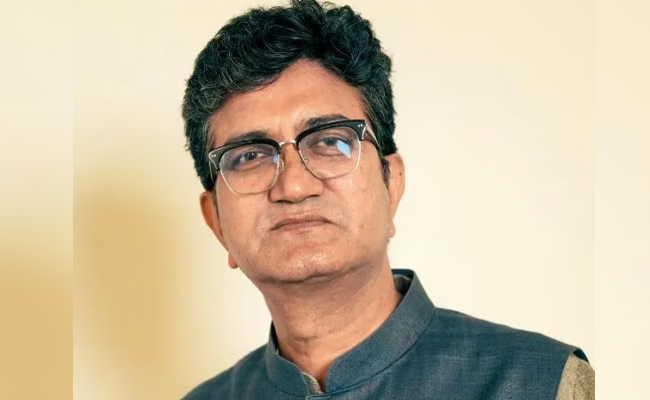
New Delhi (PTI): Noted lyricist, writer and communications expert Prasoon Joshi has been appointed as the chairman of Prasar Bharati, India's public service broadcaster.
The Ministry of Information & Broadcasting appointed Joshi to the key post, according to an official statement on Saturday.
Joshi, a distinguished creative professional with wide-ranging contributions across literature, advertising, cinema, and public communication, and known for his impactful writing and deep cultural sensibility, has played a significant role in shaping contemporary Indian media narratives, the statement said.
Joshi's body of work spans acclaimed film lyrics, advertising campaigns, and socially resonant storytelling that connects with diverse audiences across the country.
On his appointment, Union Minister of Information & Broadcasting Ashwini Vaishnaw said, "My heartfelt congratulations to Shri Prasoon Joshi ji on his appointment as chairman of the Prasar Bharati Board. Prasoon ji is a rare creative spirit celebrated across the world in advertising, literature, art and cinema, yet his heart beats unmistakably for India."
Vaishnaw said Joshi's words carry the fragrance of the country's soil, and his vision reflects the timeless essence of Indian culture.
"Under his stewardship, Prasar Bharati will discover renewed energy, deeper purpose, and a fresh creative voice. My very best wishes to him for a memorable and meaningful tenure ahead," the minister said.
Before this appointment, Joshi has served as chairperson, Central Board of Film Certification (CBFC), Mumbai since August 2017.
He contributed to strengthening film certification processes while engaging with stakeholders across the film industry and his tenure at CBFC reflected a balanced approach towards creative expression and regulatory responsibility, the statement said.
Earlier, he had also served as CEO, McCann World Group India and Chairman, McCann World Group Asia Pacific (a subsidiary of McCann Erickson). Joshi is also one of the Trustees of Indira Gandhi National Centre for Arts since 2016.
With his extensive experience in creative industries and public communication, Joshi is expected to bring a unique perspective to the leadership of Prasar Bharati at a time when public broadcasting is navigating rapid technological transformation and evolving audience expectations, it said.
Established under the Prasar Bharati (Broadcasting Corporation of India) Act, 1990, and operational since 1997, Prasar Bharati is India's statutory autonomous public service broadcaster.
It comprises two major divisions: All India Radio (AIR)-- one of the largest radio networks in the world, reaching millions across urban and rural India in multiple languages and dialects; and Doordarshan (DD) -- India's national television broadcaster, offering a wide range of programming including news, education, entertainment, and cultural content.