Nehru continues to inspire world leaders, but Modi denigrates him: Congress on Singapore PM's speech
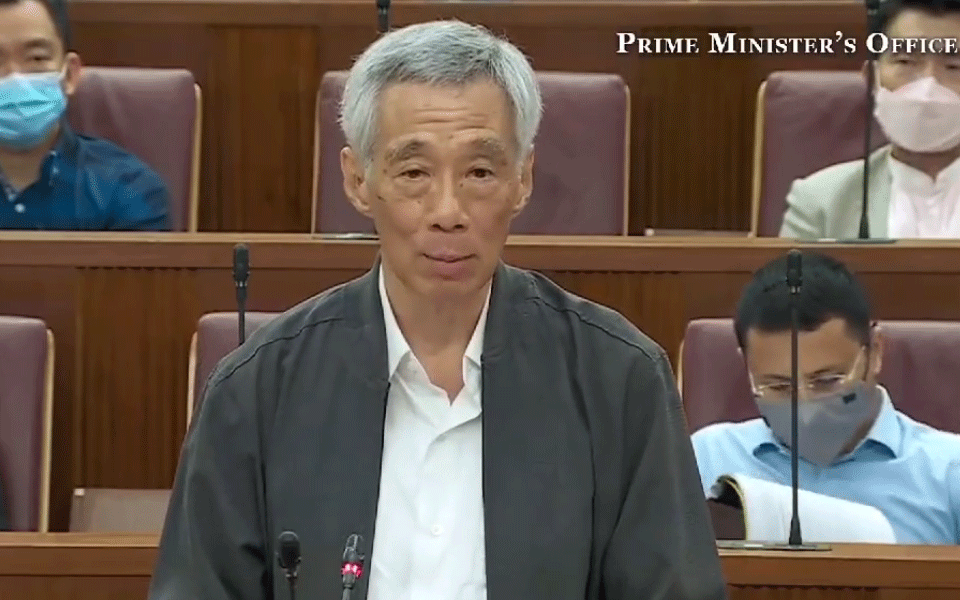
New Delhi, Feb 17: After Singapore's Prime Minister Lee Hsien Loong invoked Jawaharlal Nehru during a speech on democracy, the Congress on Thursday said while the country's first premier continues to inspire world leaders even today, PM Narendra Modi denigrates him inside and outside of Parliament.
"Pandit Nehru's magnanimity continues to inspire world leaders even today. Pity the ones here at home who fail to have the vision to understand the exceptional leader he was," the Congress said on its Twitter handle.
Senior party leader and former Union minister Jairam Ramesh shared a video clip of Lee Hsien Loong's speech and said, "Singapore PM invokes Nehru to argue how democracy should work during a parliamentary debate whereas our PM denigrates Nehru all the time inside and outside Parliament."
Former prime minister Manmohan Singh said the BJP, despite being in power for more than seven years, continued to blame Nehru for the problems of the people.
The Indian Overseas Congress also said on Twitter, "Nehru stands tall as an epitome of democracy! Listen to PM of Singapore who refers to Nehru when he speaks about building a democratic society. Hope our PM listens to it."
The All India Mahila Congress also shared an identical tweet.
Senior Congress leader and former chief minister of Madhya Pradesh Digvijaya Singh tweeted, "This is the difference between Lee Hsien Loong and Narendra Modi. Lee is leading Singapore to new heights of development and Modi is taking our country for a ride on false promises. No matter how hard Modi tries, Pt Nehru shall remain immortal, builder of Modern India."
Lee invoked Nehru while arguing how democracy should work in the city-state during a passionate debate in Parliament.
"Most countries are founded and start off on the basis of high ideals and noble values. But more often than not, beyond the founding leaders and the pioneer generation, over decades and generations, gradually things change," he said on Tuesday.
"Things start off with passionate intensity. The leaders, who fought for and won independence, are often exceptional individuals of great courage, immense culture, and outstanding ability. They came through the crucible of fire and emerged as leaders of men and nations. They are the David Ben-Gurions, the Jawaharlal Nehrus, and we have our own too," he said.
Imbued with enormous personal prestige, they strive to meet the high expectations of their peoples to build a brave new world, and shape a new future for their peoples, and for their countries. But beyond that initial fervour, succeeding generations often find it hard to sustain this momentum and drive, Lee said.
The texture of politics changes, respect for politicians declines. After a while, the electorate comes to think this is the norm. So, standards get debased, trust is eroded, and the country declines further, he said.
Singapore PM invokes Nehru to argue how democracy should work during a parliamentary debate whereas our PM denigrates Nehru all the time inside and outside Parliament
— Jairam Ramesh (@Jairam_Ramesh) February 17, 2022
pic.twitter.com/B7WVhzxb9h
Let the Truth be known. If you read VB and like VB, please be a VB Supporter and Help us deliver the Truth to one and all.
Congress using hijab issue to pacify minority anger, alleges Karnataka LoP R Ashoka
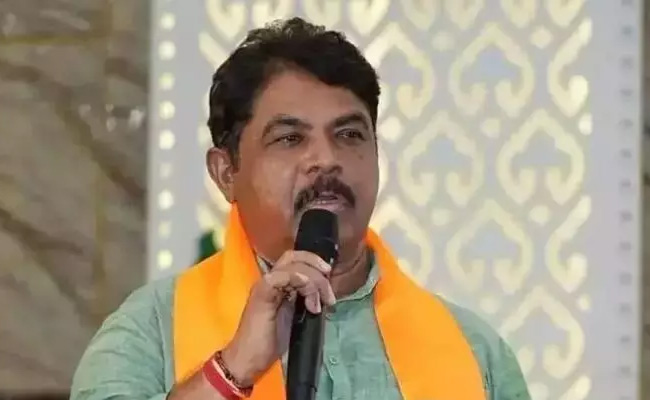
Bengaluru: Leader of Opposition in the Assembly R. Ashoka has accused the Congress government of using the hijab issue to placate what he described as discontent among minority voters after the Davanagere by-election.
In a post on X on Wednesday, Ashoka alleged that the state government, instead of addressing issues such as price rise, corruption, farmers’ distress and law and order, was attempting to retain its minority vote base by reviving the hijab issue.
Referring to the 2022 dress code introduced by the BJP government, which prohibited hijab in schools and colleges, Ashoka said the Karnataka High Court had upheld the policy and emphasised the importance of discipline in educational institutions.
He questioned the Congress government’s move to revisit the issue and asked whether setting aside the court-backed policy to benefit one community could be described as secularism.
Ashoka further alleged that while the government was willing to permit hijab, it continued to prohibit saffron shawls.
He accused the government of dividing students on religious lines rather than treating schools and colleges as spaces of equality.
Drawing a comparison with Mamata Banerjee’s government in West Bengal, Ashoka claimed that excessive appeasement politics had harmed the state and warned that the Congress in Karnataka could face a similar political response.
He said voters in Karnataka would teach the Congress a lesson for what he termed “vote-bank politics” and for compromising constitutional and judicial principles.