Never called for closure of madrassas, Muslim children should get formal education: NCPCR
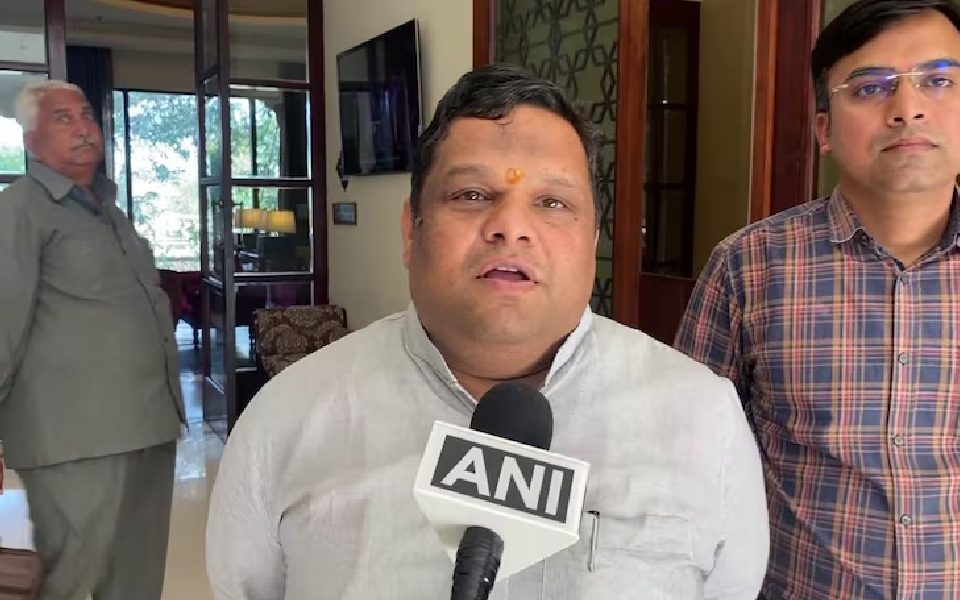
New Delhi, Oct 16: NCPCR chairperson Priyank Kanoongo said he never called for the closure of madrassas but recommended state funding to these institutions be stopped as they are depriving poor Muslim children of education.
He said that Muslim children from improverished backgrounds are often pressured into religious schooling over secular education. We advocate for equitable educational opportunities for all children.
In a recent report, the apex child rights body, the National Commission for Protection of Child Rights (NCPCR) raised serious concerns about the state of functioning in madrassas and called for stopping the state funding unless they comply with the Right to Education Act.
The report received sharp reaction from political leaders, including SP chief Akhilesh Yadav who blamed the ruling BJP for selectively targeting minority institutions. Kerala's Indian Union Muslim League (IUML) said it was the latest display of the communal agenda by the Union government and its agencies.
However, Kanoongo clarified that he never called for the closure of the madrassas.
"We never advocated for the closure of madrasas. Our stance is that while affluent families invest in religious and regular education, even children from impoverished backgrounds should be imparted that," he stated, emphasising the need for equitable educational opportunities for all children regardless of socioeconomic status. Responding to the functioning of the madrassas, Kanoongo criticised certain groups within the country for "fearing" the empowerment of the poor Muslim community.
"There exists a faction in our nation that dreads the empowerment of Muslims. Their fear stems from the anticipation that empowered communities will demand accountability and equal rights," he told PTI in an interview.
This, he suggested, is a primary reason behind the resistance to inclusive educational reforms.
Highlighting the government's responsibility, Kanoongo asserted, "It is the duty of the government to ensure that children receive normal education. The state cannot turn a blind eye to its obligations."
He pointed out that impoverished Muslim children are often pressured into religious schooling over secular education, undermining their prospects.
"Why do we constrain our poorest Muslim children to attend madrassas instead of schools? This policy shifts the burden unfairly onto them," Kanoongo remarked.
Reflecting on the historical policies, Kanoongo recalled the post-1950 constitutional mandate for universal education. "After the Constitution was implemented in 1950, Maulana Azad (India's first Education minister) visited madrassas in Uttar Pradesh and declared that Muslim children did not need to pursue higher education in schools and colleges. This led to a significant underrepresentation of Muslim students in higher education, currently hovering around five per cent," he noted.
In contrast, he highlighted the participation rates of other marginalized communities, suggesting that systemic biases have hindered Muslim students' academic achievements.
"Look at this situation: around 13 to 14 per cent of students in higher education are from Scheduled Castes (SC), and over 5 per cent are from Scheduled Tribes (ST). Combined, SC and ST students make up 20 per cent of the higher education population, while Other Backward Classes (OBC) account for 37 per cent while Muslims in higher education just remain 5 per cent," he said.
Kanoongo also criticised the past education ministers from the Muslim community, labelling them as "white elephants of misdeeds" for their roles in perpetuating educational disparities.
"These ministers stood in madrassas and discouraged Muslim children from pursuing regular education, effectively depriving them of their fundamental right to education," he said.
Going ahead, Kanoongo stressed the importance of integrating madrassa students into mainstream schools.
"We have recommended mapping unmapped madrassas and enrolling children into schools. While some states like Kerala have resisted, others like Gujarat have taken proactive steps. In Gujarat alone, over 50,000 children have been enrolled in schools despite facing violent opposition," he explained.
He remained optimistic and said, "In the next decade or so, these Muslim children will become doctors, engineers, and bankers, and they will validate our efforts."
Kanoongo highlighted the broader implications of empowering Muslim communities.
"Empowering Muslims means they will demand their rightful place in society, ensuring accountability and equality," he affirmed.
When asked about allegations that NCPCR is more vocal towards non BJP ruled states, he said "What happens is that whether you talk to Mamata ji, go to Karnataka and speak with Priyank Kharge or Siddaramaiah, or speak to Tamil Nadu’s Stalin government, they put allegations on us to hide their own wrongdoings, accusing us of political vendetta. You should read our reports. The difference is that if I speak with good intentions to BJP-ruled states, they accept our recommendations in good faith".
Kanoongo finishes two terms as NCPCR chairperson on Wednesday.
Let the Truth be known. If you read VB and like VB, please be a VB Supporter and Help us deliver the Truth to one and all.
Gold, silver soar as US-Iran deal hopes lift bullion demand

New Delhi (PTI): Gold prices rebounded by Rs 2,900 to Rs 1.55 lakh per 10 grams in the national capital on Wednesday, while silver climbed to Rs 2.54 lakh per kilogram as easing geopolitical tensions triggered a pullback in oil rates, boosting demand for precious metals.
According to the All India Sarafa Association, the yellow metal of 99.9 per cent purity jumped by Rs 2,900, or nearly 2 per cent, to Rs 1,55,400 per 10 grams (inclusive of all taxes) from Tuesday's closing level of Rs 1,52,500 per 10 grams.
Traders attributed the surge in bullion prices to reports that Washington and Tehran are close to finalising a framework agreement to end months of conflict, raising the prospects of smoother flows through the Strait of Hormuz and easing inflation concerns tied to energy markets.
"Gold rallied strongly on Wednesday as easing geopolitical tensions triggered a sharp reversal in key macro drivers that had recently pressured precious metals," Saumil Gandhi, Senior Analyst - Commodities at HDFC Securities, said.
Silver prices also advanced for the third straight session by rising Rs 3,500, or 1.4 per cent, to Rs 2,54,500 per kg (inclusive of all taxes). The metal had settled at Rs 2,51,000 per kg in the previous session, as per the Association.
"The prospect of a diplomatic breakthrough triggered a steep decline in oil prices and the US dollar, easing concerns about inflation while boosting demand for precious metals," Gandhi said.
Globally, spot gold increased by USD 106.15, or 2.33 per cent, to USD 4,663.70 per ounce while silver gained USD 3.40, or 4.68 per cent, to USD 76.24 per ounce.
"Gold witnessed a sharp rally as markets reacted positively to reports that the US and Iran are moving closer to a one-page agreement framework aimed at ending the conflict," Jateen Trivedi, VP Research Analyst - Commodity and Currency, LKP Securities, said.
Despite strong international gains, rupee strength limited the upside in domestic gold prices. The market is now highly focused on final confirmation and execution of the proposed deal, he added.
Any negative surprise or breakdown in negotiations could trigger a sharp sell-off in gold, while a successful agreement and sustained ceasefire could push the bullion prices higher in the near-term, Trivedi said.