New commission to replace UGC will be autonomous: Javadekar
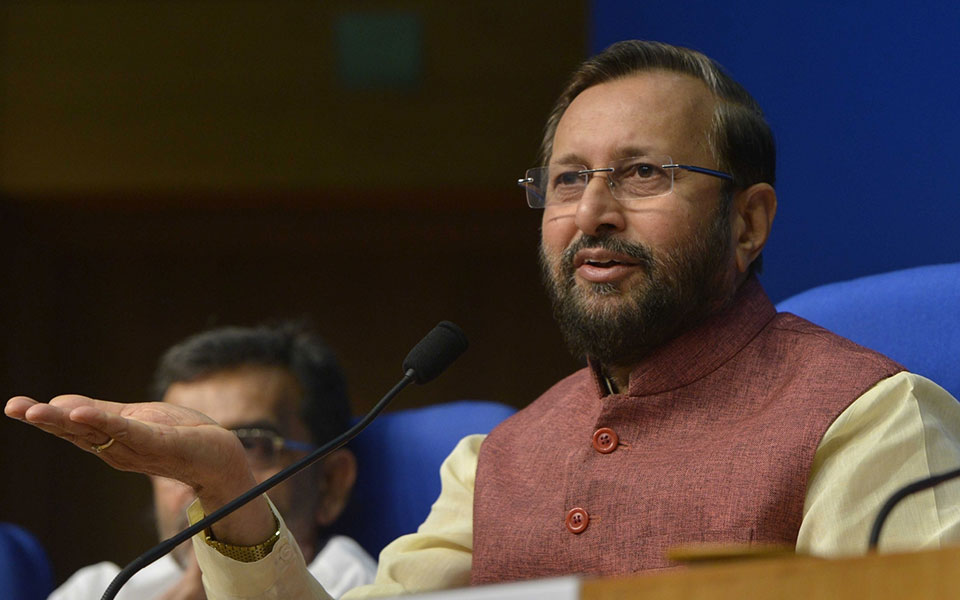
New Delhi, July 23 : Human Resource Development Minister Prakash Javadekar on Monday said the new body to replace the University Grants Commission (UGC) will be autonomous with two separate wings -- one for regulatory functions and the other for providing grants to higher education institutions.
"We are not converting the UGC into a bureaucratic body. It will be autonomous. We will only change the name. It has to concentrate on quality of education and maintenance of standards," Javadekar told the Lok Sabha after members raised the issue.
He was replying to some members who raised apprehensions over the government bringing in the Higher Education Commission of India Bill, 2018 that seeks to repeal the University Grants Commission (UGC) Act, 1956.
The minister said the UGC was created in 1956, when the country had 20 universities, 500 colleges and around 200,000 students.
But now there were 900 universities, 40,000 colleges and over 3.5 crore students in the country.
The new act proposes to establish the Higher Education Commission ostensibly to improve the quality of higher education in the country and bring it at par with international standards.
K.C. Venugopal of the Congress asked the government if it had sought opinions from stakeholders and the public before bringing in changes.
Javadekar said the ministry had received "10,000 reactions" from different people and the government was reviewing them.
Calling the Higher Education Commission Act an "old wine in new bottle", AIADMK member M. Thambidurai asked: "Why can't they strengthen the UGC instead of replacing it with a new bill?"
Let the Truth be known. If you read VB and like VB, please be a VB Supporter and Help us deliver the Truth to one and all.
4 workers die after being buried under coal slurry in Jharkhand's Dhanbad
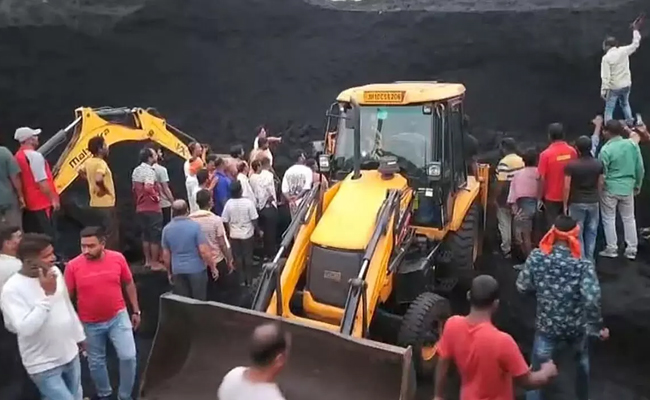
Dhanbad (Jharkhand) (PTI): At least four workers died after being buried under coal slurry in Jharkhand's Dhanbad district on Saturday, a police official said.
The incident took place at Moonidih coal washery in the command area of Bharat Coking Coal Limited (BCCL).
"Bodies of all four workers were dug out of debris during a rescue operation," Putki police station in-charge Waqar Hussain told PTI.
The incident took place when coal slurry was being loaded into trucks by workers, during which a large chunk of slurry fell and trapped several workers underneath, officials said.
The deceased have been identified as Manik Bauri, Dinesh Bauri, Deepak Bauri, and Hemlal Gope.
Meanwhile, the family members of the deceased and local villagers placed the bodies in front of the washery gate and began a protest.
They demanded compensation, jobs for dependents and action against those responsible for the incident.
Police and administration officials are trying to pacify the protesters, an official said.