New motor vehicles act made stricter to make people respect rules: Nitin Gadkari
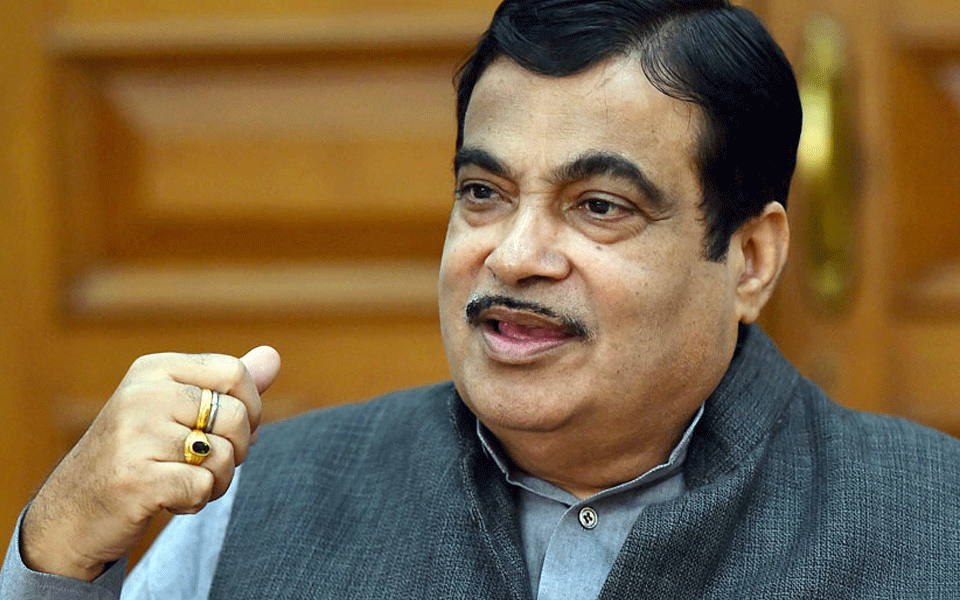
Nagpur: Union Road Transport and Shipping Minister Nitin Gadkari on Saturday defended the high penalty under the new motor vehicles act, saying the idea behind it is to make people conform to rules, and asked what is more important lives or money.
Speaking during a programme in Nagpur, Gadkari tried to address the criticism of the high penalties under the new law, saying only those who were breaking the law were paying fines. "If one does not break the law, why will he need to pay a fine?"
"We are jumping red signals, accidents are happening everyday, people are losing their lives. If people will have fear of law, only then will they follow rules," he said.
"What is more important people's lives or money," Gadkari asked, when pointed out the high penalty provisions under the Motor Vehicles (Amendment) Bill, 2019.
Earlier, he said, people did not take road safety rules seriously and used to get away by paying a small amount. This attitude won't stop until strict rules are made, the minister added.
"Now people are applying for licences, insurances and purchasing helmets and this would save lives of thousands of people," he said.
During the programme, Gadkari also spoke on various aspects of his life, his childhood, family, politics, his vision for the country. And shared is ideas on his social, innovative projects.
He said people often make fun of his innovative ideas and mock him. Citing an example, he said once he had spoken about collecting 'urine in plastic bags', which, he added, if done on a massive scale, could decrease the load of urea import on the country.
Gadkari also talked about his meeting with a person researching on "gold" coming out of cow dung and human faeces. He did not name the person.
He said a lot changes are taking place today and, "I feel more emphasis should be put on research as such things coming out of research.
Let the Truth be known. If you read VB and like VB, please be a VB Supporter and Help us deliver the Truth to one and all.
Bridge portion collapses on Jammu outskirts; 3-4 labourers feared trapped, 1 rescued
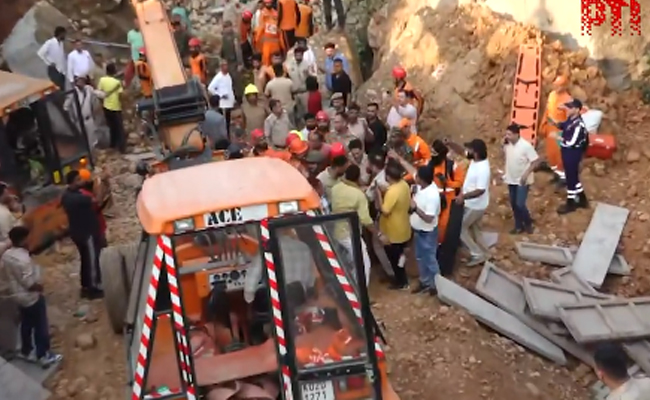
Jammu (PTI): A portion of a small bridge collapsed in the Bantalab area on the outskirts of Jammu city on Friday, trapping at least three to four labourers under the debris, while one injured worker was rescued, official sources said.
Authorities have closed the road link following the collapse of the portion of the bridge.
The incident occurred when labourers were carrying out repair work on a retaining wall near the bridge that was damaged in last year's flash floods, the sources said.
According to the sources, a section of the bridge suddenly gave way, burying workers engaged at the site under the rubble.
Police, Army and State Disaster Response Force (SDRF) teams launched rescue operations to extricate those buried under the debris. They pulled out one injured labourer and shifted him to a hospital, the sources said.
Family members of the labourers present at the site said around six workers engaged at the site at the time of the incident came under the debris when the structure collapsed. The family members said while two of the labourers managed to escape, four got trapped.
The sources said those trapped included the husband of a woman labourer, a mason, an unmarried labourer and a relative of the contractor.
There was no official confirmation on the exact number of persons trapped under the debris till the filing of this report.
The rescue operations are ongoing.