New reservation, domicile rules announced for Ladakh
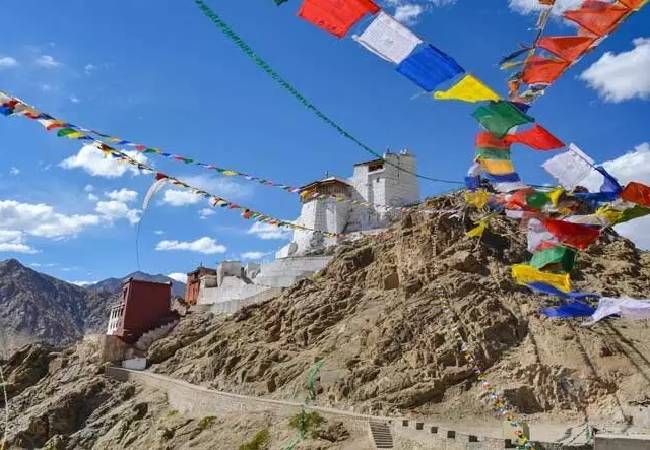
New Delhi (PTI): The government on Tuesday announced new reservation and domicile polices for the Union Territory of Ladakh, reserving 85 per cent jobs for locals and one-third of the total number of seats in the Ladakh Autonomous Hill Development Councils for women.
English, Hindi, Urdu, Bhoti and Purgi languages have been made the official languages in Ladakh.
The move is aimed at safeguarding local interests as people in Ladakh have been protesting for constitutional safeguards to protect their language, culture and land after the special status of the erstwhile state of Jammu and Kashmir under Article 370 was abrogated in 2019.
The changes in the policies for reservation in jobs, autonomous councils, domicile and languages will come into effect from Tuesday, according to multiple notifications issued by the government.
Under the new rules, those who have resided for a period of 15 years in the UT or studied for a period of seven years and appeared in class 10 or 12 examination in an educational institution located in the UT shall be domicile of Ladakh for the purposes of appointment to any post under the UT or under a local or other authority other than cantonment board.
Children of central government officials, All India Services Officers, officials of Public Sector Undertaking and autonomous body of central government, Public Sector Banks, officials of statutory bodies, officials of central universities and recognised research institutes of central government who have served in the UT for a total period of 10 years are also eligible for domicile.
Reservation for the Economically Weaker Sections continues to be 10 per cent.
In another notification, the government said that in the Ladakh Autonomous Hill Development Councils Act, 1997, not less than one-third of the total number of seats in the Councils shall be reserved for women and such seats may be allotted by rotation to different territorial constituencies.
The rotation of constituencies reserved for women shall be made on the basis of serial number allotted to each constituencies by notification in the official gazette.
Ladakh has two autonomous hill development councils - the Ladakh Autonomous Hill Development Council, Leh and the Ladakh Autonomous Hill Development Council, Kargil.
Domicile certificate will be valid only for the purpose of appointment to the posts under the UT of Ladakh as defined in the Ladakh Civil Services Decentralisation and Recruitment (Amendment) Regulation, 2025.
Besides making English, Hindi, Urdu, Bhoti and Purgi as the official languages of Ladakh, the government said English shall continue to be used for all the official purposes of the UT for which it was being used before the date of commencement of this regulation.
The administrator of the UT will also take such necessary steps to strengthen the institutional mechanisms for the promotion and development of other languages in Ladakh and the establishment of the Academy of Art, Culture and Languages.
Special efforts will be made for the promotion and development of other native languages of Ladakh like Shina (Dardic), Brokskat (Dardic), Balti and Ladakhi.
According to the provisions of the Jammu and Kashmir Reorganisation Act, Jammu and Kashmir has been made a UT with a legislative assembly and Ladakh a UT without any assembly.
The BJP-led Centre had assured a delegation from Ladakh in December 2023 that it was committed to fast-tracking the development of the UT and meeting the aspirations of the people in the region.
Subsequently, the Ministry of Home Affairs formed a High Powered Committee (HPC) for Ladakh under Union Minister of State Nityanand Rai's chairmanship to discuss measures needed to protect the region's unique culture and language, taking into consideration its geographical location and strategic importance.
The HPC was given mandate to discuss ways for protection of land and employment, measures for inclusive development and employment generation in the region, measures related to the empowerment of the Ladakh Autonomous Hill Development Councils of Leh and Kargil and constitutional safeguards that could be provided.
Several organisations of Ladakh were demanding a separate UT for the region for decades and the demand was fulfilled on August 5, 2019. However, many people of Ladakh were not happy after losing the rights to elect their representatives to the legislative assembly.
In August 2024, the Centre created five new districts in the UT of Ladakh.The new districts were Zanskar, Drass, Sham, Nubra and Changthang. Being a UT, Ladakh comes under the direct administrative control of the union home ministry.
In October 2024, climate activist Sonam Wangchuk also sat on an indefinite fast in Delhi to press for their demands After that, talks were held with civil society leaders from Ladakh on December 3, 2024 and again on January 15 this year and on May 27.
Let the Truth be known. If you read VB and like VB, please be a VB Supporter and Help us deliver the Truth to one and all.
Double-decker electric bus gutted in fire at Kurla BEST depot
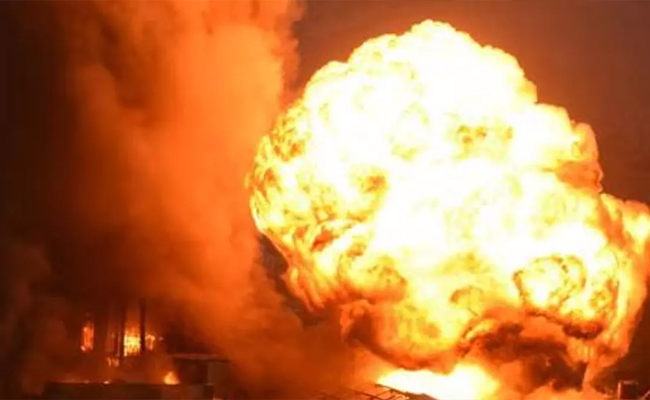
Mumbai (PTI): An empty double-decker electric bus was gutted in a fire during servicing at a BEST depot in Mumbai's Kurla area on Sunday, officials said, adding that nobody was injured.
The blaze broke out inside the Kurla BEST bus depot near Kanakia Building at 4.14 pm, according to preliminary information from the Mumbai Fire Brigade.
The parked bus was unoccupied at the time of the incident.
Fire brigade personnel rushed to the spot and brought the blaze under control. The exact cause of the fire was yet to be ascertained, they said.
No injuries were reported in the incident, officials added.
The Brihanmumbai Electricity Supply and Transport (BEST) Undertaking has hired 50 electric double-decker buses from Switch Mobility in its fleet of around 2,700 buses.