News Anchor Aman Chopra who screamed “Ashraf, Ashraf” in Mahalaskhmi case, now tight-lipped
Accused Mukti Ranjan Roy was found dead in Odisha
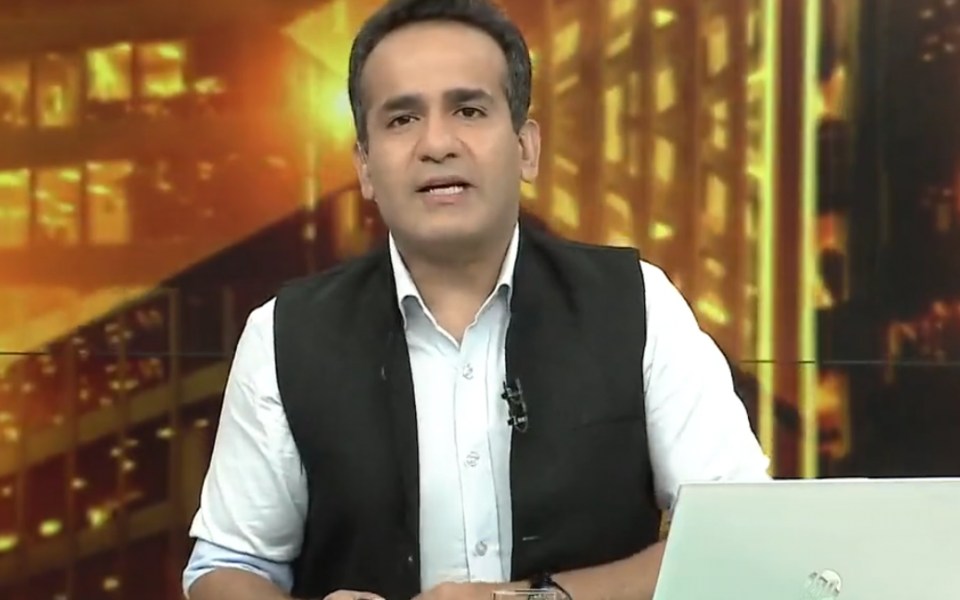
Bengaluru/New Delhi: Aman Chopra, a prominent news anchor with News18 India, is under fire for attempting to communalize the tragic murder of a woman in Bengaluru. The body of Mahalakshmi, 29, was found chopped into 59 pieces inside a refrigerator at her residence on September 21, shocking the city and sparking intense media coverage.
In the early days of the investigation, Chopra focused on Mahalakshmi's acquaintance, a man named Ashraf, attempting to link the crime to what he suggested was a broader pattern of "love jihad," a term used by some to allege that Muslim men target Hindu women in relationships to convert them. On his prime-time show, Chopra repeatedly stressed Ashraf's name, insinuating that the crime had religious undertones.
However, the investigation took a turn when the prime suspect, Mukti Ranjan Roy, was found dead in Odisha. A suicide note discovered near his body revealed that Roy had a close relationship with Mahalakshmi and that a heated argument between the two had led to her death. The note also detailed Roy’s subsequent actions, including dismembering the body and fleeing Bengaluru.
Despite this development, which clearly pointed to a different suspect, Aman Chopra has remained conspicuously silent. His earlier attempts to communalize the case by drawing parallels with the high-profile Shraddha Walker murder case—where the accused was a Muslim—have now come under scrutiny.
This is not the first time Chopra has been criticized for such coverage. In previous instances, he has been accused of using similar tactics to inflame communal tensions by focusing on the religious identity of suspects in unrelated crimes. Critics argue that such coverage not only distorts the facts but also exacerbates divisions in society.
As the investigation into Mahalakshmi’s murder continues, authorities in Bengaluru and Odisha are working to piece together the full story. Meanwhile, the backlash against Chopra’s handling of the case has sparked debates about responsible journalism and the dangers of communalizing criminal cases.
News Anchor at Ambani's Channel @News18India was screaming "Ashraf" and trying to communalise the unfortunate death of Mahalakshmi, Now that it is clear that the accused is Mukti Ranjan Roy, @AmanChopra_ has gone back to his holes. pic.twitter.com/Gh7KHQiDz2
— Mohammed Zubair (@zoo_bear) September 26, 2024
Let the Truth be known. If you read VB and like VB, please be a VB Supporter and Help us deliver the Truth to one and all.
Bhojshala case: Disputed structure built from remains of pre-existing temples, claims ASI
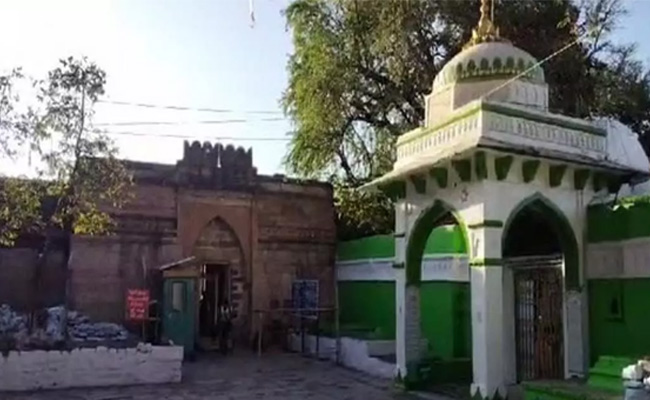
Indore (PTI): The ASI has told the Madhya Pradesh High Court that a massive structure dating back to the Paramara kings' rule existed at the disputed Bhojshala temple-Kamal Maula mosque complex, and the current structure was built from the remains of temples.
The Archaeological Survey of India (ASI) made the claim on Tuesday based on its 98-day scientific survey and over 2,000-page report.
The Hindu community considers Bhojshala a temple dedicated to Vagdevi (Goddess Saraswati), while the Muslim side claims the monument as the Kamal Maula Mosque. The disputed complex is protected by the ASI.
During the hearing before Justices Vijay Kumar Shukla and Alok Awasthi of the HC's Indore bench, Additional Solicitor General Sunil Kumar Jain, representing the ASI, presented a detailed account of the scientific survey conducted two years ago at the complex.
Referring to the ASI's survey report, he said, "Retrieved architectural remains, sculptural fragments, large slabs of inscriptions with literary texts, Nagakarnika inscriptions on pillars, etc, suggest that a large structure associated with literary and educational activities existed at the site. Based on scientific investigations and archaeological remains recovered during the investigations, this pre-existing structure can be dated to the Paramara period."
It can be said that the existing structure was made from the parts of earlier temples, based on scientific investigations, survey and archaeological excavations conducted, study and analysis of retrieved finds, study of architectural remains, sculptures, and inscriptions, art and sculptures, Jain said quoting the report.
Summarising the report, he also drew the court's attention to the fact that the archaeological study identifies that many architectural components, such as pillars and beams, were originally part of temple structures before being repurposed for a mosque.
"The evidence of this transition includes Sanskrit and Prakrit inscriptions that were damaged or hidden, alongside sculptures of deities and animals that were often mutilated or defaced," Jain contended.
The report also states that "all Sanskrit and Prakrit inscriptions are older than the Arabic and Persian inscriptions, indicating that users or engravers of the Sanskrit and Prakrit inscriptions occupied the place earlier".
In light of the Muslim side's earlier objections, the bench wanted to know why there were some discrepancies in the ASI's responses regarding the status of the disputed complex in the cases filed over the years.
The Additional Solicitor General argued that earlier studies of the complex involved only officials, while the current survey involved scientists and the use of advanced technologies such as Ground Penetrating Radar (GPR).
The hearing in the Bhojshala case will continue on Wednesday.
The high court has been regularly hearing four petitions and one writ appeal regarding the religious nature of the Bhojshala temple-Kamal Maula mosque complex since April 6.