NewsClick row: Delhi HC dismisses portal founder's plea challenging arrest in UAPA case
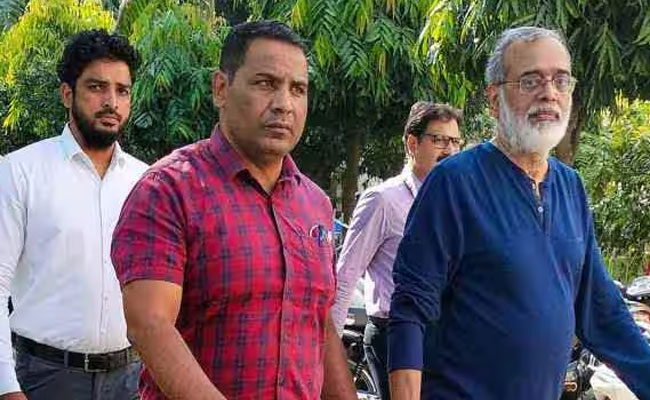
New Delhi (PTI): The Delhi High Court on Friday refused to interfere with the arrest and subsequent police remand of NewsClick founder Prabir Purkayastha and portal's human resources department head Amit Chakravarty in a case lodged under anti-terror law UAPA.
Purkayastha and Chakravarty had contended that the grounds of arrest were not supplied to them when they were apprehended and the trial court order of remand was passed in the absence of their lawyers.
Dismissing the petitions, Justice Tushar Rao Gedela said there was no "procedural infirmity" or violation of legal or constitutional provisions in relation to the arrest and the remand order is sustainable in law.
The judge said the grounds of arrest needed to be "informed" to the arrestee within 24 hours and furnishing of such grounds, in written, was not mandated by the UAPA.
The court, however, said it would be "advisable" that the police henceforth, provide grounds of arrest in writing after redacting "sensitive material".
"The petition, being devoid of any merit, along with pending applications, is dismissed," said the court in its order passed on the petition by the portal's founder.
"After examining the entire issue in the right perspective, it appears as of now that the grounds of arrest were indeed conveyed to the petitioner, as soon as may be, after the arrest and as such, there does not appear to be any procedural infirmity or violation of the provisions of the Section 43B of the UAPA or the Article 22(1) of the Constitution of India and as such, the arrest are in accordance with law," the court further stated.
The court noted that offences under the UAPA directly impact the stability, integrity and sovereignty of the country and are of utmost importance since they would affect the national security and grounds of arrest only need to be informed.
"Keeping in view the law laid down by the Supreme Court in (the case of) Pankaj Bansal (supra), and also considering the stringent provisions of UAPA, it would be advisable that the respondent, henceforth, provide grounds of arrest in writing, though after redacting what in the opinion of the respondent would constitute 'sensitive material'. This too would obviate, as held by the Supreme Court, any such challenge to the arrest as made in the present case," the court, however, added.
Purkayastha and Chakravarty were arrested by the Special Cell of the Delhi Police on October 3.
They subsequently moved the high court challenging the arrest as well as the seven-day police custody and sought immediate release as an interim relief.
On October 10, the trial court sent them to judicial custody for ten days.
A case has been lodged against the two under anti-terror law Unlawful Activities (Prevention) Act (UAPA) for allegedly receiving money to spread pro-China propaganda.
According to the FIR, a large amount of funds to the news portal allegedly came from China to "disrupt the sovereignty of India" and cause disaffection against the country.
It also alleged that Purkayastha conspired with a group -- People's Alliance for Democracy and Secularism (PADS) -- to sabotage the electoral process during the 2019 Lok Sabha polls.
Let the Truth be known. If you read VB and like VB, please be a VB Supporter and Help us deliver the Truth to one and all.
AIITA welcomes Karnataka’s ban on obscene songs in school events
Bhatkal: The Karnataka unit of the All India Ideal Teachers Association (AIITA) has welcomed the Karnataka government’s decision to strictly ban school children from dancing to obscene songs during educational and cultural programmes in government, aided, and private schools across the state.
AIITA Karnataka State President M. R. Manvi congratulated the government for taking what he termed an important step to preserve the sanctity of education.
“Such decisions to safeguard the dignity of school children and uphold the values of education are the need of the hour. This rule should not be limited to government schools alone but must be strictly implemented in all private educational institutions as well,” he said.
He further urged the government to address other concerns within school programmes.
“The government should not only prohibit obscene dances in the name of school anniversaries, but also ensure that plays and dialogues that incite religious hatred are avoided. Schools should be centres of harmony, not platforms for spreading hatred,” he added.
According to a recent circular issued by the Department of School Education and Literacy, obscene dances are adversely affecting the mental health and moral values of students.
In this regard, schools have been advised to use songs that promote nationalism, positive thinking, the greatness of Kannada culture, and value-based traditions instead of inappropriate content during programmes.
The circular also emphasises that students should be dressed in decent attire.
AIITA also backed the department’s warning that disciplinary action would be taken against head teachers if such guidelines are violated. The association has further demanded that district Deputy Directors of Public Instruction strictly monitor the implementation of these rules.