NIA arrests two key men involved in human trafficking to US via 'dunki' route
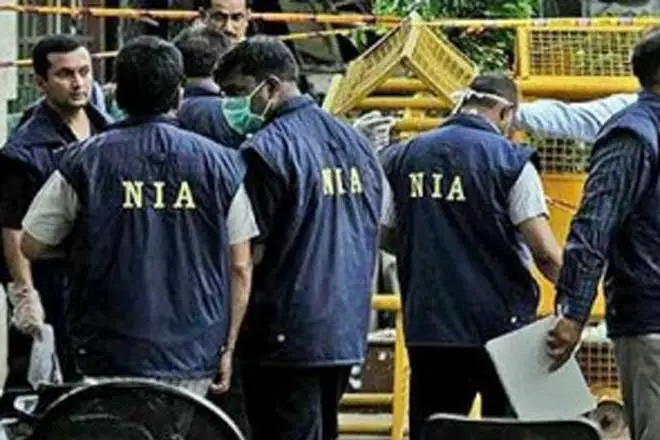
New Delhi (PTI): The National Investigation Agency (NIA) has arrested two key men allegedly involved in trafficking of humans to the US via the infamous 'dunki' route, officials said on Saturday.
The arrests came after searches at a location each in Himachal Pradesh and Delhi, they said.
The accused, Sunny alias Sunny Donker of Dharamshala of Kangra district in HP, and Shubham Sandhal alias Deep Hundi of Ropar, Punjab, who was living in Outer Delhi's Peeragarhi, were arrested on Friday, the NIA said in a statement.
Both, the probe agency said, were associates of Gagandeep Singh alias Goldy, who was arrested in March.
Gagandeep was arrested on a complaint of a victim, who was trafficked to the US using the dunki route and was deported to India this February.
The term dunki, believed to have originated from the word donkey, refers to an illegal pathway that immigrants take to enter countries like the United States without proper documentation.
The risky and arduous travel is usually facilitated by a human-trafficking syndicate.
NIA had chargesheeted Gagandeep Singh, a resident of Tilak Nagar in New Delhi, in the case on June 27.
According to the NIA investigation, Gagandeep used to take around Rs 45 lakh from each traveller and would promise to send them to the US on a valid legal visa.
He would send these people on an arduous journey via multiple countries, including Spain, El Salvador, Guatemala, and Mexico, the probe agency said.
Gagandeep sent more than 100 people illegally to the US in this manner before he was arrested, it said.
Sunny, the main associate/donker of Gagandeep's gang, played a key role in facilitating the illegal travel, the NIA said.
Their victims were physically and mentally harassed on the way by the donkers and agents seeking to make more money, it said.
Shubham Sandhal was an important hawala courier operator, involved in transferring funds to donkers in Latin America, the probe agency said.
Gagandeep used him to transfer part of the money taken from the victims to the donkers based in Latin America, it said.
NIA, which took over the case from Punjab Police on March 13, 2025, continues its investigation, the statement said.
Let the Truth be known. If you read VB and like VB, please be a VB Supporter and Help us deliver the Truth to one and all.
Bridge collapse in Jammu: 3 bodies, 1 injured pulled out from rubble; probe ordered
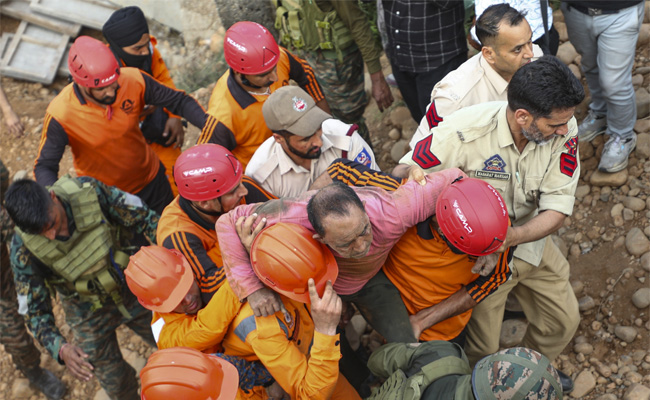
Jammu (PTI): Rescue workers pulled out three bodies and an injured person from the debris of a partially collapsed old bridge during a 12-hour search operation on the outskirts of Jammu, officials said on Saturday.
One injured worker was rescued on Friday, shortly after a portion of the bridge collapsed in the Thuther area of Bantalab.
Deputy Chief Minister Surinder Kumar Choudhary rushed to the spot at midnight and ordered the suspension of two engineers. The government has also constituted a committee to probe the incident.
According to the officials, labourers were carrying out retaining wall and foundation-laying work on the bridge, which was damaged in flash floods last year, when a portion of it gave way, trapping four of them.
Police, Army, National Disaster Response Force, State Disaster Response Force, and fire and emergency department immediately launched a rescue operation. The rescue teams first pulled out a labourer, who was identified as Tarsem Lal, the officials said.
ALSO READ: Five from TN drown in MP boat tragedy
"The search and rescue operation concluded this morning. Three bodies have been recovered from the spot. Two others have been rescued in injured condition," a senior officer told PTI.
The bodies were recovered during the 12-hour search operation, which went on through the night under floodlights, the officials said.
Among the two injured was Divisional Fire Officer, Fire and Emergency Services Department, Mohammad Jaffar, who was hit by a boulder during the rescue operation. The injured have been hospitalised.
Deputy Chief Minister Choudhary was briefed about the incident after he reached the spot at midnight.
"I have ordered the suspension of the assistant executive engineer and the junior engineer. I have also issued directions to the engineer-in-chief for attachment of the executive engineer," he told reporters at the spot.
Choudhary ordered a probe into the incident and directed the authorities to complete it in five days.
Following his order, Assistant Executive Engineer Sahil Verma and Junior Engineer Sajad Mir were placed under suspension, pending inquiry into their conduct, the officials said.
The government has also constituted a three-member inquiry committee headed by Purshotam Kumar, Secretary Technical (Engineer-in-Chief), Public Works (R&B) Department, they said.
Superintendent Engineer, Public Works (R&B), Circle Jammu South, Arit Gupta, and Executive Engineer, Public Works (R&B) Satwari division, Rajan Mengi are members of the panel, they said.