NIA chargesheets 11 accused in BKI-orchestrated terror attack on Punjab police station
New Delhi (PTI): The National Investigation Agency (NIA) has chargesheeted 11 accused ved in connection with the terror attack on a police station in Punjab that was orchestrated by a banned Khalistani outfit, officials said.
The arrested accused have been charged on Saturday under various provisions of the Bharatiya Nyaya Sanhita (BNS), Unlawful Activities (Prevention) Act, Arms Act, and Explosive Substances Act. The chargesheet was filed before an special NIA court in Mohali, Punjab, an official statement said.
Another 11 accused identified in the case are absconding.
Foreign-based handlers of the proscribed terror outfit Babbar Khalsa International (BKI) -- Harpreet Singh alias Happy Passia, Mannu Agwan and Gurpreet Singh alias Gopi Navasherian -- had publicly claimed responsibility for the attack, which took place on April 6 this year, the statement said.
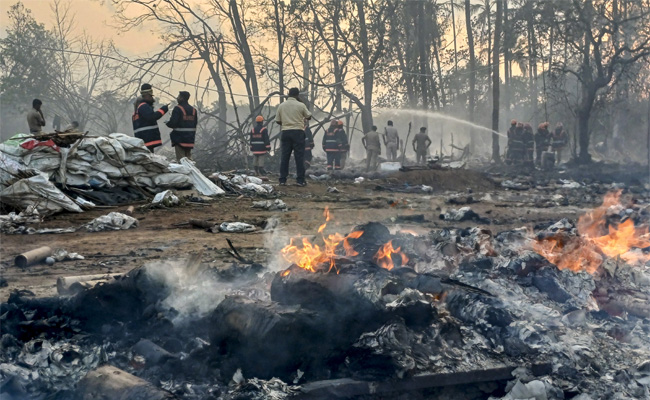
The rocket propelled grenade (RPG) attack on the Qila Lal Singh police station in Batala district was executed by BKI members, with active support from foreign-based operatives, with the intent to spread terror and promote the agenda of anti-India groups, it said.
Investigations by the NIA, which took over the case from the state police in May, revealed that the conspiracy was directed by foreign-based terror operatives, who exploited family ties and other vulnerabilities.
They used social media platforms to radicalise and recruit vulnerable youth from Punjab to unleash terrorism against India, the probe agency said.
The NIA is continuing to investigate the case in an effort to nab the absconders and any other unidentified conspirators involved in the attack, it added.
Let the Truth be known. If you read VB and like VB, please be a VB Supporter and Help us deliver the Truth to one and all.
NIA registers case to probe recovery of 79 crude bombs in poll-bound West Bengal
New Delhi (PTI): The National Investigation Agency (NIA) on Sunday registered a case to probe recovery of 79 crude bombs in poll-bound West Bengal, officials said.
The move came following a directive by the Union Home Ministry in this regard, they said.
In pursuance to the home ministry's order, the anti-terror agency on Sunday registered a case, which was originally filed at Uttar Kashi police station, Bhangar division, Kolkata on Saturday, and took up the investigation, an NIA spokesperson said in a late night statement.
"The case pertains to recovery of 79 crude bombs and other incriminating materials by Kolkata police, which were being stored at a spot, thereby endangering human life and property," the spokesperson said.
Earlier in the day, the Election Commission had directed the West Bengal Police to launch a special drive to arrest those involved in illegal manufacturing of crude bombs in the poll-bound state, an official said.
It asserted that all cases related to the making of any such explosive would be probed by the National Investigation Agency, the official said.
The directive came after the police recovered a large number of crude bombs from the house of a person, allegedly a TMC worker, at Bhangar in South 24 Parganas district, days ahead of the second and final phase of the assembly polls in the state.
The explosives were recovered during a search at the residence of Rafikul Islam following specific inputs, the official said.
The poll panel also issued a warning to senior police officers across the state over any lapse in maintaining law and order before the April 29 polling.
The first phase of the assembly elections in West Bengal was held on April 23, while the second phase will take place on April 29. Votes will be counted on May 4.
A record 93.19 per cent turnout has been recorded in the first round of polling. Bhangar will vote in the second phase.