Nine dead, over 150 hospitalised after consuming contaminated water in Indore, sewer bacteria found

Indore: At least nine people have died and more than 150 others have been hospitalised after consuming contaminated drinking water in Indore’s Bhagirathpura area of Madhya Pradesh, with an official inquiry detecting the presence of bacteria commonly found in sewer water, officials said on Thursday.
Initial findings from water samples collected in the locality revealed “abnormal bacteria generally found in sewer water,” indicating possible contamination from human waste. Officials said further laboratory tests are underway to identify the exact pathogens responsible for the outbreak.
ALSO READ: Congress and NCP (SP) to contest separately in Nagpur civic polls
The contamination is suspected to have occurred due to a leakage from a sewage line into a drinking water pipeline, as reported by Hindustan Times. “The initial report has confirmed the presence of bacteria usually found in sewer water. However, the culture report is awaited to identify the bacteria. Stool test reports of affected patients are also pending, which will provide further clarity,” said Dr Arvind Ghanghoria, Dean of Mahatma Gandhi Medical College, Indore.
Residents claimed that they had been complaining about foul-smelling water for several days before the outbreak intensified. According to the local administration, complaints about the water supply began around December 25, though residents said the problem had persisted for weeks.
The National Human Rights Commission (NHRC) has issued a notice to the Madhya Pradesh government, seeking a detailed report within two weeks. The NHRC noted that residents had reportedly raised concerns about contaminated water supply before the deaths occurred.
The Indore bench of the Madhya Pradesh High Court has also sought a report from the state government. The court directed it to place full details of the incident on record.
Chief Minister Mohan Yadav visited affected patients undergoing treatment and announced an ex-gratia assistance of ₹2 lakh each for the families of the deceased. He assured free medical treatment for all those affected.
So far, around 2,456 people have reported symptoms such as vomiting and diarrhoea. Of these, 162 have been admitted to hospitals.
Let the Truth be known. If you read VB and like VB, please be a VB Supporter and Help us deliver the Truth to one and all.
Fire at mass marriage event attended by Dy CM Shivakumar, nobody affected
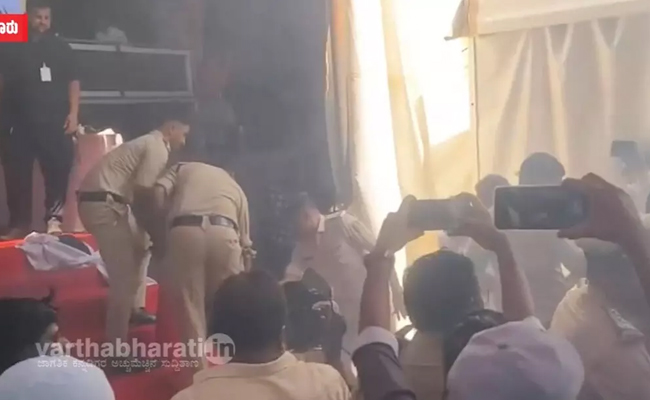
Raichur (Karnataka) (PTI): Fire broke out near the stage of the mass marriage event that was attended by Deputy Chief Minister D K Shivakumar here, police said on Sunday.
Nobody was affected, and the fire was immediately put out, they said.
The fire was noticed shortly after Shivakumar and other dignitaries left the stage, and Forest Minister Eshwaran Khandre was speaking to the media at the venue in Sindhanur, officials said.
According to officials, wires, speakers, and cloth materials near the stage caught fire, allegedly due to a short circuit.
Police personnel present at the spot quickly swung into action and extinguished the fire.
The programme was halted for some time and resumed later, they said.
Several ministers, legislators and political leaders from the region, and actor Sudeep had attended the event.