Nine-judge SC bench hears pleas on discrimination against women at religious places
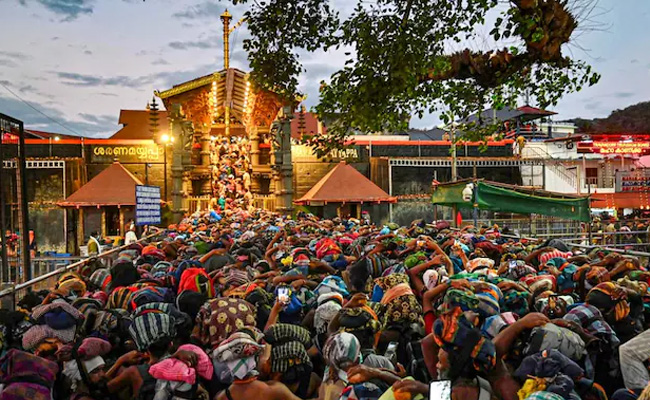
New Delhi (PTI): A nine-judge Supreme Court bench on Tuesday commenced hearing on petitions related to discrimination against women at religious places, including Sabarimala temple of Keralam, and on the ambit and scope of religious freedom practised by multiple faiths.
The Constitution bench comprises Chief Justice Surya Kant and Justices B V Nagarathna, M M Sundresh, Ahsanuddin Amanullah, Aravind Kumar, Augustine George Masih, Prasanna B Varale, R Mahadevan and Joymalya Bagchi.
Ahead of the hearing, the Centre filed written submissions and requested the top court to uphold restriction on the entry of women of menstruating age into Sabarimala temple.
The Union of India said the issue falls squarely within the domain of religious faith and denominational autonomy, and lies beyond the scope of judicial review.
In September 2018, a five-judge Constitution bench, by a 4:1 majority verdict, had lifted the ban that prevented women between the age of 10 and 50 from entering the Ayyappa shrine at Sabarimala and held that the centuries-old Hindu religious practice was illegal and unconstitutional.
ALSO READ: Sathankulam custodial deaths: Nine police personnel sentenced to death by court
Later, on November 14, 2019, another five-judge bench headed by the then CJI Ranjan Gogoi, by a majority of 3:2, referred the issue of discrimination against women at various places of worship to a larger bench.
The bench had then framed broad issues on freedom across religions, saying they cannot be decided without any facts of the particular case.
Besides the Sabarimala case, the verdict also referred to the larger bench the issues of Muslim women's entry into mosques and dargahs, and the entry of Parsi women, married to non-Parsi men, to the holy fire place of an Agiary.
On May 11, 2020, another bench held that its five-judge bench had the power to refer the questions of law to a larger bench for adjudication while exercising its limited power under review jurisdiction in the Sabarimala temple entry case.
On February 16, the top court had said it would commence final hearing in the matter on April 7, which was expected to conclude on April 22.
Solicitor General Tushar Mehta appearing for the Centre had said that he supported the pleas for review of the Sabarimala verdict, which allowed entry of women of all age groups to the hill-top shrine in Keralam.
Earlier, the top court read out seven questions it had framed on the scope of religious freedom.
Asserting that it was open to addition and deletion of issues framed, the bench had said it would consider "what is the scope and ambit of right to freedom of religion under Article 25 of the Constitution of India?"
About the second issue, it said, "What is the inter-play between the rights of persons under Article 25 of the Constitution of India and rights of religious denomination under Article 26?"
The third question is whether the rights of a religious denomination under Article 26 are subject to other fundamental rights apart from public order, morality and health.
"What is the scope and extent of the word 'morality' under Articles 25 and 26 of the Constitution, and whether it is meant to include Constitutional morality?" read the fourth question.
The bench had said it would also examine the "scope and extent of judicial review," concerning a religious practice as referred under Article 25.
"What is the meaning of the expression "sections of Hindus" occurring in Article 25 (2) (b) of the Constitution of India?" read the sixth issue.
The top court had said it would examine, as the seventh question, whether a person not belonging to a religious denomination or religious group can question a practice of that "religious denomination or religious group" by filing a public interest litigation.
It had said the larger bench would have to evolve a judicial policy to do "substantial and complete justice" in matters of freedom of religion, such as restrictions on the entry of Muslim and Parsi women into their places of worship.
Let the Truth be known. If you read VB and like VB, please be a VB Supporter and Help us deliver the Truth to one and all.
Election results prove Modi best for national security: R Ashoka
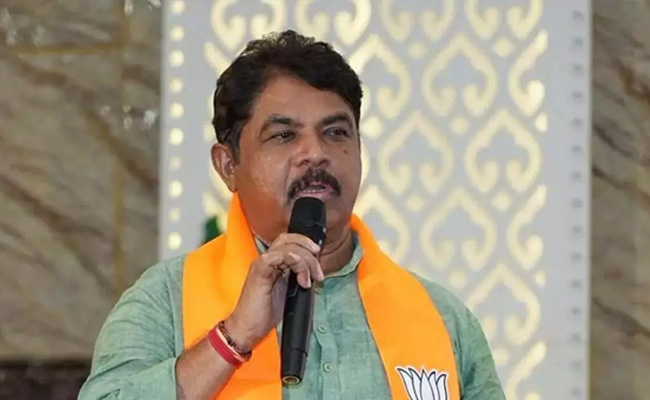
Bengaluru: Leader of Opposition in Karnataka Assembly R. Ashoka said the election results show that Narendra Modi is the most suitable leader for the country’s security.
Speaking to the media, he claimed that the political future of Mamata Banerjee and her government has come to an end. He alleged that around two crore people from Bangladesh were helped to enter the country with Aadhaar cards.
Ashoka said that even though elections were held in five states, the entire country’s attention was on West Bengal. He attributed this to what he described as misgovernance in the state.
He further said there were continuous political allegations and objections related to CBI matters, and added that such developments have now come to an end with the latest election outcome.