Nipah virus: Six suspected patients test negative
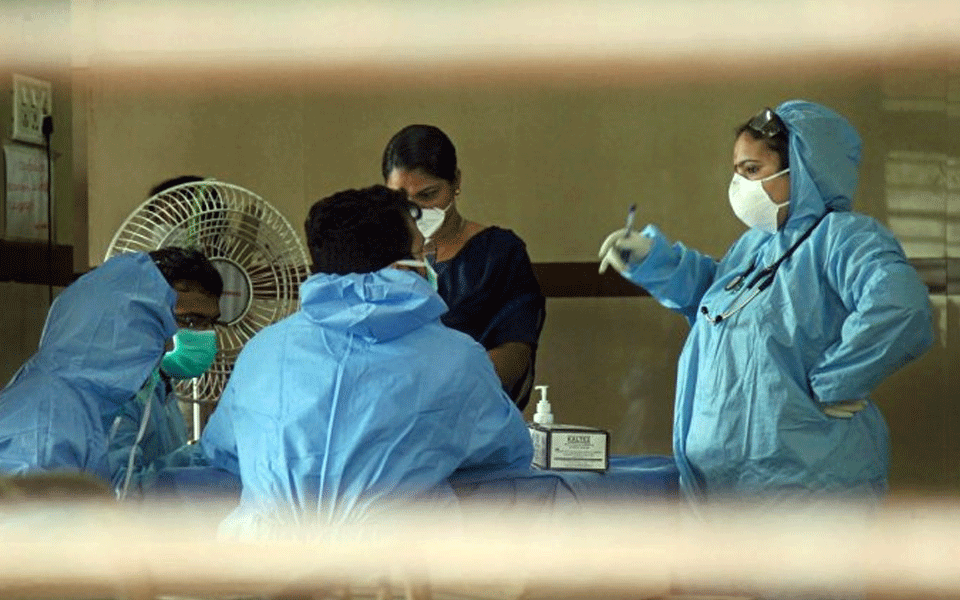
New Delhi: Six persons admitted to a quarantine facility at the Government Medical College in Kerala's Ernakulam have tested negative for the potentially deadly Nipah virus, a senior Health Ministry official said Thursday.
The condition of the college student, diagnosed with Nipah infection, is stable and a total of 314 persons who were in touch with the infected person have been kept under observation, the official said.
"The blood and serum samples of all six suspected patients have tested negative for Nipah virus infection," the official said.
The Union Health Ministry has deployed a six-member team comprising an epidemiologist to conduct contact tracing for early detection of suspects and review of isolation facilities.
Union Health Minister Harsh Vardhan, who reviewed the public health measures put in place in Kerala on Wednesday, said the situation is under control and people need not panic.
During the review meeting, the Centre also discussed SOPs for quarantine of symptomatic contacts, sample collection or testing and dedicated isolation facility with trained health staff and epidemiological investigation by multi-disciplinary central team to ascertain the possible source of infection and history of exposure.
A designated control room has been established at the district collector's office and an isolation ward established at the Government Medical College Ernakulam, the Health Ministry said in a statement on Tuesday.
Isolation facilities have also been ensured at medical colleges at Calicut, Thrissur and Kottayam, it said.
All healthcare facilities have been asked to ensure high index of suspicion in cases with similar symptoms and also ensure availability of isolation and emergency management facilities before referral, the ministry said.
According to the WHO, Nipah virus is a newly emerging disease that can be transmitted from its reservoir (natural wildlife host), the flying foxes (fruit bats), to both animals and humans.
Symptoms range from asymptomatic infection, acute respiratory infection and encephalitis. Infected people initially develop influenza-like symptoms of fever, headache, vomiting and sore throat.
This can be followed by dizziness, drowsiness, altered consciousness, and neurological signs that indicate acute encephalitis.
Let the Truth be known. If you read VB and like VB, please be a VB Supporter and Help us deliver the Truth to one and all.
Defamatory post against Dharmasthala Veerendra Heggade: Case registered against Girish Mattannavar

Belthangady: A case has been registered at Dharmasthala police station against Girish Mattannavar over a complaint regarding alleged defamatory posts on social media against Dr. D. Veerendra Heggade, Dharmadhikari of Sri Kshetra Dharmasthala.
The complaint was filed by Subrahmanya Prasad, a resident of Dharmasthala.
The complainant stated that Mattannavar posted content on Instagram making allegations against Dr. Heggade and allegedly affecting his reputation.
Based on the complaint, a case was registered under Section 353(2) of the Bharatiya Nyaya Sanhita (BNS), which is related to spreading false information, rumours, or alarming news, on April 18, and the investigation is in progress.
Following information about Mattannavar’s appearance at the SIT office on May 7, a police officer from Dharmasthala police station issued a notice directing him to appear at the station within a week.