Nitish denies rift over seat sharing in NDA in Bihar
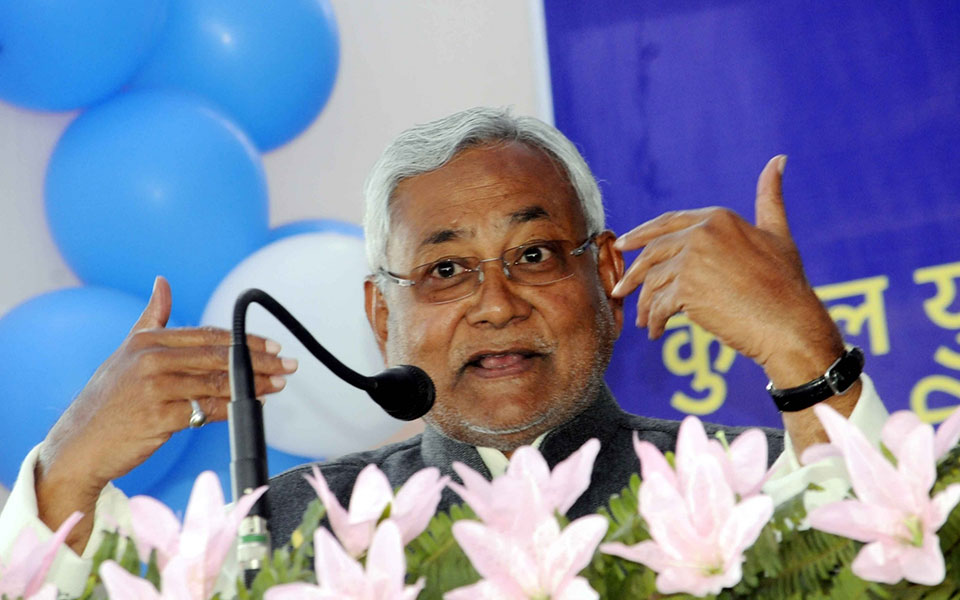
Patna, June 11: In a bid to downplay reports of growing restlessness over seat sharing for the 2019 elections among the allies of the BJP-led NDA in Bihar, Chief Minister Nitish Kumar on Monday denied any rift in the ruling alliance.
"There are no differences in the NDA... We are working together and will continue to work," said Nitish Kumar, who is president of the Janata Dal-United (JD-U), an ally of the Bharatiya Janata Party (BJP), here.
This is first time since the reports of growing differences among constituents of the National Democratic Alliance (NDA) over seat sharing for the 2019 Lok Sabha polls surfaced that Nitish Kumar has publicly said that the NDA was united and there were no differences over seat sharing.
"Issues related to polls will be discussed at the time of polls," he said.
The Chief Minister blamed the media for creating and spreading news of differences in the ruling NDA in the state.
Rashtriya Lok Samata Party (RLSP) chief and Union Minister Upendra Kushwaha last week demanded a decision on which party would contest how many seats in the 2019 Lok Sabha elections, citing lack of coordination in the BJP-led NDA.
Soon after that the Lok Janshakti Party (LJP) of Union Minister Ram Vilas Paswan said that it would not compromise on the seats held by it and supported the contention of Kushwaha.
Two senior JD-U leaders Pawan Verma and K.C. Tyagi claimed that Nitish Kumar would spearhead the NDA challenge next year and later other JD-U leaders said that the party would contest 25 of the 40 Lok Sabha seats in Bihar as it contested in 2009 as an ally of the NDA.
The demand may spell trouble for the NDA in Bihar with regard to seat sharing, as the BJP is keen to play the "big brother" in the backdrop of its better-than-expected performance in the 2014 Lok Sabha polls.
Let the Truth be known. If you read VB and like VB, please be a VB Supporter and Help us deliver the Truth to one and all.
Have no personal involvement in Cong’s action against some minority leaders: Shivakumar
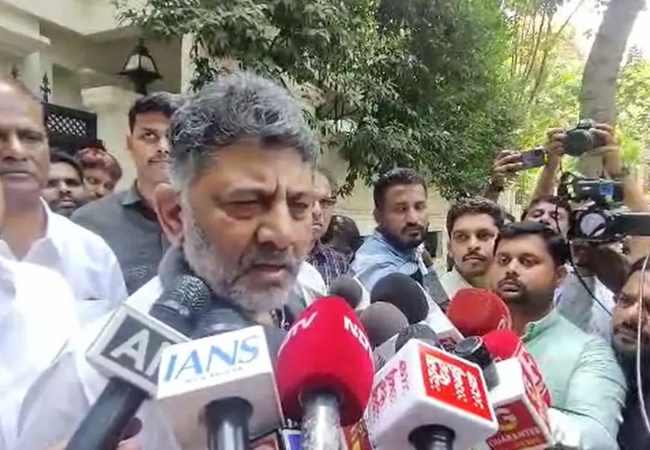
Bengaluru (PTI): Karnataka Deputy Chief Minister D K Shivakumar on Friday said he has no personal involvement in action taken against certain Congress leaders from the minority community following allegations of an internal conspiracy during the recently held Davanagere South bypolls.
He clarified that the decisions were taken by the party high command based on available reports.
Asserting that party discipline is of utmost importance, Shivakumar, who is also the Karnataka Pradesh Congress Committee (KPCC) president, sought to downplay concerns that action against minority leaders may send the message that “Muslims are being targeted.”
“I don’t have any personal involvement in this. Whatever decisions are taken are made by the party leadership. The party has its own reports. Decisions regarding MLAs or MLCs cannot be taken at the state level without instructions from Delhi,” he said.
Speaking to reporters, he added, “People may blame me; I am not concerned. Everyone must function in accordance with party discipline.”
Responding to concerns within sections of the party that recent actions may convey the impression that minority leaders are being targeted, he said the Congress exists for the welfare of Scheduled Castes, Scheduled Tribes, minorities, backward classes, farmers, and all sections of society.
The Congress has suspended MLC K Abdul Jabbar from primary membership and relieved another MLC, Naseer Ahmed, from the post of Chief Minister’s political secretary.
The action followed allegations by a group of Muslim leaders that certain party members conspired to defeat the official candidate in Davanagere South.
Following the action, speculation has emerged that Housing Minister B Z Zameer Ahmed Khan may also face disciplinary measures during the next cabinet reshuffle.
The three leaders had reportedly sought a Muslim candidate for the Davanagere South bypoll ticket, which the party instead allotted to the late MLA Shamanur Shivashankarappa’s grandson, Samarth Mallikarjun.
They were also said to have not actively participated in the campaign.
Shivakumar also rejected claims of factionalism within the ruling party amid speculation that leaders close to Chief Minister Siddaramaiah were being targeted.
Naseer Ahmed and Zameer Ahmed Khan are considered close to the CM.
Rejecting allegations of factionalism within the party, Shivakumar said, “We speak to each other every day. It is the media that creates divisions. Where is my faction? Has anyone put up a board saying they belong to the Siddaramaiah faction? Have I put up any such board?”
“All 139 legislators are my people, and they are all Siddaramaiah’s people as well. Everyone belongs to the Congress,” he added, saying there are no factions within the party and that such claims are media-driven.
Public Works Department (PWD) Minister Satish Jarkiholi met Shivakumar on Friday, a day after expressing concerns that disciplinary action against minority leaders may send the wrong message.
Shivakumar said he discussed with Jarkiholi the need to decongest Bengaluru traffic by diverting vehicles entering the city from state and national highways, along with party-related issues.
“We also discussed political matters in the interest of the party and the need to work together,” he said.
Later, speaking to reporters, Jarkiholi said he discussed with Shivakumar the issue of withdrawing Jabbar’s suspension. He said he will also visit New Delhi next week to meet the high command and discuss state developments.
“Jabbar’s suspension was discussed (with Shivakumar). It should be withdrawn. Let’s issue him a notice and allow him to reply. Then let’s send the report to the high command and seek their approval. High command approval is necessary because the instructions came from there. It may take some time,” he said.
Stating that he met the KPCC chief for “damage control,” the minister said, “We have tried to convince him. Sometimes certain decisions happen that need rectification.”
_vb_33.jpeg)