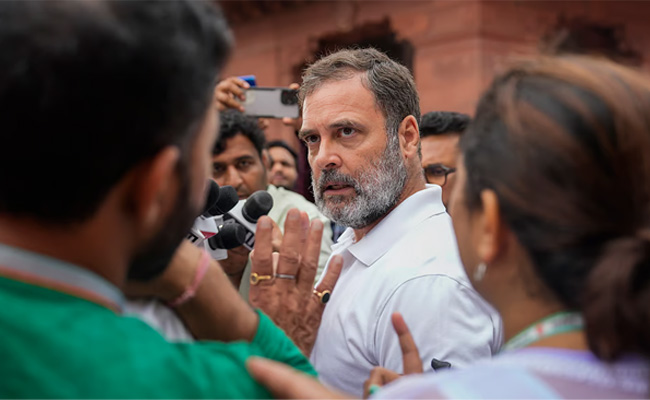
Nitish Kumar govt destroyed Bihar; education, healthcare systems finished off: Rahul
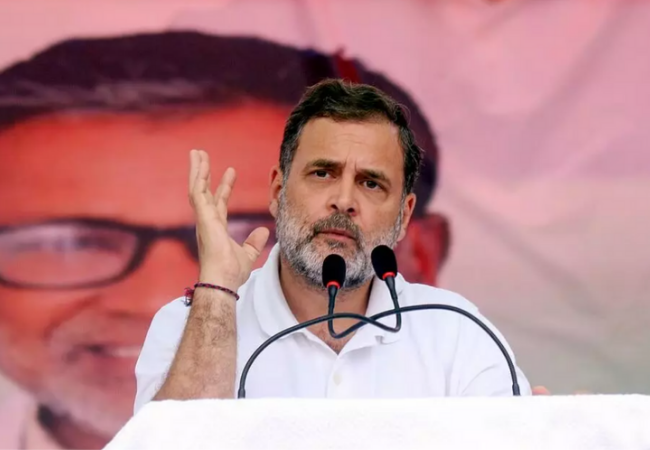
New Delhi (PTI): The Nitish Kumar government in Bihar has destroyed the state by finishing off its education and healthcare systems, Congress leader Rahul Gandhi claimed during an interaction with youngsters.
Gandhi put out on X a video on Monday of his recent interaction with a group of Gen Z youngsters and said this generation believes in 'satya' (truth) and 'ahimsa' (non-violence), and will lead India towards a brighter future.
"The energy of India’s Gen Z gives me hope. This generation believes in satya and ahimsa, carries compassion and courage, and will lead India towards a brighter, more just future. I'm excited to see them step into the political sphere," the leader of opposition in Lok Sabha said.
In the video, Gandhi, who has a free-wheeling interaction with the youngsters, has said the Congress is stating that if one is Dalit, Adivasi, EBC, Muslim, all of them should get equal opportunity and the whole wealth should not be concentrated in one or two hands.
Asked about the Bihar polls by a student, he said, "For 20 years, there is Nitish Kumar's government there and they have destroyed Bihar. Secondly, the education system -- be it primary or secondary education, university or college education, has been finished off. There are paper leaks happening one after another...they put RSS vice chancellors in universities."
The basic structure of education system has been "finished off" in Bihar, he alleged.
The healthcare system has also been destroyed, Gandhi added.
The video comes a day before polling for the second and final phase of the Bihar Assembly elections.
The first phase of polling in the Bihar elections was held on November 6, and the second phase is scheduled on November 11. The counting of votes will be held on November 14.
Let the Truth be known. If you read VB and like VB, please be a VB Supporter and Help us deliver the Truth to one and all.
Lebanon appoints new representative for talks with Israel, rejects linkage to Iran
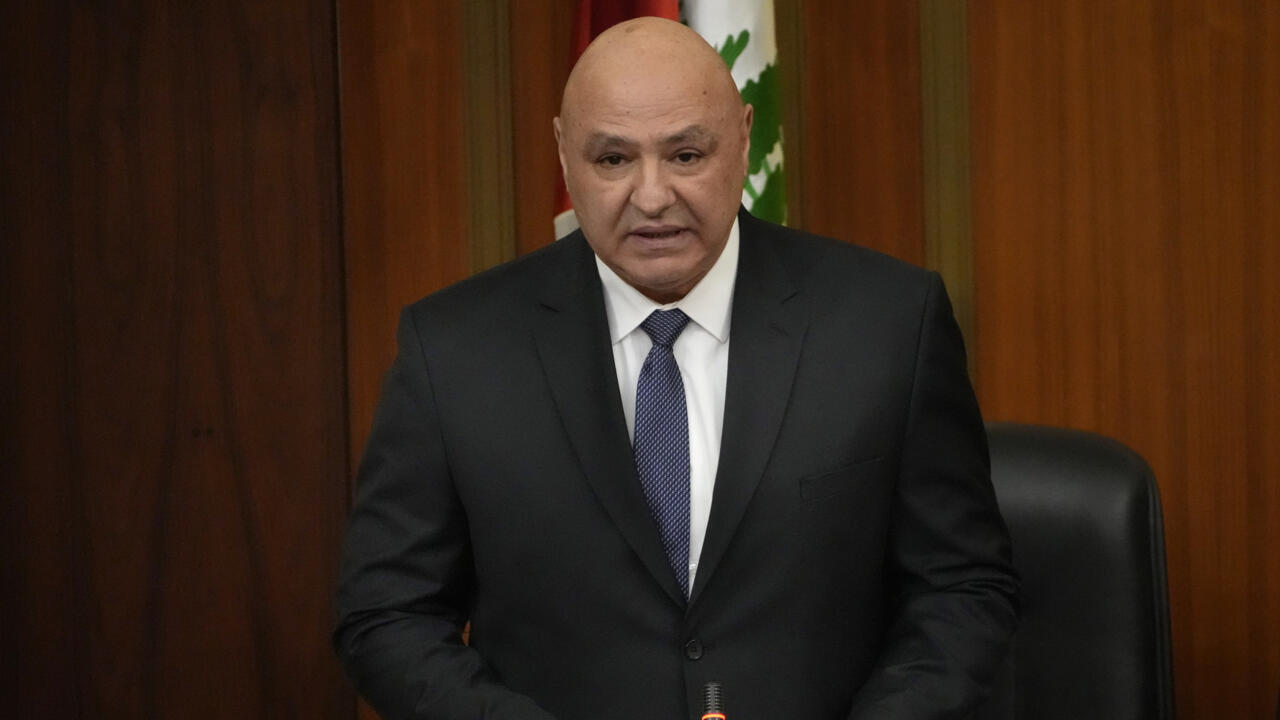
Beirut: Lebanon’s has moved to underline its independent position in ongoing regional developments, amid attempts to link the country to the broader conflict involving Iran, the United States and Israel.
President Joseph Aoun, while announcing the appointment of former US ambassador Simon Karam as Lebanon’s representative in talks with Israel, made it clear that Karam would be the sole representative for Lebanon and that there would be no substitute.
The move comes in response to what the Lebanese officials see as efforts by Iran to tie Lebanon’s situation to the wider regional conflict. Iran had indicated that there would be no ceasefire involving the US, Israel and Iran unless it also included a ceasefire in Lebanon.
Some groups, including Hezbollah and its supporters, had expressed support for linking the situations, citing concerns that the Lebanese government has limited leverage in negotiations with Israel. Lebanon is not formally a party to the conflict, and its army is considered weak.
However, others, including Prime Minister Nawaf Salam, have opposed this approach. They view Iran’s stance as an attempt to influence Lebanon’s internal affairs and see it as undermining the country’s sovereignty.
Officials backing the government’s position say the move is aimed at reaffirming Lebanon’s sovereignty and ensuring that decisions about peace and ceasefire within the country are not dictated externally.
They also see it as a safeguard, so that any breakdown in talks between the US, Israel and Iran does not automatically lead to renewed conflict in Lebanon.