No CM can remain absent for long, it's against national interest: Delhi HC on Kejriwal
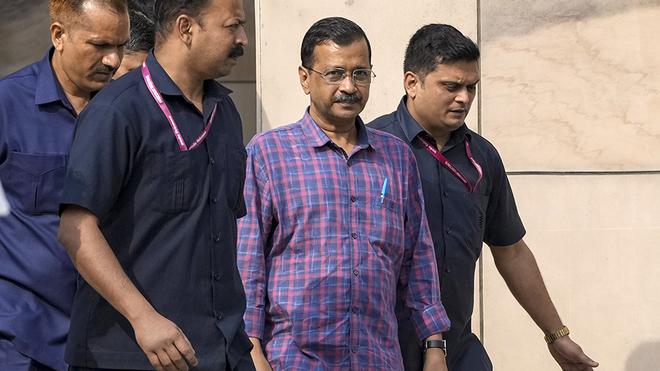
New Delhi, Apr 29: The Delhi High Court on Monday said the decision of Arvind Kejriwal to continue as the Chief Minister after his arrest is "personal" but it does not mean that the fundamental rights of school-going children would be trampled upon.
The high court also said that Kejriwal's absence cannot allow students to go through the first term without free textbooks, writing material and uniform in schools run by the Municipal Corporation of Delhi (MCD).
The high court observed that a chief minister’s post in any state, leave alone a buzzing capital city like Delhi, is not a ceremonial post and that it is a post where the office holder has to be virtually available 24x7 to deal with any crisis or natural disaster like flooding, fire and disease.
"National interest and public interest demands that no person who holds this post is incommunicado or absent for a long stretch of time or for an uncertain period of time. To say that no important decision can be taken during a model code of conduct is a misnomer," a bench of Acting Chief Justice Manmohan and Justice Manmeet PS Arora said.
Kejriwal, who is in judicial custody till May 7, was arrested on March 21 in connection with the excise policy-linked money laundering case.
The court was dealing with a PIL by NGO Social Jurist, represented by advocate Ashok Agarwal, highlighting the non-supply of educational material and other statutory benefits to eight 8 lakh students in the MCD schools even after the commencement of the new academic session.
The MCD commissioner had earlier stated that the non-distribution of the facilities was due to the non-formation of a standing committee which has the power to reward contracts worth more than Rs 5 crore.
The high court said as the students of MCD schools are entitled for free textbooks, writing material and uniform in accordance with their constitutional and statutory rights, and the schools are soon going to close for summer vacations, the MCD Commissioner is directed to incur the expenditure required for fulfilling the obligations forthwith without being constrained by the expenditure limit of Rs 5 crore.
“However, the expenditure incurred by the Commissioner, MCD shall be subject to statutory audit,” it added and asked the MCD commissioner to file a fresh status report by May 14.
The high court said there is a ring of truth in the statement made by Delhi’s Urban Development Minister Saurabh Bharadwaj that any increase in financial power of MCD commissioner shall require the chief minister’s approval and added that it amounts to an admission that the Delhi government is at a standstill due to absence of the chief minister.
“Undoubtedly, no new policy decision can be taken but holders of constitutional posts have to everyday take important as well as urgent decisions. For instance, issuance of free textbooks, writing material and uniform as well as replacement of broken chairs and tables in accordance with the existing policies in the MCD schools is an urgent and immediate decision which brook no delay and which is not prohibited during the model code of conduct,” it said.
It said non-availability of chief minister or non-formation of a standing committee or non-compliance of certain provisions of Delhi Municipal Corporation Act cannot come in the way of the school-going children receiving their free textbooks, writing material and uniform forthwith.
“The decision of the Chief Minister, despite having been arrested and his petition being dismissed by a single judge of this court, to continue to hold the position is his personal decision. However, it does not mean that if the Chief Minister is not available, the fundamental rights of young children would be trampled upon and they would go through the first term (April 1 to May 10) without free textbooks, writing material and uniform,” the bench said.
The Delhi government’s counsel had stated that the issue of constitution of the standing committee was pending consideration before the Supreme Court which had reserved the judgment.
However, to address the void created by the absence of the committee, the MCD has adopted a resolution in January that all functions of the committee shall be carried out by the House until it is duly constituted, he said.
The court took judicial notice of the fact that the current MCD House has “hardly transacted any business in the last one year”.
It said nothing prevented the Delhi government from moving a suo motu resolution in the MCD House authorising the commissioner to make payment for textbooks, writing material and uniform.
“Consequently, the submission of the Delhi government counsel blaming other institutions amounts to nothing but 'shedding of crocodile tears',” the court said.
It said the argument that taking "House's consent would ensure democratic control" is a red herring as it is not the case of the respondents that such an expenditure should not be incurred.
Their only submission is that the MCD commissioner at his own initiative should not award the contracts for free textbooks, writing material and uniform as it is beyond Rs 5 crore, it noted.
“Consequently, the real issue is ‘power’, ‘control’, ‘turf dominance’ and ‘who takes the credit’,” the bench said.
It added that receipt of free textbooks, writing material and uniform by school- going children is not only a legal right under the Right to Education Act and RTE rules but is also a part of the fundamental right under Article 21A of the Constitution.
“The inability of Delhi government to act with alacrity and respond to the urgency of the issue at hand, exhibits its indifference towards the plight of the students enrolled in MCD schools and is a wilful violation of the fundamental rights of the students,” the court said.
Let the Truth be known. If you read VB and like VB, please be a VB Supporter and Help us deliver the Truth to one and all.
2nd phase of Bengal poll: 39.97 per cent polling till 11 am amid sporadic violence
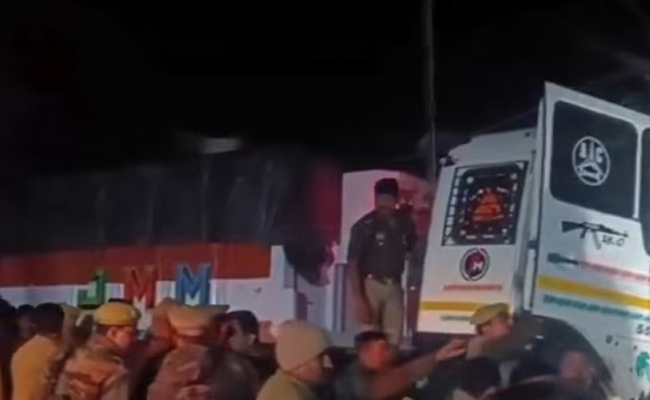
Kolkata (PTI): Nearly 40 per cent of the 3.21 crore electors voted till 11 am of the second phase of polling in West Bengal amid sporadic violence, while tension gripped the Bhabanipur seat briefly as Chief Minister Mamata Banerjee and Suvendu Adhikari took swipes at one another in the same booth area.
Voters queued up from 7 am outside booths in Kolkata, Howrah, Hooghly, Nadia, North and South 24 Parganas and Purba Bardhaman districts, which form Bengal's electoral and political core.
Of the total electorate eligible to vote in this phase, 1.57 crore are women, and 792 are third-gender.
Till 11 am, West Bengal recorded 39.97 per cent polling with Purba Bardhaman registering the highest turnout at 44.50 per cent, followed by Hooghly at 43.12 per cent and Nadia at 40.34 per cent.
ALSO READ: BJP will form govt in Bengal with thumping majority: Nabin
Howrah recorded 39.45 per cent polling, while North 24 Parganas registered 38.43 per cent. Kolkata North and Kolkata South recorded 38.39 per cent and 36.78 per cent turnout, respectively.
South 24 Parganas, a politically crucial district witnessing several high-profile contests, recorded 37.9 per cent voting.
The first phase of polls in 152 Assembly seats of West Bengal on April 23 also recorded more than 41 per cent polling till 11 am.
"Polling is underway peacefully, barring some minor incidents in certain areas. We have sought reports from the officials concerned," a poll panel official said.
The early-morning convergence of Banerjee and Adhikari at the same booth area in Chakraberia turned Bhabanipur -- the chief minister's electoral bastion -- into the centrepiece of the day, reinforcing the symbolic weight of their prestige battle seen as a rematch of Nandigram, where the BJP leader had defeated her in 2021.
Banerjee was already seated outside the booth after receiving complaints of alleged intimidation of local TMC leaders when Adhikari arrived there amid heavy deployment of central forces.
Stepping out of his car, Adhikari declared, "I will not allow any hooliganism", while Banerjee accused the BJP of trying to "rig" the election using central forces, police observers and election officials.
"BJP wants to rig this election. Polls in Bengal are usually peaceful. Is there goonda raj here?" Banerjee told reporters, alleging CRPF personnel had visited the homes of TMC leaders late Tuesday night and unleashed terror in the area.
She alleged that election observers were acting at the BJP's behest and claimed TMC workers were being selectively targeted across districts.
Adhikari dismissed the charges as signs of "frustration", claiming Banerjee had realised that "not a single vote" was coming her way.
Banerjee, who usually steps out of her Kalighat residence late in the day to cast her vote at Mitra Institution School, broke convention and hit the ground before 8 am, moving through Chetla, Padmapukur and Chakraberia, underlining the stakes attached to Bhabanipur and the wider battle for south Bengal.
Reports of violence, vandalism and tension surfaced from several districts.
In Nadia district's Chapra, a BJP polling agent was allegedly assaulted inside a booth during a mock poll. The BJP accused TMC supporters of attacking its agent, while the ruling party denied the charge. In Shantipur, a BJP camp office was found vandalised.
In South 24 Pargana's Bhangar, the ISF alleged that its polling agents were prevented from entering booths.
Howrah's Bally constituency saw tension at a booth in Liluah after an EVM malfunction delayed voting, prompting central forces to lathi-charge agitated voters. Two people were arrested in the matter.
Police and RAF personnel were also seen chasing away crowds near a booth in Amdanga following complaints of unlawful gathering by bike-borne supporters.
In Panihati, BJP candidate Ratna Debnath, the mother of the RG Kar victim, faced protests and her car was allegedly stopped by TMC workers, while in Jagaddal, the recovery of a firearm near a polling booth triggered tension before police and central forces restored order.
BJP candidate from Basanti assembly constituency in South 24 Parganas, Bikash Sardar, on Wednesday, alleged that "200-250 TMC goons" attacked his car and assaulted his driver when he was visiting polling booths in the constituency.
The TMC did not immediately respond to the allegations.
Unlike the first phase, where the BJP sought to defend its north Bengal gains, the final round has shifted the battle squarely to the TMC's strongest belt.
In 2021, the ruling party had won 123 of these 142 seats, leaving just 18 for the BJP and one for the ISF. For the BJP, breaching this southern fortress remains critical if it hopes to mount a serious challenge for power in the state.