'No decision taken that makes stall owners display name, address,' says HP govt
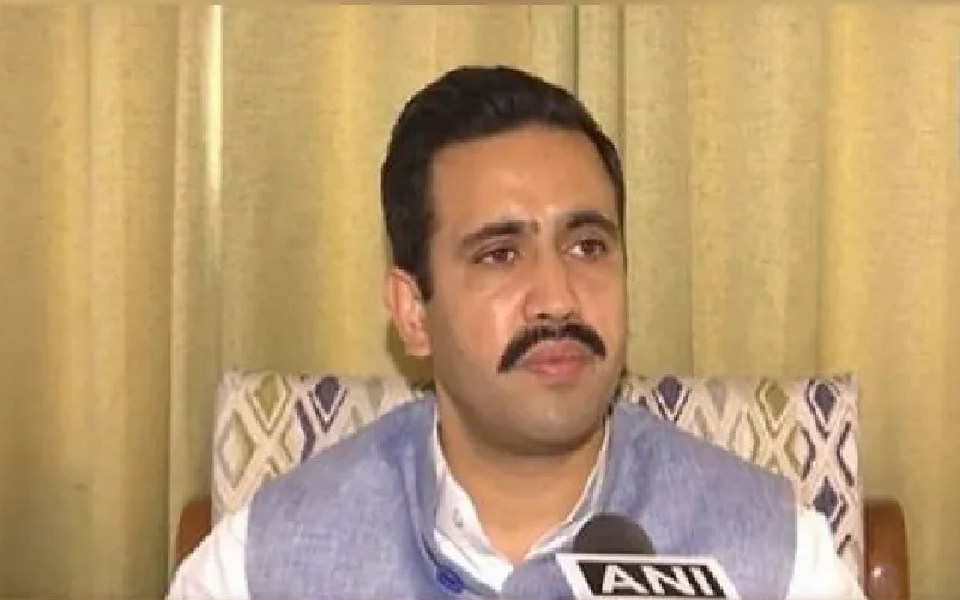
Shimla, Sep 26: Facing flak over minister Vikramaditya Singh's announcement on mandatory display of names by street vendors, the Himachal Pradesh government on Thursday said no such decision has been taken.
Singh, the state Public Works and Urban Development Minister, had on Wednesday told media that it would be mandatory for street vendors, especially those selling food items, to display their identity cards at their shops.
The decision, he had said, was taken on the lines of the one taken by the Uttar Pradesh government.
"We have decided to make it mandatory for the street vendors to display their ID cards given by the street vendor's committee on the pattern adopted by the Uttar Pradesh government, which pioneered the idea," Singh had said.
The state in a statement said it has not taken any decision that makes it mandatory for street vendors to display nameplates or other identification at their stalls.
Singh had said the decision was taken considering "apprehensions" expressed by several locals about rising numbers of migrants in the state.
He drew the censure of several leaders of INDIA bloc when he posted his remarks on Facebook.
BJP leader Jai Ram Thakur on Thursday said Singh must stick to his words. '
"If Vikramaditya Singh has talked about implementing vendors' policy on the pattern of Uttar Pradesh, he should stick to his words," Thakur, who is Leader of the Opposition in the Himachal Pradesh Assembly, said.
Last week, Himachal Pradesh Assembly Speaker Kuldeep Singh Pathania constituted a seven-member committee headed by Industries Minister Harshwardhan Chauhan for the framing of a policy for 'Street Vendors,' according to a statement.
The decision to register outside workers with their identity came following massive protests weeks ago for the demolition of alleged unauthorised portions of a mosque in Sanjauli.
Demonstrations were held across the state by Hindu outfits, who demanded workers coming from outside to work in Himachal Pradesh be registered.
Citing alleged incidents of spitting and mixing of urine in eatables, Uttar Pradesh Chief Minister Yogi Adityanath had on Tuesday ordered operators, proprietors, and managers of food stalls to mandatorily display their names and addresses at their shops.
He also ordered that chefs and waiters must wear masks and gloves, and made mandatory that CCTV cameras be mounted in hotels and restaurants.
Let the Truth be known. If you read VB and like VB, please be a VB Supporter and Help us deliver the Truth to one and all.
Bhojshala case: Disputed structure built from remains of pre-existing temples, claims ASI
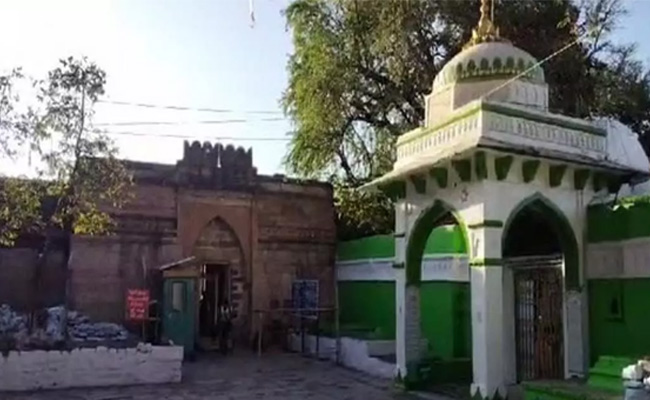
Indore (PTI): The ASI has told the Madhya Pradesh High Court that a massive structure dating back to the Paramara kings' rule existed at the disputed Bhojshala temple-Kamal Maula mosque complex, and the current structure was built from the remains of temples.
The Archaeological Survey of India (ASI) made the claim on Tuesday based on its 98-day scientific survey and over 2,000-page report.
The Hindu community considers Bhojshala a temple dedicated to Vagdevi (Goddess Saraswati), while the Muslim side claims the monument as the Kamal Maula Mosque. The disputed complex is protected by the ASI.
During the hearing before Justices Vijay Kumar Shukla and Alok Awasthi of the HC's Indore bench, Additional Solicitor General Sunil Kumar Jain, representing the ASI, presented a detailed account of the scientific survey conducted two years ago at the complex.
Referring to the ASI's survey report, he said, "Retrieved architectural remains, sculptural fragments, large slabs of inscriptions with literary texts, Nagakarnika inscriptions on pillars, etc, suggest that a large structure associated with literary and educational activities existed at the site. Based on scientific investigations and archaeological remains recovered during the investigations, this pre-existing structure can be dated to the Paramara period."
It can be said that the existing structure was made from the parts of earlier temples, based on scientific investigations, survey and archaeological excavations conducted, study and analysis of retrieved finds, study of architectural remains, sculptures, and inscriptions, art and sculptures, Jain said quoting the report.
Summarising the report, he also drew the court's attention to the fact that the archaeological study identifies that many architectural components, such as pillars and beams, were originally part of temple structures before being repurposed for a mosque.
"The evidence of this transition includes Sanskrit and Prakrit inscriptions that were damaged or hidden, alongside sculptures of deities and animals that were often mutilated or defaced," Jain contended.
The report also states that "all Sanskrit and Prakrit inscriptions are older than the Arabic and Persian inscriptions, indicating that users or engravers of the Sanskrit and Prakrit inscriptions occupied the place earlier".
In light of the Muslim side's earlier objections, the bench wanted to know why there were some discrepancies in the ASI's responses regarding the status of the disputed complex in the cases filed over the years.
The Additional Solicitor General argued that earlier studies of the complex involved only officials, while the current survey involved scientists and the use of advanced technologies such as Ground Penetrating Radar (GPR).
The hearing in the Bhojshala case will continue on Wednesday.
The high court has been regularly hearing four petitions and one writ appeal regarding the religious nature of the Bhojshala temple-Kamal Maula mosque complex since April 6.