No evidence of ‘vote theft’ in Haryana’s Hodal, Rai as alleged by Rahul Gandhi: Report
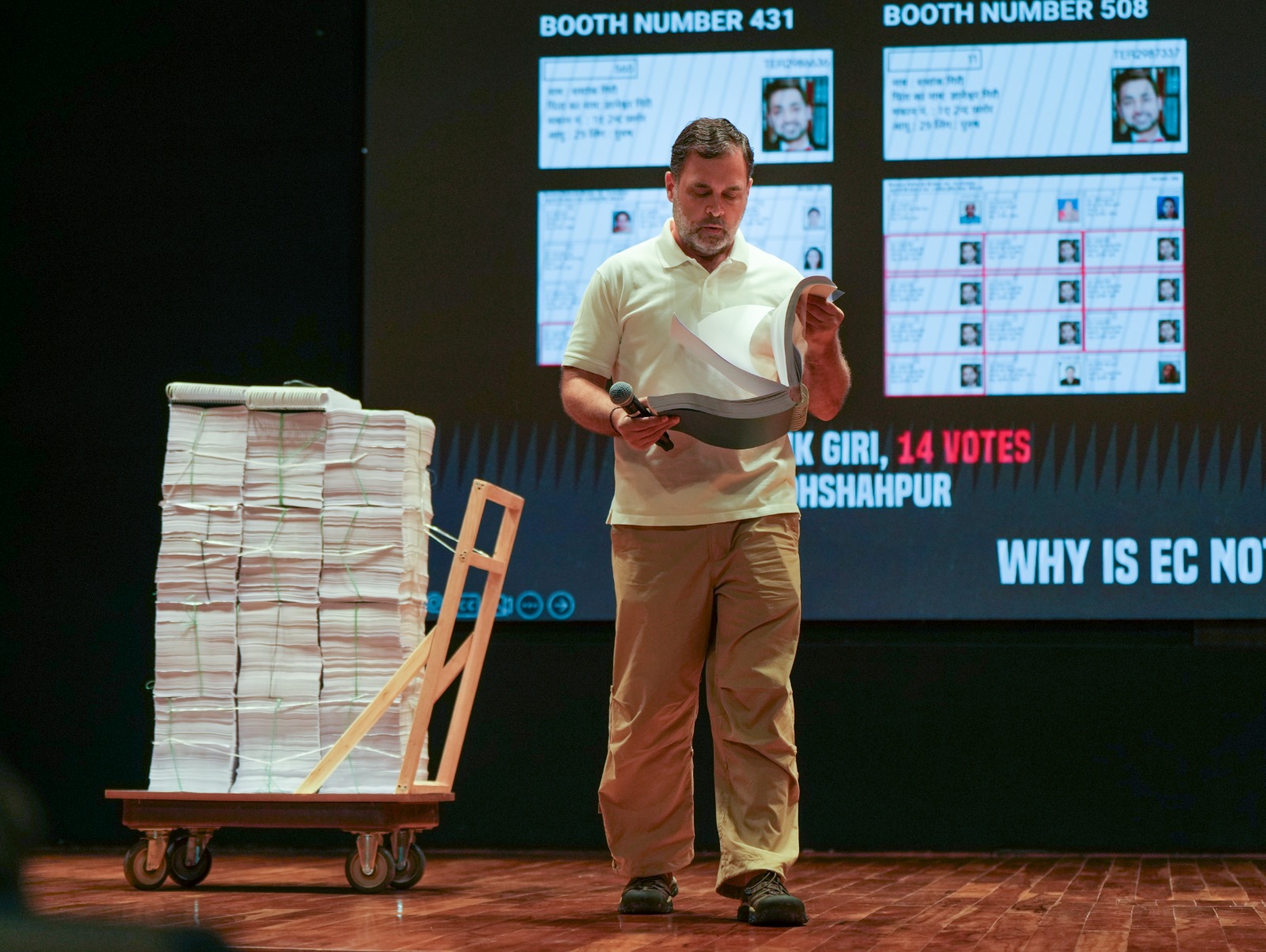
Hodal: A field investigation by The Indian Express has contradicted Opposition Leader Rahul Gandhi’s recent allegations of large-scale “vote theft” in Haryana’s Hodal and Rai constituencies. Gandhi had claimed that dozens and even hundreds of voters were registered under single house numbers and that the photo of a Brazilian national had been used multiple times on voter lists.
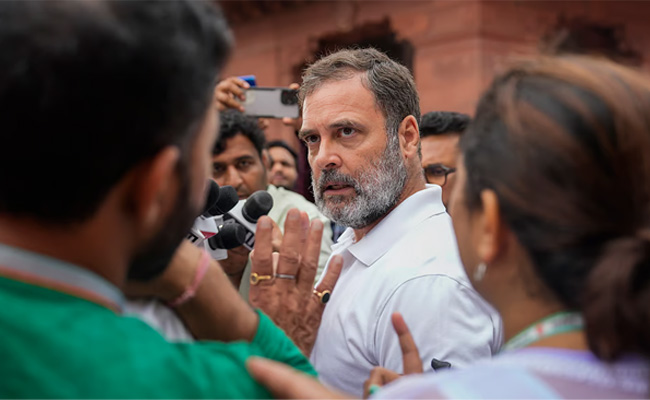
At a press conference earlier, Rahul Gandhi alleged that in Palwal district’s Hodal, “66 voters were registered in one house and 501 in another,” calling it evidence of “vote theft.” He further claimed that a photograph of a Brazilian woman was used under multiple Indian names in Sonipat district’s Rai, adding, “She has got multiple names — Seema, Sweety, Saraswati, Rashmi, Vimla.”
However, The Indian Express reported that its ground investigation found no irregularities of the kind alleged. The two addresses in question in Hodal turned out to be large family plots, each housing multiple families who legitimately reside there and vote from those addresses.
In Hodal’s Gudhrana village, House Number 150, cited by Gandhi as having 66 voters, belongs to BJP zila parishad vice-chairperson Umesh Gudhrana. His uncle, Rajpal Gudhrana, told the newspaper that the extended Gudhrana family has lived on the same five-acre plot for four generations. Each of the several family homes built there over time continues to share the original house number. “There is no question of vote theft. Whoever from my family gets a voter ID made, the BLO writes the address as House Number 150 only,” Umesh Gudhrana said.
Similarly, at House Number 265, alleged to have 501 voters, residents explained that the land once belonged to a single family that has since subdivided it into about 200 houses and three private schools. One of the residents, Kishni (72), said her family had lived there for generations. Her son, Pawan, told the outlet that as the land was divided and sold, many houses were built but retained the same address number in records.
In Sonipat’s Rai, The Indian Express traced four of the women whose photos on the voter roll matched that of a Brazilian model. They said they had voted without issue and were unaware of Rahul Gandhi’s allegations. One of them, Sweety, said, “I used my 2012 voter card and the slip they issued.” Another voter, Harsha, said her mother’s 2019 voter ID had the correct photo and that they had faced no difficulties voting.
A voter from Machhraula village, Pinki, acknowledged a mix-up in her voter ID but clarified it was due to a local administrative error, not the use of a foreign photograph. She said she had returned her card to the Booth Level Officer (BLO) and had voted using her Aadhaar and voter slip instead.
Both current and former BLOs of the area told the newspaper that they were unaware of how a Brazilian national’s photograph came to appear on the rolls.
Let the Truth be known. If you read VB and like VB, please be a VB Supporter and Help us deliver the Truth to one and all.
Lebanon appoints new representative for talks with Israel, rejects linkage to Iran
Beirut: Lebanon’s has moved to underline its independent position in ongoing regional developments, amid attempts to link the country to the broader conflict involving Iran, the United States and Israel.
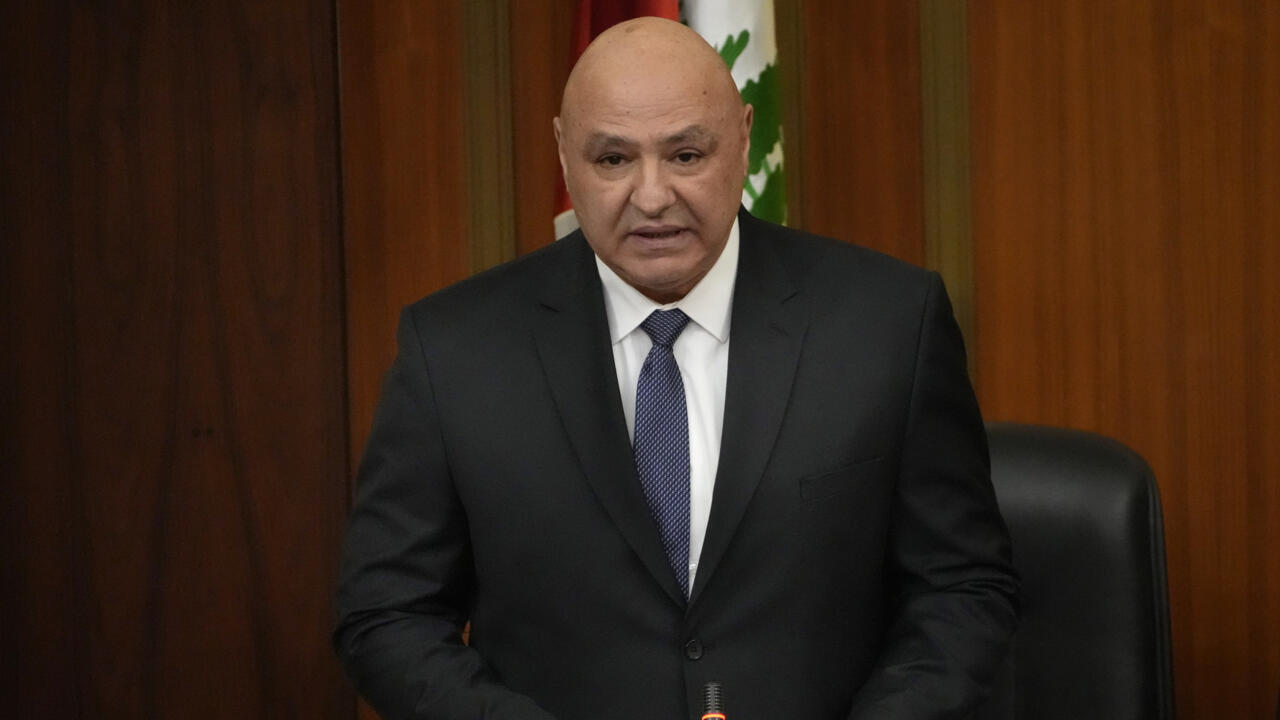
President Joseph Aoun, while announcing the appointment of former US ambassador Simon Karam as Lebanon’s representative in talks with Israel, made it clear that Karam would be the sole representative for Lebanon and that there would be no substitute.
The move comes in response to what the Lebanese officials see as efforts by Iran to tie Lebanon’s situation to the wider regional conflict. Iran had indicated that there would be no ceasefire involving the US, Israel and Iran unless it also included a ceasefire in Lebanon.
Some groups, including Hezbollah and its supporters, had expressed support for linking the situations, citing concerns that the Lebanese government has limited leverage in negotiations with Israel. Lebanon is not formally a party to the conflict, and its army is considered weak.
However, others, including Prime Minister Nawaf Salam, have opposed this approach. They view Iran’s stance as an attempt to influence Lebanon’s internal affairs and see it as undermining the country’s sovereignty.
Officials backing the government’s position say the move is aimed at reaffirming Lebanon’s sovereignty and ensuring that decisions about peace and ceasefire within the country are not dictated externally.
They also see it as a safeguard, so that any breakdown in talks between the US, Israel and Iran does not automatically lead to renewed conflict in Lebanon.