No evidence that vaccines will not work against new COVID variant: Centre
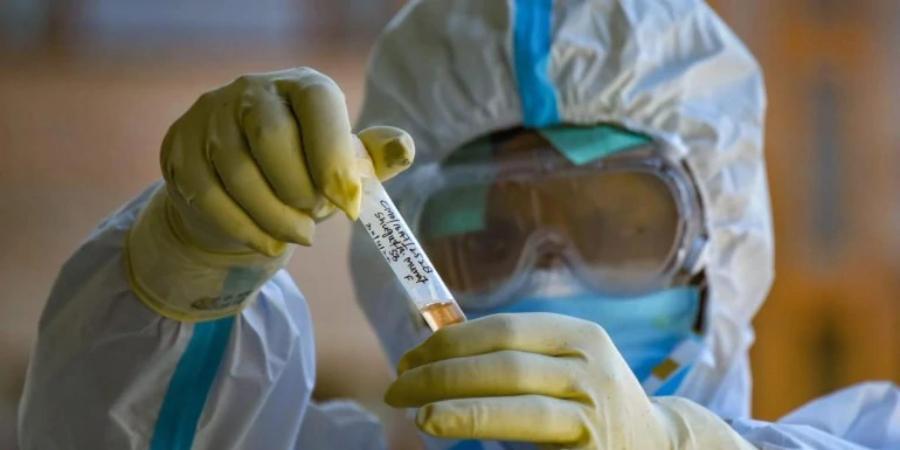
New Delhi: COVID-19 vaccines will work against new variants of the coronavirus and there is no evidence that current vaccines will fail to protect against the SARS-CoV-2 mutants reported from the United Kingdom or South Africa, the government said on Tuesday.
Addressing a press conference, Principal Scientific Advisor K Vijay Raghavan said so far it has not been found that the new variant of the coronavirus increases the severity of the disease.
"There is no evidence that current vaccines will fail to protect against COVID-19 variants reported from the UK or South Africa. Vaccines stimulate our immune system to produce a wide range of protective antibodies. The changes in the variants are not sufficient to make the vaccines ineffective," he said.
"If you look at the surface of SARS-CoV2, there are changes in the spike proteins in the UK and South Africa variants. There are 17 changes in the UK variant of the coronavirus, of which eight are very important... these eight changes the spike protein," he said.
The virus enters human cell through receptors. N501Y increases affinity for the ACE2 receptor used for viral entry into human cells, Raghavan said, underlining there is a concern about the new variants.
Citing data from the UK, he said cases in September-October were less there but the new coronavirus variant comprises 80 per cent of the total number of infections.
"This is spreading very rapidly and taking over the frequency of all other variants as dominating them. This is also reflected in large positivity in the UK. The positivity has gone up in the UK substantially but the fraction of positivity which is due to this variant has also gone up substantially," Raghavan said.
It is important globally because this increases transmission, he stressed.
The principal scientific advisor, however, stated that there is no evidence so far that it spikes severity of the disease, but because it increases transmission it will lead to rise in the number of people who are affected and therefore the number of severely diseased.
"Therefore, we must take extraordinary precautions to prevent these kinds of variants from dominating the population," he said.
On what should scientists, government and researchers do, Raghavan said given the widespread prevalence of the virus, these kind of variants can also arise elsewhere.
"We are not only sequencing our population who have been tested positive by choosing representative samples, but we will also test these samples in the laboratory to see whether the infectivity has increased and do field studies to see whether transmission of any specific variants have increased.
"This will protect us substantially and it is very important from the scientific perspective about what we are doing. So, (we are) testing and sequencing samples across the country, from international travellers and those from hospitals," he said.
Raghavan urged people not to be complacent. A vaccine will be available soon and that will be the exit visa from this for sure, he said.
"But that has to be rolled out steadily. It has to go to priority groups and has to reach the country. All of that will take time. We have to be patient," he said.
NITI Aayog Member (Health) Dr V K Paul said there has been a consistent decline in the number of new COVID-19 cases and deaths which is reassuring given the current COVID-19 scenario across the world.
"We are consistently showing a decline in the number of new COVID-19 cases, active cases and deaths, which is very reassuring. It stands out particularly during this very period when several nations are facing a devastating situation," Paul said adding, it is being seen that situation in all states is stabilising.
He said a majority of the population is still susceptible to the infection during the winter.
"The UK mutation is contagious and its transmission presents a concern before us and destabilises our preparations. The UK variant has travelled to several other countries and also to India, this virus strain may have its own run and we have to very careful," Paul said.
Also, when a new type of virus enters a population, it is easier to suppress that in the beginning because the spread is limited, he said while urging people to remain vigilant and keep following COVID-appropriate behaviour.
He further said the Indian Council of Medical Research has decided to study the disease in all its aspects of severity -- mild and serious -- and going beyond genome sequencing to study the behaviour of the virus.
He said the established strategy of testing, tracing and tracking will continue and wherever cases will be found, they will be isolated and their contacts quarantined.
Also, wherever clusters will be formed, containment zones will be made and house-to-house search will be carried out to curb the chain of transmission of this new variant, Paul said.
Let the Truth be known. If you read VB and like VB, please be a VB Supporter and Help us deliver the Truth to one and all.
Two injuries, one DNF, a DQ as India end messy World Relays campaign
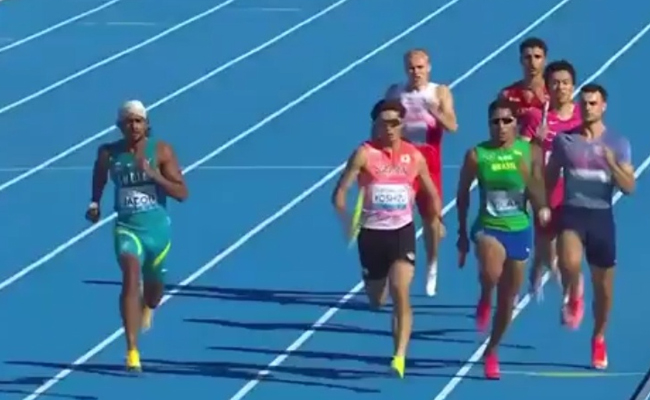
Gaborone (Botswana) (PTI): Amoj Jacob and Ragul Kumar got injured during the men's 4x400m and 4x100 races respectively as India ended their World Athletics Relays campaign in disappointment on the second day of competitions here on Sunday.
The Indian camp had high hopes of making the 2027 World Championships in the men's 4x400m relay but the team did not finish (DNF) the race as Jacob suffered cramps and pulled out of the race after taking the baton from the first leg runner Dharamveer Choudhary. Rajesh Ramesh and Vishal TK were to run in the third and fourth legs.
Those teams which could not qualify for the 2027 Beijing World Championships by reaching the final round of each of the six relay events on Saturday were given another chance in the second qualification round on Sunday.
The top two teams in each of the two heats (in all six relay events) booked the Beijing ticket on Sunday.
India will now have to try and qualify for the World Championships through the Top Lists of the World Athletics, which is a long and tedious process.
In the men's 4x100m race, third leg runner Ragul Kumar fell down the track after failing to hand over the baton inside the exchange zone to fourth leg runner Gurindervir Singh, which clearly showed the lack of coordination among the runners.
Harsh Santosh Raut and Animesh Kujur ran the first two legs.
The Indian quartet was disqualified and Kumar was seen being taken away from the Field of Play with the help of the volunteers.
It was a comedy of errors in the case of the women's 4x100m race, which saw the baton being dropped during an exchange between first leg runner Tamanna and second runner Nithya Gandhe, though the Indians finished the race in 53.09 seconds.
Gandhe started running quite a distance, but after realising that the baton was not in her hand, she turned and ran back to pick it up.
The only silver-lining for the Indian contingent was the national record time in the mixed 4x100m relay race, though the quartet of Ragul Kumar, Nithya Gandhe, Animesh Kujur and Sneha SS finished sixth in heat number two with a time of 41.35 seconds, bettering the previous national mark of 42.30 seconds set in March in Chandigarh.
The mixed 4x400m relay quartet of Theerthesh P Shetty, Kumari Saloni, Nihal William and Rashdeep Kaur ended at fifth in heat number one with a time of 3 minutes and 19.40 seconds.
On Saturday, all the five Indian relay teams had failed to make it to the respective final rounds and thus missed out on the 2027 World Championships berths.