No fresh Nipah positive cases, 42 more negative results: Kerala govt
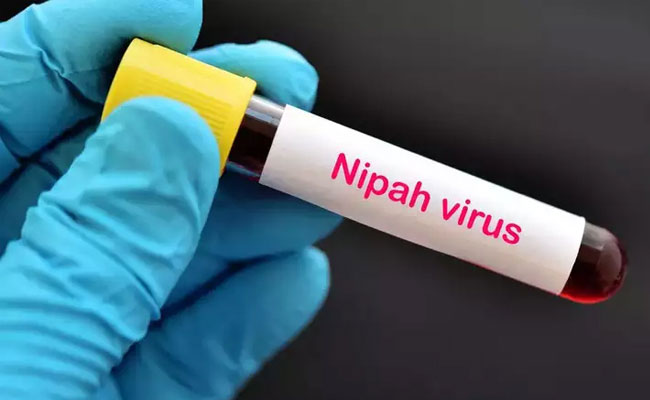
Kozhikode (Kerala) (PTI): The Kerala government on Sunday said that there were no fresh Nipah positive cases with test results of 42 samples, of persons in the high risk contact list, coming out negative.
The negative results were announced by State Health Minister Veena George while speaking to reporters here this morning.
She said test results of more samples are awaited and may be available during the day.
Asked how long the vigilance and caution needs to bebe exercised since no new positive cases are being reported, the minister said according to the guidelines and protocols it is 42 days from the last positive case.
The incubation period of the virus is 21 days and therefore, "a double incubation period of 42 days from the last positive case" is considered as the period during which caution has to be exercised, George said.
Police help will be sought to complete contact tracing as many persons who may have been in the area visited by those infected, deny having been there when called over phone.
"So we will seek police help to get their mobile tower locations. It is only being done to plug the gaps in the contact tracing," she said.
Meanwhile, the central team will be surveying the area of the 2018 Nipah outbreak and will look for any ecological changes there, the minister said.
Besides that, the teams from the National Institute of Virology (NIV), Pune and Indian Council of Medical Research (ICMR) are also carrying out field surveys in the district.
"Genomic sequencing of the virus is also being carried out. Bat survey is also going on. Bat survey was carried out last year and earlier this year too," George noted.
A central bat surveillance team is also here which is collecting samples of the mammals.
All the Nipah positive patients are stable with the health condition of the nine-year-old boy who was on ventilator support showing improvement, the minister added.
At present, six cases of Nipah infection have been confirmed in the state.
Of the six, two persons have died bringing the number of active cases to 4.
The World Health Organisation and ICMR studies have found that the entire state, not just Kozhikode, is prone to such infections.
Let the Truth be known. If you read VB and like VB, please be a VB Supporter and Help us deliver the Truth to one and all.
AIITA welcomes Karnataka’s ban on obscene songs in school events
Bhatkal: The Karnataka unit of the All India Ideal Teachers Association (AIITA) has welcomed the Karnataka government’s decision to strictly ban school children from dancing to obscene songs during educational and cultural programmes in government, aided, and private schools across the state.
AIITA Karnataka State President M. R. Manvi congratulated the government for taking what he termed an important step to preserve the sanctity of education.
“Such decisions to safeguard the dignity of school children and uphold the values of education are the need of the hour. This rule should not be limited to government schools alone but must be strictly implemented in all private educational institutions as well,” he said.
He further urged the government to address other concerns within school programmes.
“The government should not only prohibit obscene dances in the name of school anniversaries, but also ensure that plays and dialogues that incite religious hatred are avoided. Schools should be centres of harmony, not platforms for spreading hatred,” he added.
According to a recent circular issued by the Department of School Education and Literacy, obscene dances are adversely affecting the mental health and moral values of students.
In this regard, schools have been advised to use songs that promote nationalism, positive thinking, the greatness of Kannada culture, and value-based traditions instead of inappropriate content during programmes.
The circular also emphasises that students should be dressed in decent attire.
AIITA also backed the department’s warning that disciplinary action would be taken against head teachers if such guidelines are violated. The association has further demanded that district Deputy Directors of Public Instruction strictly monitor the implementation of these rules.