No hearing in Bofors case in SC on Friday
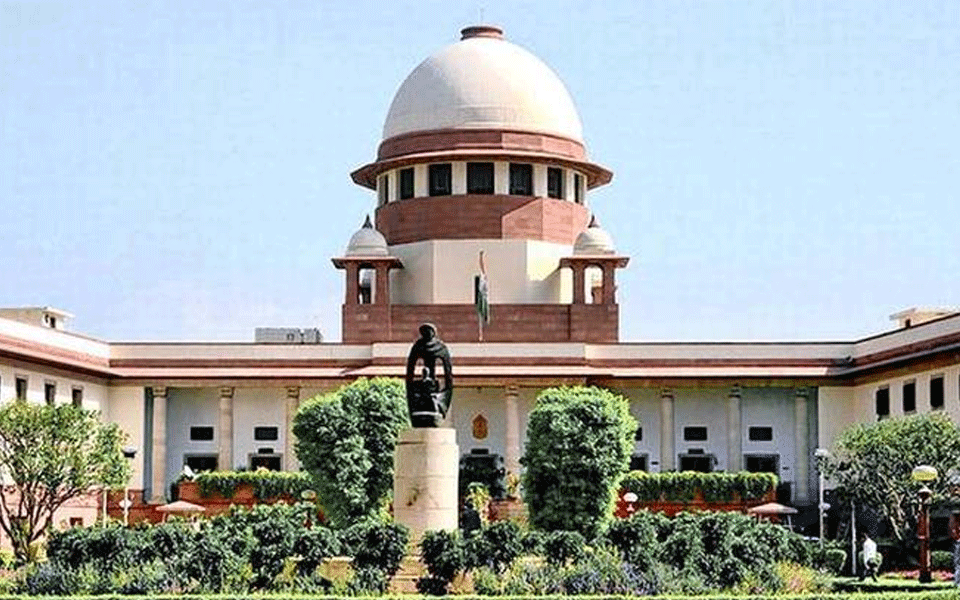
New Delhi, Oct 11: The much-awaited scheduled hearing in the politically-sensitive Rs 64 crore Bofors pay-off case will not take place Friday in the Supreme Court as it has been deleted from the cause list which contains a record of businesses for the day.
The cause list till Thursday afternoon showed that the petition filed by the CBI was listed for hearing before a bench comprising justices R Banumathi and Indira Banerjee in court number 8 as item number 43.
The matter was deleted from the cause list late Thursday evening.
Another petition filed by advocate and BJP leader Ajay Agrawal was not mentioned in the cause list.
Agrawal said when he contacted an apex court official about the matter not there in the cause list, he was told that it has been deleted by an administrative order.
Some law officers said the CBI was all set to argue on Friday before the Supreme Court to admit its petition in the case which was filed early this year after an inordinate delay of 13 years.
Attorney General K K Venugopal and newly-appointed Solicitor General Tushar Mehta were to appear for the CBI.
In the petition filed by Agrawal, Additional Solicitor General Maninder Singh is appearing for the CBI which has been named as one of the respondents.
The CBI on February 2 filed its appeal against the May 31, 2005 decision of the Delhi High Court quashing all charges against the accused persons in the case.
The Special Leave Petition (appeal) of the CBI is filed in seven bulky volumes running into 1,782 pages which also contains various annexures.
The agency had failed to file the appeal within the mandatory 90 days period but Agrawal filed the petition challenging the High Court Order on September 17, 2005.
Agrawal, who contested the 2014 Lok Sabha election from Rae Bareli against the then Congress president Sonia Gandhi, filed the appeal after the CBI did not challenge the high court order due to the denial of permission by the then UPA government to file a Special Leave Petition before the Supreme Court.
The BJP leader has been pursuing the case for over a decade.
After lot of deliberation, the CBI this year got the nod from the NDA government to file an appeal in the apex court.
The filing of the appeal assumes significance as Attorney General Venugopal in January advised the agency against moving a petition against the high court verdict after a delay of more than a decade.
Later after consultations, law officers were in favour of the appeal as the CBI came out with "some important documents and evidence" to challenge the high court order.
Sources in February had said the agency swung into action after the Attorney General orally gave it a go-ahead to file the appeal in the case in which it cited the October 2017 interview of private detective Michael Hershman, who alleged that the then Rajiv Gandhi-led Congress government had sabotaged his investigation.
Hershman, who is the president of the US-based private detective firm Fairfax, had claimed in television interviews that Rajiv Gandhi was "furious" when he had found a Swiss bank account "Mont Blanc".
He had also alleged that the bribe money of the Bofors gun scandal had been parked in the Swiss account.
The CBI in its appeal stated that further investigation was necessary in view of the reports relating to Hershman's interviews.
The CBI filed the appeal against the May 31, 2005 decision of the high court by which all accused, including Europe-based industrialists Hinduja brothers -- S P Hinduja, G P Hinduja and P P Hinduja -- were discharged from the Rs 64-crore pay-off case.
Before the 2005 verdict of Justice R S Sodhi (since retired), another judge of the Delhi High Court, retired Justice J D Kapoor, had on February 4, 2004, exonerated Rajiv Gandhi in the case and directed the framing of charge of forgery under section 465 of the IPC against Bofors company.
The Rs 1,437-crore deal between India and Swedish arms manufacturer AB Bofors for the supply of 400 155mm Howitzer guns for the Indian Army was entered into on March 24, 1986.
Swedish Radio on April 16, 1987, had claimed that the company had paid bribes to top Indian politicians and defence personnel.
The CBI on January 22, 1990, had registered the FIR for alleged offences of criminal conspiracy, cheating and forgery under the Indian Penal Code and other sections of the Prevention of Corruption Act against Martin Ardbo, the then president of AB Bofors, alleged middleman Win Chadda and the Hinduja brothers.
It had alleged that certain public servants and private persons in India and abroad had entered into a criminal conspiracy between 1982 and 1987 in pursuance of which the offences of bribery, corruption, cheating and forgery were committed.
The first charge sheet in the case was filed on October 22, 1999 against Chadda, Ottavio Quattrocchi, the then defence secretary S K Bhatnagar, Ardbo and the Bofors company.
A supplementary charge sheet was filed against the Hinduja brothers on October 9, 2000.
A special CBI court in Delhi on March 4, 2011, had discharged Quattrocchi from the case saying the country could not afford to spend hard-earned money on his extradition which had already cost Rs 250 crore.
Let the Truth be known. If you read VB and like VB, please be a VB Supporter and Help us deliver the Truth to one and all.
Sujit Nair raises concerns over speculation of DMK-AIADMK understanding to block TVK
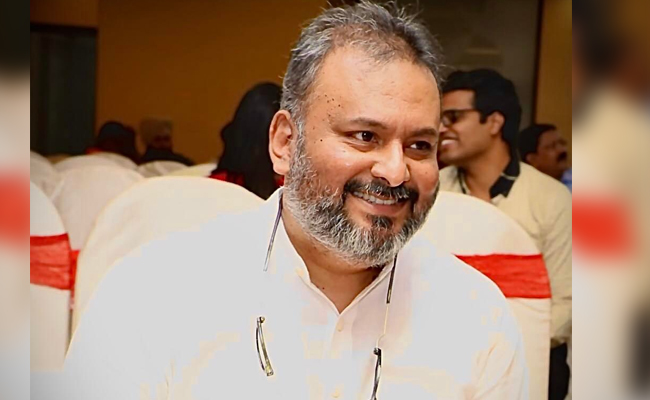
Chennai: Journalist and political commentator Sujit Nair has expressed concern over speculation that the Dravida Munnetra Kazhagam and the All India Anna Dravida Munnetra Kazhagam could explore a post-poll understanding to prevent Vijay-led Tamilaga Vettri Kazhagam from forming the government in Tamil Nadu.
In a social media post, Sujit Nair said the election verdict in Tamil Nadu reflected a clear public demand for political change and argued that the mandate should be respected irrespective of political preferences.
Referring to reports and political discussions surrounding a possible understanding between the DMK and AIADMK, he said he hoped such developments remained only speculative conversations and did not turn into reality.
Nair stated that if such an alliance were to take shape, it would raise serious questions about ideological politics in the country. He said TVK had emerged through a democratic electoral process and that the legitimacy to govern in a parliamentary democracy comes from the people’s verdict.
According to him, attempts to prevent an electoral winner from forming the government through unexpected political arrangements may be constitutionally valid, but many people could view them as politically opportunistic.
He further said that such a move could particularly affect the political image of the DMK, which has historically projected itself around ideology, social justice and opposition politics. Nair said that in ideological terms, the DMK appeared closer to TVK than to the AIADMK, and joining hands with its long-time political rival only to remain in power could weaken its broader political narrative.
He added that the same questions would apply to the AIADMK as well, as the party had spent decades positioning itself against the DMK and such an arrangement could create discomfort among its cadre and supporters.
Drawing a comparison with Maharashtra politics in 2019, Nair said he had expressed similar views when the Shiv Sena formed an alliance with the Indian National Congress and the Nationalist Congress Party after the Assembly elections.
He said post-poll alliances between long-standing political rivals often create a public perception that ideology and electoral mandates become secondary when political power equations come into play.
Nair also said such developments increase public cynicism towards politics and reinforce the belief among voters that ideology is often sidelined after elections.
He maintained that the Tamil Nadu verdict was emphatic and said respecting both the spirit and substance of the mandate was important for the credibility of democratic politics.